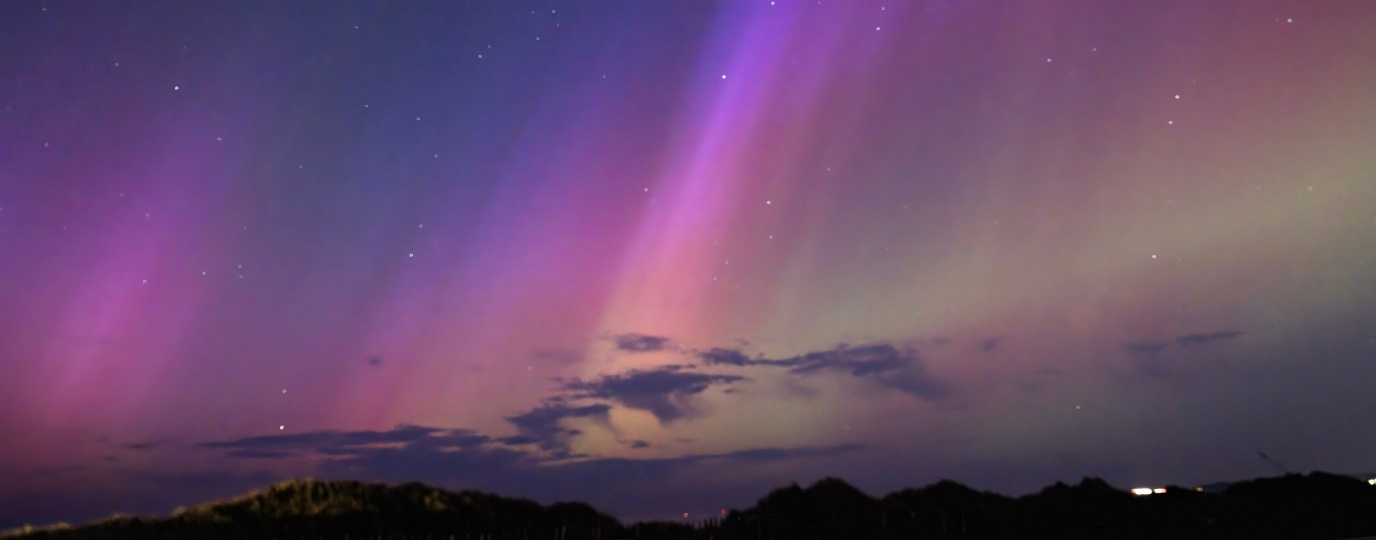
The UK is a darker place than you might have thought!
Although we live in a densely populated country with significant light pollution in urban areas, there are 22 officially recognised International Dark Sky Places in the UK. This means there are plenty of opportunities to see the stunning Northern Lights, provided you’re in the right place at the right time of year.
This guide explores some of the best places to see the Northern Lights in the UK, along with some suggested hiking routes, so you can take in a viewing as part of your next expedition.
Make sure you are prepared for night hiking
Hiking after dark requires careful planning and the confidence to navigate safely. Make sure you have the right navigation skills, equipment and experience before setting out, and always check conditions and your route in advance.
What are the Northern Lights?
Also known as ‘aurora borealis’, the Northern Lights are a visual phenomenon that occur in the skies above the northern hemisphere. They’re caused by contact between the magnetic fields of the Sun and the Earth, which charges different atoms and pushes some of them towards Earth.
When these atoms hit the Earth’s atmosphere, the resulting collisions release energy and a colourful glow: red and green at higher altitudes when reacting with oxygen, and purple, pink and blue lower down when reacting with nitrogen.
How can I see the Northern Lights in the UK?
The Northern Lights are naturally stronger and more visible the further north you go, which is why destinations like Canada, Iceland and Scandinavia are popular with stargazers from all over the world. This makes sightings in this country weaker and less frequent. However, the peaks of solar cycles (such as that occurring around 2025 and 2026) makes for more solar activity and a better chance of seeing them.
The best times of year to see aurora borealis from the UK are the spring and the autumn, in the periods around the vernal equinox (approximately 20th March) and the autumn equinox (approx. 22nd/23rd September).
To maximise your chances of seeing them, you’ll need a clear night, on high ground, in a dark place well away from any major sources of light pollution. And as the aurora is generally strongest in the middle of the night (between 11pm and 2am, according to the Natural History Museum), you’ll want to make sure that any hiking route you choose isn’t too challenging or dangerous to tackle in the dark.
Here are some of our top choices for hikes in areas where you may see the Northern Lights in the UK. Some of these routes may not be suitable for night-time hiking, so you may want to plan to hike by day and stargaze by night (check before travelling):
Brecon Beacons, Wales
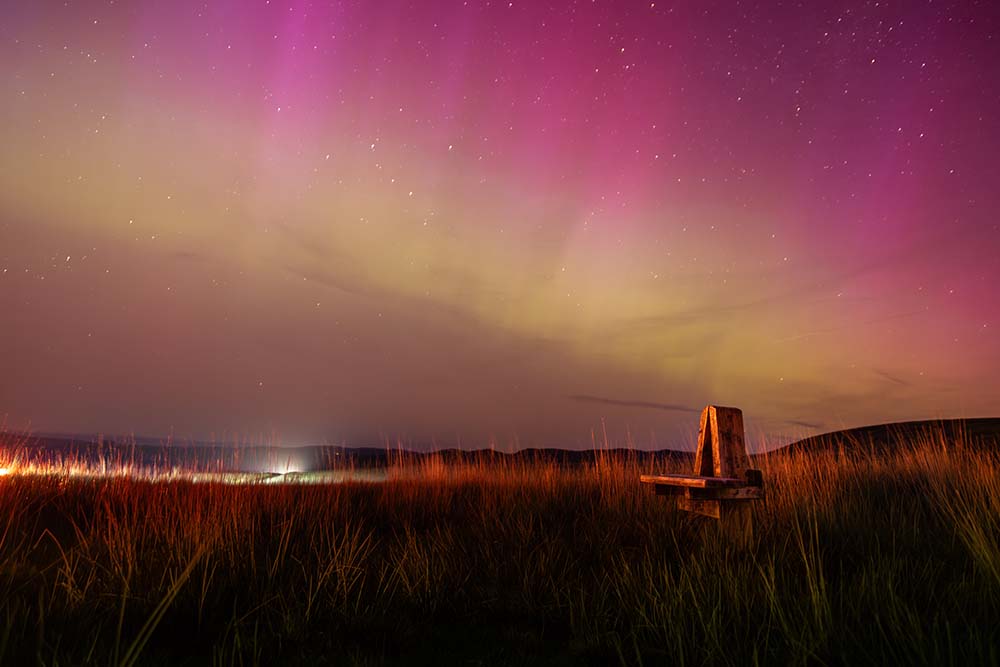
Seeing the Northern Lights in Wales can be tricky, as the principality is known for wet and cloudy weather in the spring and the autumn. But the Brecon Beacons National Park (‘Bannau Brycheiniog’ in Welsh) will give you one of your best opportunities.
The Brecons are one of the UK’s International Dark Sky Places, meaning you’ll be well-placed to avoid any light pollution that might spoil your view. A relatively simple hike to the top of Pen y Fan should give a good view, while sightings have also been known from the Brecon Beacons Visitor Centre a few miles to the west.
Arthur’s Seat, Edinburgh
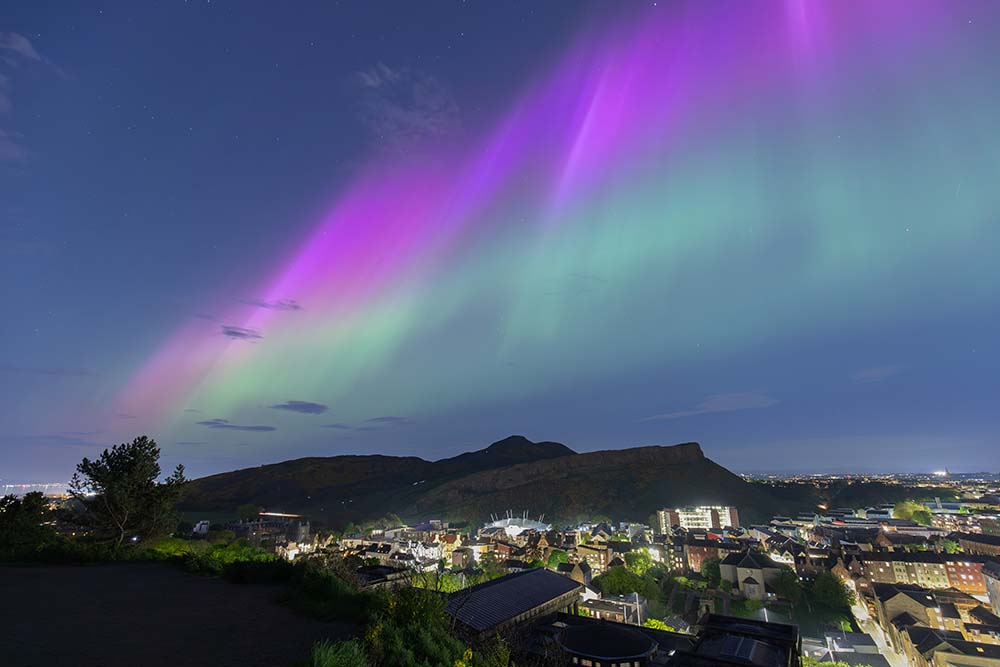
You may think seeing aurora borealis in Edinburgh would be impossible because of the light pollution emanating from Scotland’s capital city. But Arthur’s Seat, an extinct volcano 251 metres above sea level could give you a perfect combination of the Northern Lights, and the twinkling city landscape below.
A hike up and down the peak, and around its base, can make for a walk of decent length. And with urban environments on all sides, access is relatively easy, meaning you can start or end your walk from whichever direction suits you.
West Penwith, Cornwall
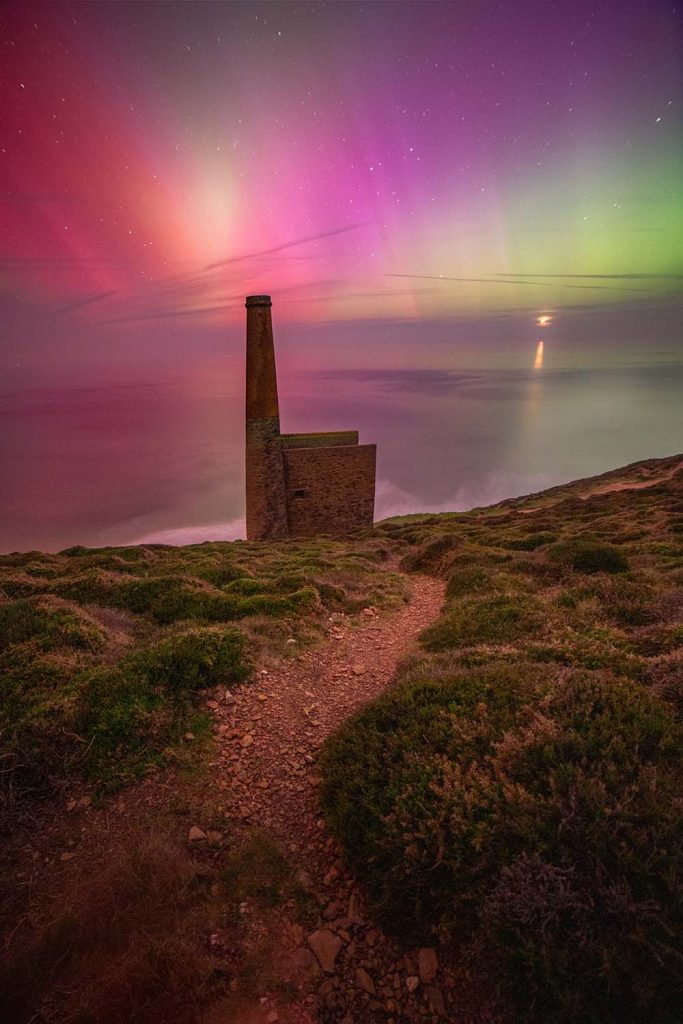
You don’t necessarily have to head north to see the Northern Lights, in fact it’s possible to see them from some of the most southerly places in the UK!
There was a particularly strong display of the Northern Lights across Cornwall in January 2026, which would have been especially visible in Cornwall’s two International Dark Sky Places: Bodmin Moor, and the West Penwith peninsula.
An inland hike in this area would be ideal for a sighting for two reasons: it will give you some higher ground for a better view, and you’ll avoid the safety risk of hiking around the coastal clifftops at night.
The Quiraing, Isle of Skye
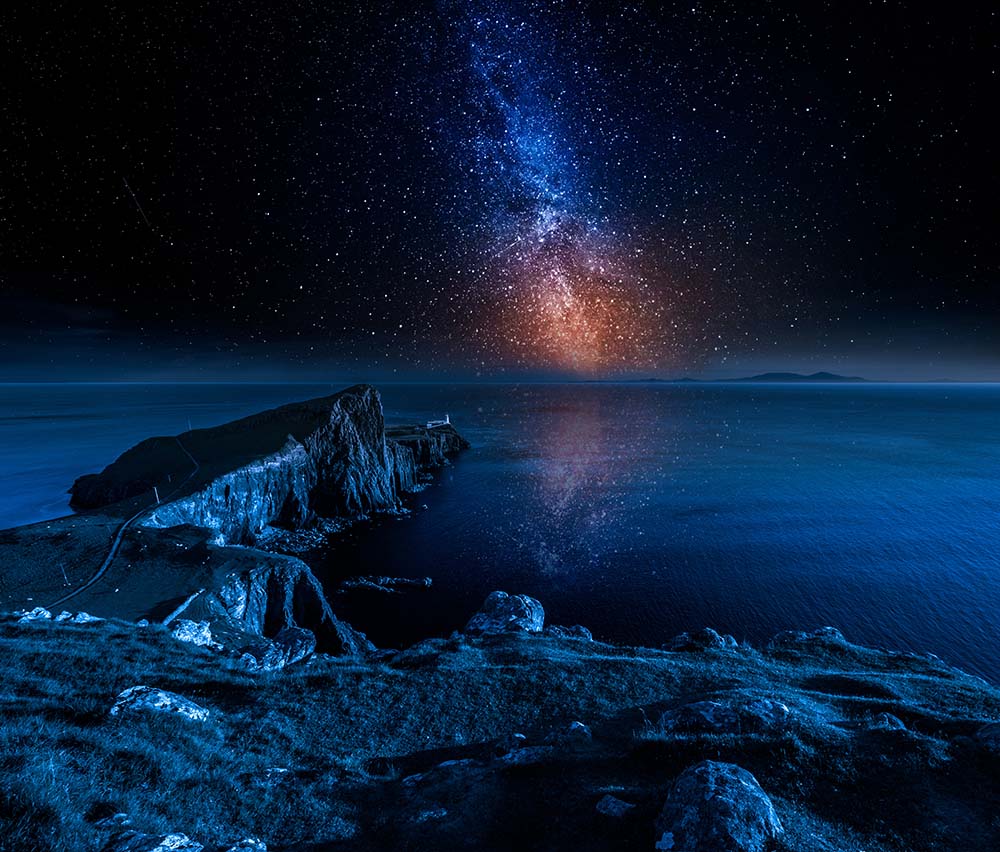
As one of the northernmost and isolated parts of the UK, seeing the Northern Lights on the Isle of Skye (and the Inner and Outer Hebrides in general) can be an unforgettable experience. And that’s before considering the amazing landscape views you’ll get during the daytime, too.
The best Northern Lights sightings are towards the north and west, well away from the main town of Portree. A walk up and around the Quiraing is a popular choice, and at its highest point will take you to more than 500 metres above sea level. It’s hard work, but potentially well worth the view at the end.
North Antrim coast, Northern Ireland
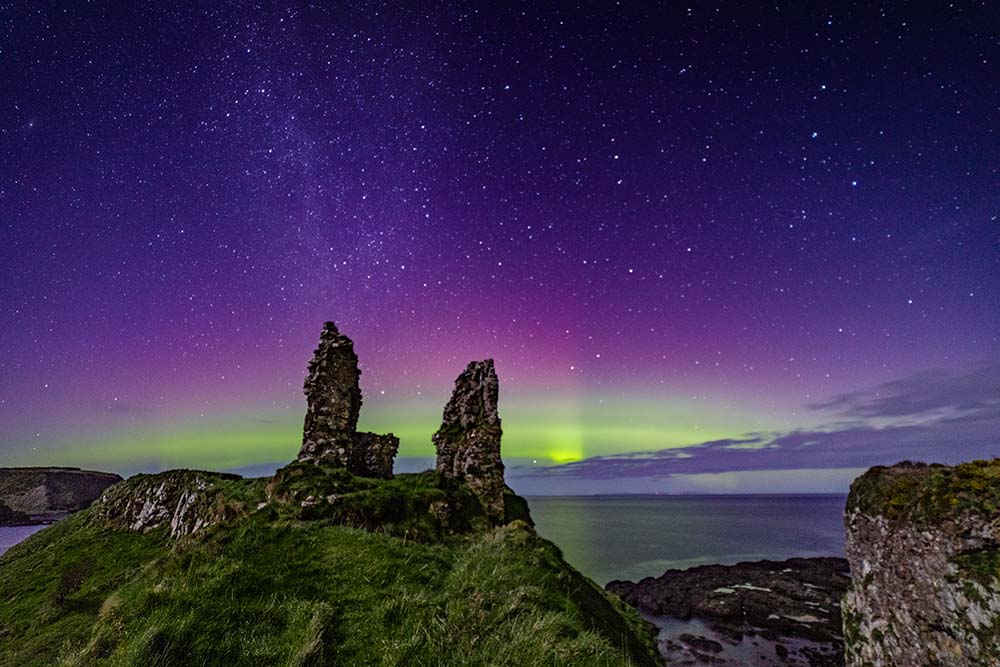
The north coast of Northern Ireland is an excellent spot for Northern Lights viewing, and the further you can get away from the light pollution of Belfast to the south-east, the better.
Although the Giant’s Causeway might seem like the natural choice on the North Antrim coast, public access is restricted at night. Instead, try to head a little further east along the North Antrim coast path, towards Dunseverick and Portbradden for something a little more off the beaten track.