How to Improve Your 5k Time: Training Tips to Run a Faster 5k
It doesn’t matter if you’re aiming to break 30 minutes, achieve a new personal best or simply feel stronger on your local runs, improving your 5k time is one of the most rewarding goals in running.
The good news is that running a faster 5k is not just about running more miles. Smart training, varied routes and consistent practice all play a part. By combining speed work, strength building and careful route planning, you can become a stronger, more efficient runner.
If you’re looking to improve your 5k time, it’s worth remembering that progress rarely happens overnight. Jack Wood, a member of the OS Running Club and Technology team at Ordnance Survey, has reduced his 5k time from around 22 minutes to 18 minutes over the past four years. Surprisingly, he puts much of that improvement down to running easy most of the time and finding support from a running community. We’ll hear more from Jack later in the article, alongside practical tips you can use to build speed, consistency and confidence in your own running.
How to Run a Faster 5k: Key Training Tips
Use the links below to jump straight to the training advice that’s most relevant to your goal.
- Why Route Choice Matters for 5k Training
- Build a Library of Training Routes
- Use Elevation Profiles and Contours to Find the Right Terrain
- Add One Speed or Tempo Session Each Week
- Use Hills to Build Strength
- Why Regular Easy Runs Can Make You Faster
- Strength Training Helps More Than You Think
- Pay Attention to Recovery
- Progress Is Not All About Running Faster
- Sample Week for a Faster 5k
- Jack’s story of running a faster 5k

Why Route Choice Matters for 5k Training
Many runners complete the same route week after week. While consistency is helpful, continually running on similar terrain can limit progress.
Different routes help develop different aspects of fitness:
- Flat routes improve pace consistency.
- Gentle undulating routes build endurance.
- Hillier routes develop strength and running economy.
- Off-road routes can improve stability and resilience.
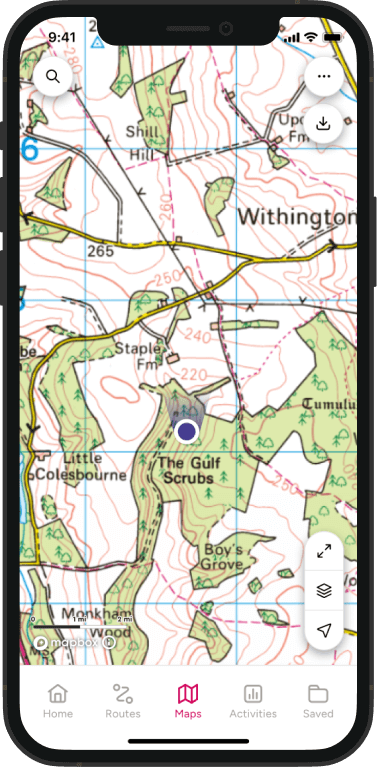
Using OS Maps, you can explore local routes, analyse elevation profiles and find suitable locations for different training sessions. Filter routes to find 5k runs in your area.
Build a Library of Training Routes
One advantage of using OS Maps for running is the ability to match routes to specific training goals, then save them for future sessions. Rather than heading out on the same loop every week, you can build a library of routes for different workouts and return to them whenever they’re needed.
Even if every run starts from your front door, small route variations can create very different training opportunities. A local park loop might be ideal for steady efforts, while a route that includes a short hill, flights of steps or a bridge approach can be used for strength and hill sessions. Trails, grass paths and uneven terrain can help improve balance and running efficiency, while flatter routes are useful for tempo runs and speed work.
Over time, you’ll build a bank of tried and tested routes with different distances, surfaces and elevation profiles. When it’s time for a hill session, recovery run or faster workout, you’ll already know exactly where to go, removing the guesswork and helping you stay consistent with your training.
- Easy runs: Parks, trails and quiet local routes where you can maintain a comfortable, conversational pace.
- Intervals: Flat paths, seafront promenades and quiet roads with minimal interruptions.
- Tempo runs: Consistent terrain that allows you to settle into a steady effort without frequent sharp climbs.
- Hill repeats: Short, sustained climbs that can be repeated multiple times.
- Longer runs / walks: Mixed terrain routes with manageable elevation that build endurance without becoming overly demanding.
Use Elevation Profiles and Contours to Find the Right Terrain
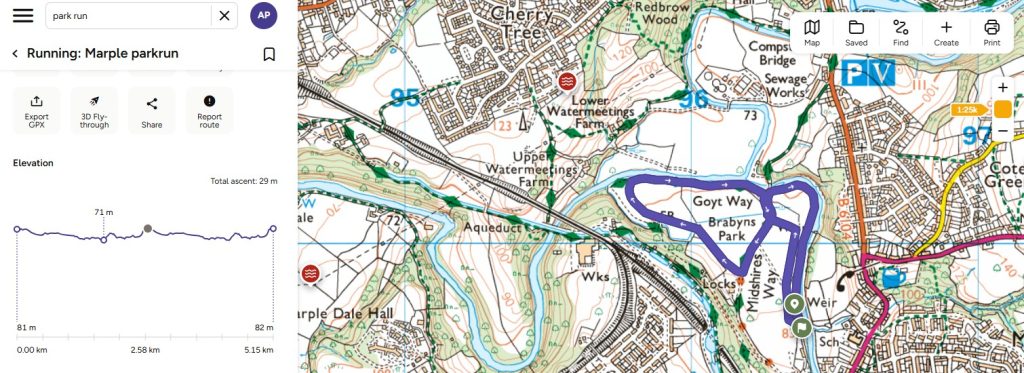
The terrain you run on can have a big impact on your training. Before heading out, it’s worth looking beyond the distance of a route and considering how much climbing and descending it includes. In OS Maps, contour lines can help you identify hills and valleys when planning a route, while the elevation profile shows exactly where climbs and descents occur along the course. Together, they can help you choose routes that match your training goals, whether that’s a flat route for speed work, a steady climb for hill training or an undulating route that builds endurance.
- Widely spaced contour lines generally indicate gentler gradients, making them a good option for easy runs and tempo sessions.
- Closely packed contour lines show steeper slopes, making them useful for hill training and strength-building workouts.
- Use the elevation profile to see where climbs and descents occur, helping you avoid unexpected hills during speed sessions or tempo runs.
- River valleys, canal paths and former railway lines often provide flatter routes that are well suited to faster efforts.
- If you’re preparing for a race with rolling terrain, look for routes with a similar elevation profile to help replicate race day conditions.
Keep Training Fresh
One of the biggest challenges when training for a faster 5k is maintaining motivation. Exploring new routes can help keep running enjoyable while exposing you to different terrain and training stimuli. However, running the same route periodically is a useful way to measure progress. If a hill feels easier or your pace improves on a familiar loop, you’ll have a clear indication that your training is working.
Add One Speed or Tempo Session Each Week
If you’re looking to improve your 5K time, one of the most effective changes you can make is adding a dedicated speed or tempo session to your weekly routine. While easy runs build endurance, faster workouts help your body run more efficiently and become comfortable at higher paces.
What is a tempo run?
A tempo run involves running at a comfortably hard effort for a sustained period. It’s faster than your normal easy pace, but not an all out effort.
During a tempo run:
- Your breathing will be noticeably heavier.
- You should only be able to speak in short phrases rather than full sentences.
- The pace should feel challenging but sustainable.
Example tempo session
- 10 minute warm up
- 20 minute tempo effort
- 10 minute cool down
Tempo runs help improve your body’s ability to maintain a faster pace without tiring. For a 5K runner, this means you’re more likely to hold a strong pace throughout the race rather than slowing significantly in the final kilometres.

What is a speed session?
Speed sessions involve shorter, faster efforts with recovery periods between them.
Example speed session
- 10 minute warm up
- 6 x 1 minute fast efforts
- 2 minutes easy jogging between each effort
- 10 minute cool down
These sessions train your legs and cardiovascular system to cope with faster running speeds. They can also improve running economy, helping you use less energy at your goal 5K pace.
Which is better for improving your 5K?
Both are effective, but they develop slightly different qualities:
- Tempo runs help you sustain a faster pace for longer.
- Speed sessions help you become comfortable running faster and build leg turnover.
If you’re only adding one quality workout each week, alternating between a tempo run one week and a speed session the next is a simple approach that provides the benefits of both.
Route Planning Tip
Both tempo runs and speed sessions work best on routes with minimal interruptions. Look for traffic free paths, parks, cycleways or quiet country lanes where you can maintain a consistent effort without frequent stops. OS Maps can help you identify flatter routes with fewer road crossings, making it easier to focus on your pace and training goals.
Use Hills to Build Strength
Hill training acts like strength training for runners.
Running uphill develops:
- Leg strength
- Running power
- Cardiovascular fitness
- Mental resilience
You do not need mountain-sized climbs to benefit.
Hill Session Example
- Warm up for 10 minutes.
- Run uphill for 60 seconds at a strong effort.
- Jog back down for recovery.
- Repeat 6 to 10 times.
Route Planning Tip
Compare the elevation profile of your regular 5K route with alternatives in OS Maps. Choosing a flatter route can be a great way to target a new personal best, but don’t avoid hills altogether. Training on hillier routes builds strength and stamina, helping you run faster and feel stronger when you return to your regular 5K.
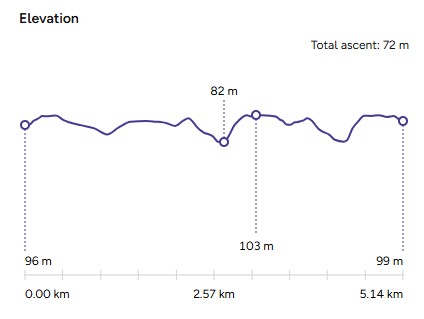
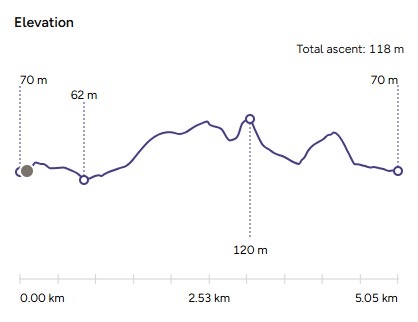
These two Parkruns, just 30 minutes drive from each other shows just how much impact looking at elevation in your route selection will have on your 5k run timings. Plot your own local routes and take a look at the total elevation but also the diagram which shows at which point in the run you’ll have the hardest hills, this can all make a big difference to your training and improvement.
Strength Training Helps More Than You Think
You don’t need a gym membership to become a stronger runner. Two short strength sessions per week can improve running efficiency and reduce injury risk, at home or while you’re out on a walk. Strong muscles help maintain good form when fatigue starts to build.
Focus on:
- Squats
- Lunges
- Calf raises
- Glute bridges
- Core exercises
Why Regular Easy Runs Can Make You Faster
Many runners make the mistake of treating every run like a race. While it might feel productive, running hard every time can leave you tired, increase your risk of injury and make it harder to improve.
Easy runs build your aerobic fitness, which is the engine that powers your 5K running. The stronger your aerobic fitness, the longer you can maintain a quicker pace before fatigue sets in.
An easy run should feel comfortable and relaxed. You should be able to hold a conversation in full sentences without needing to stop for breath. For many beginners, this pace feels slower than expected, especially on hills. That’s completely normal.
Think of easy runs as the foundation that supports your faster sessions. If you’re constantly tired from running too hard, you’ll struggle to get the most from tempo runs, hill sessions and speed workouts. By keeping easy days genuinely easy, you’ll have more energy to run harder when it matters.
A good rule of thumb is that most of your weekly running should be at an easy, conversational pace, with just one quality session focused on speed, hills or tempo work.
Route Planning Tip
Use OS Maps to find quieter routes where you can settle into a steady rhythm without frequent road crossings or interruptions. If your goal is an easy run, check the elevation profile before setting off. Choosing a flatter route can help you keep your effort comfortable and avoid turning an easy run into an unintended hill workout.
Pay Attention to Recovery
Fitness gains happen during recovery, not during the workout itself.
Prioritise:
- Sleep
- Hydration
- Balanced nutrition
- Rest days
- Easy recovery runs
A well-rested runner is more likely to perform well than one constantly pushing through fatigue.
A Sample Training Week for Running a Faster 5k
For runners training three to four times per week:
Tuesday: Speed session or hill repeats
Wednesday: Easy run
Thursday: Strength training
Friday: Tempo run
Saturday: Rest
Sunday: Longer easy run
Progress is not all about running faster
Improvement is not always measured by a personal best. Other signs of progress include:
- Running the same route at a lower effort
- Recovering more quickly after hard sessions
- Feeling stronger on hills
- Maintaining pace for longer
Consistency over several weeks is far more effective than occasional hard efforts. It doesn’t matter if you’re preparing for your first parkrun or chasing a new PB, thoughtful training and smart route planning can make a significant difference.

When will you see results?
Most runners begin to notice improvements in fitness and pace after four to six weeks of consistent training. After six to eight weeks, many runners find they can either run their 5K faster or maintain the same pace with less effort.
Consistency matters more than intensity. One quality speed or tempo session each week, combined with regular easy running, is often enough to produce noticeable improvements over time.
Join a running community to stay motivated
Improving your 5k time is not just about training plans and interval sessions. Finding support from other runners can help you stay consistent, motivated and accountable.
Many workplaces including Ordnance Survey now offer running groups, Couch to 5k programmes or social running clubs that make it easier to build a regular running habit. If your employer doesn’t have one, consider starting an informal group with colleagues or friends. Even meeting once a week for an easy run can help you stay on track.
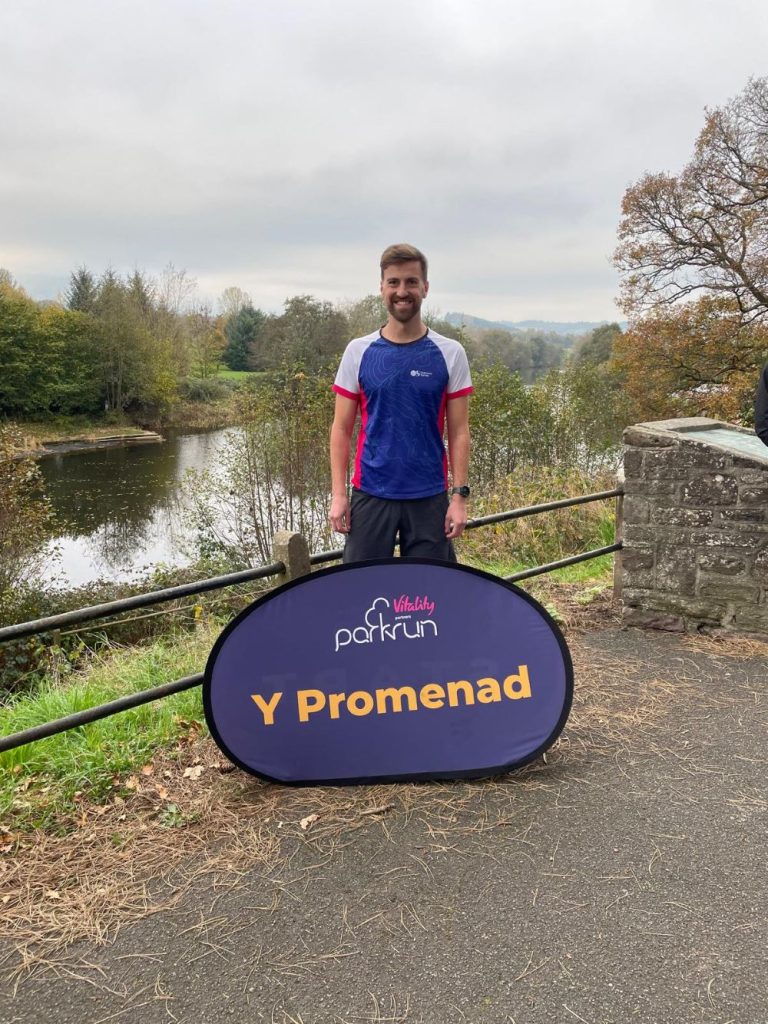
Jack Wood, a member of the OS Running Club and Technology team at Ordnance Survey, credits community support as a key part of his improvement.
“A few years ago I joined a local running club, Romsey Road Runners, and the regular training with them has given my running a lot of structure. I now attend two club sessions per week, and the club support with integrating speed work into my weekly runs, while also providing a very friendly and social environment to run in.”
Jack also follows the widely recommended approach of keeping most runs easy.
“One thing I feel has made a real difference for me is running easy about 80% of the time, and only doing speed or interval work for a maximum of 20% of my running time. Easy running should be just that, easy. The common saying is that it should be conversational. This has helped me build a strong running base and allows my body to recover between more intense sessions.”
Since adopting this approach and training consistently with his club, Jack has reduced his 5k time from around 22 minutes to approximately 18 minutes between 2022 and 2026.
“There are many local running clubs around, and they are all extremely supportive of newcomers, wherever you are on your running journey. I would highly recommend doing a trial session with your local club.”
The Ordnance Survey Running Club offers a similar sense of community for staff, organising social runs from the office and regular parkrun meetups.
Find your perfect training route
Use OS Maps to discover flat routes for speed work, local hills for strength sessions and new places to keep your running fresh and motivating. Explore routes near you and build a training plan that works for your goals.

20 reasons to love running
When it’s cold and dark, or you’re tired, or just not in the mood to exercise, it’s very easy to find an excuse not to go for a run outside – yet running is one of the best forms of exercise out there. In an attempt to get you out there, we’ve put together 20 reasons to love running!

A beginner’s guide to running
Whether it’s around the block, to the shop, or a full scale marathon, there is no doubt that running is good for you. This beginner’s guide to running will help you get started.

What is running cadence? – An FAQ guide for runners
Learn the significance of running cadence and how it can enhance your running experience, regardless of your fitness level.