Why talking about mountain safety matters more than ever
As Editor of OS Maps Discover, my aim is to create inspirational stories that encourage people to spend more time outside. It is literally in my job description – “help more people get outside, more often“
But with that inspiration comes responsibility. The more we encourage people into wild places, the more important it becomes that we also help them understand how to do it safely. Not in a way that feels preachy or off‑putting, but in a way that genuinely lands when it matters most.
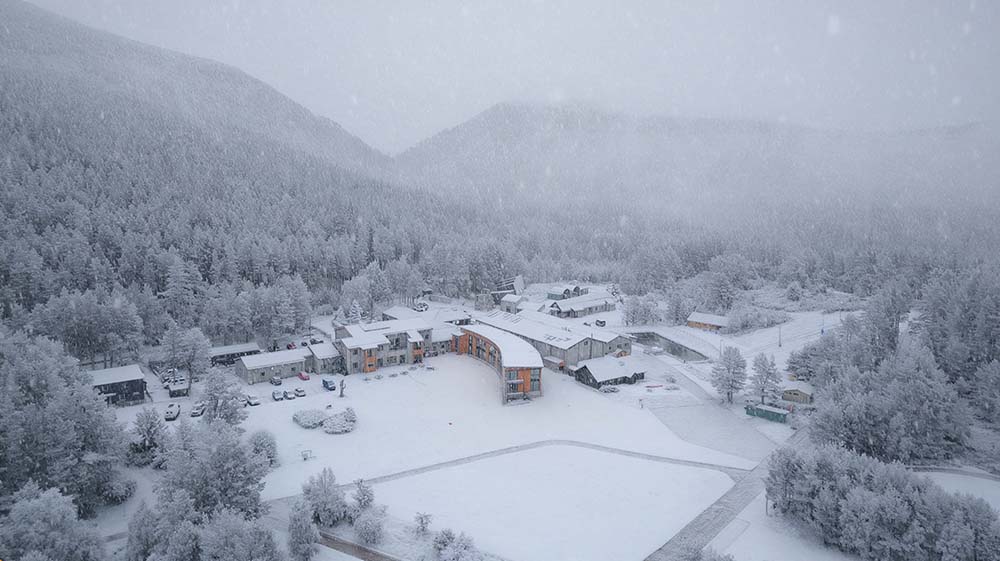
That tension between inspiration and responsibility was at the heart of a recent mountain safety training event I attended in the beautiful Cairngorms. It was actually April but there was still lots of snow.
Save A Life! A Practical First Aid Course
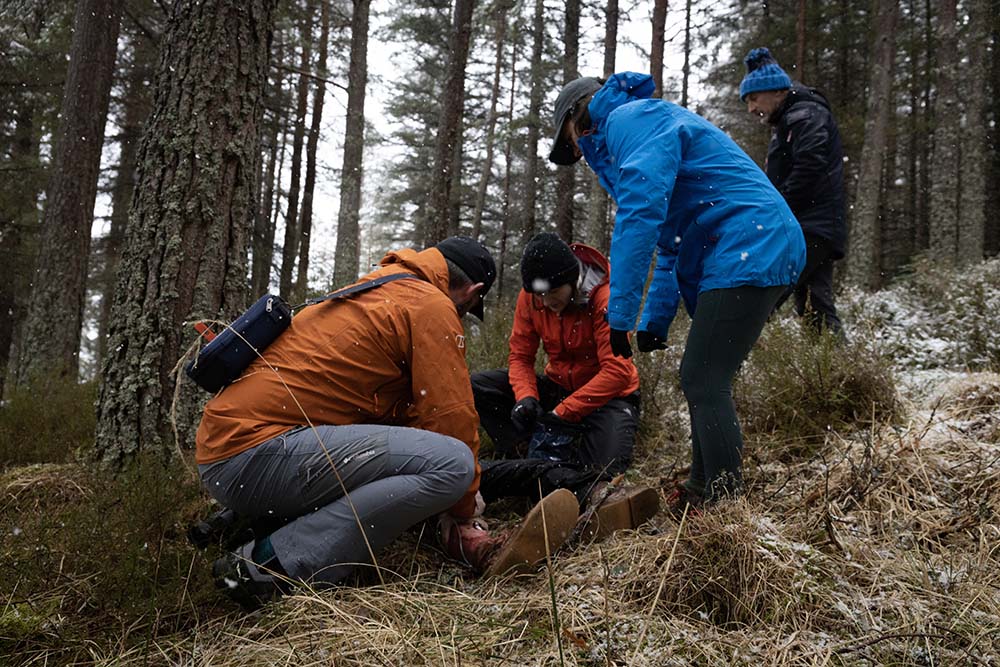
The training was hosted by Vango as part of its 60th anniversary celebrations and delivered by instructors from Sandstone Training at Glenmore Lodge. A group of outdoor journalists came together for a practical course titled Save A Life, focused not on everyday first aid but on what to do when things go seriously wrong in remote environments.
I spend a lot of my spare time walking in the hills and mountains of Eryri and the Clwydian Range. I am comfortable with navigation, with judging conditions and with making decisions about my own safety. Even so, the training challenged how I think about risk, preparedness and, crucially, how we communicate mountain safety.
If you have an accident of any kind when you’re walking in the mountains, help may be hours away, not minutes. That reality reframes safety from who will come and help to what you need to manage while you wait. It’s not just about calling Mountain rescue it’s about what you’re doing while you wait for them.
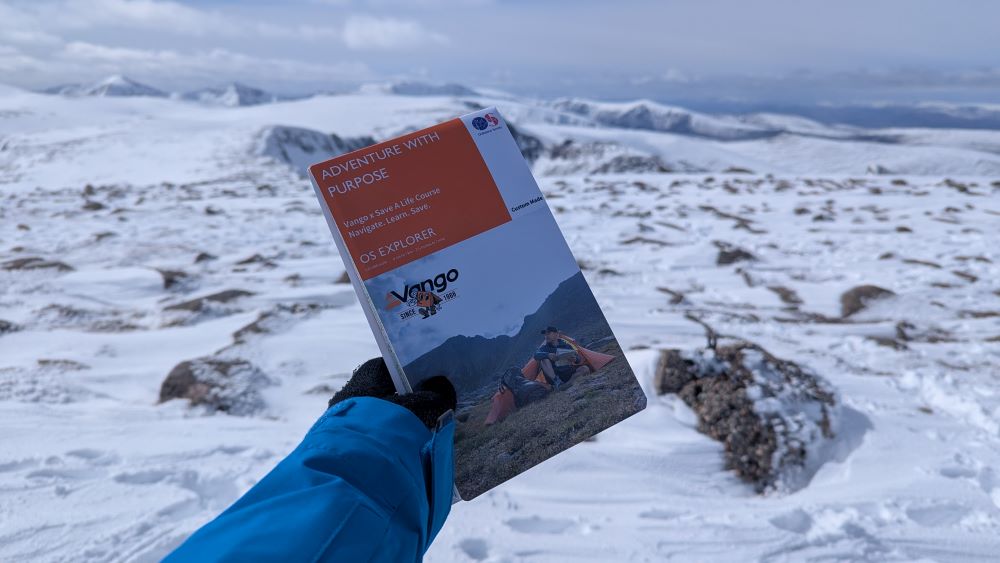
When inspiration needs context
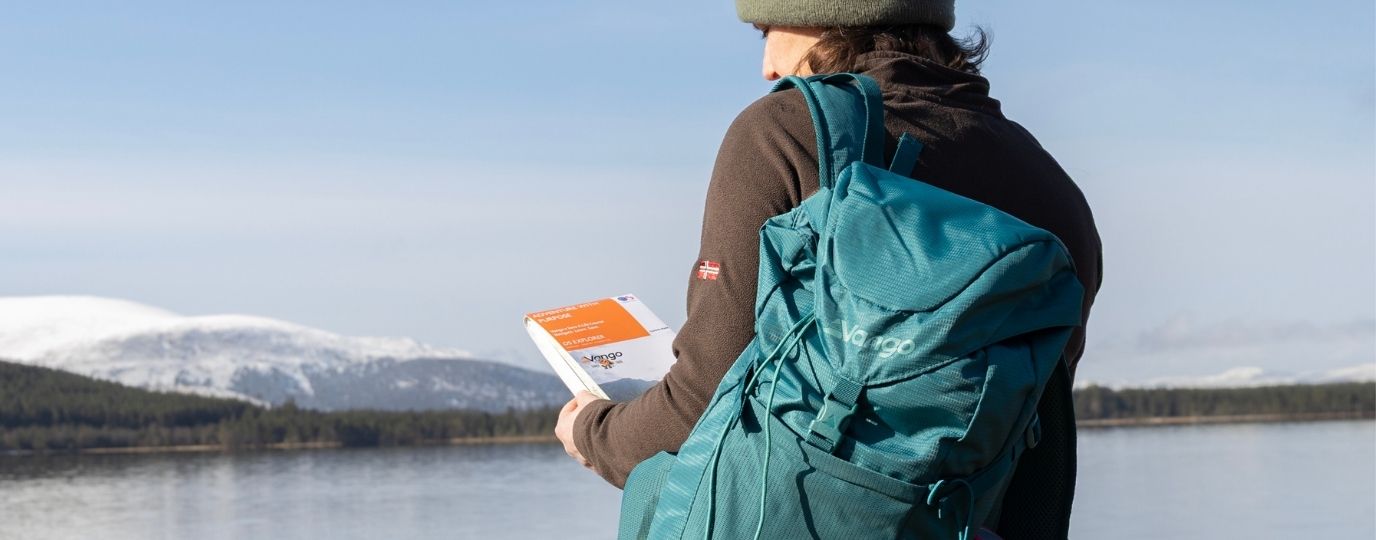
Outdoor participation continues to grow, and that is overwhelmingly a good thing. But inspiration without context can leave gaps, particularly for people who are newer to walking, hiking or fell running. Seeing people happily exploring inspires beginners into the mountains, they don’t see the years of experience, the navigation courses, first aid training and the backpack full of essential kit.
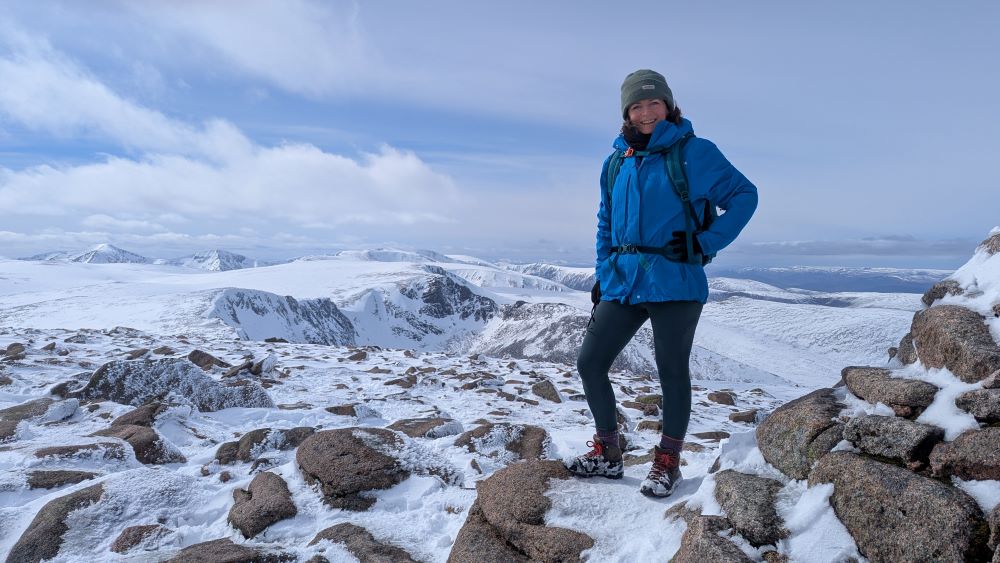
One of the strongest elements of the Save A Life course was how clearly it stripped safety back to outcomes. We talked openly about how incidents escalate, how stress affects thinking and how fine detail disappears under pressure. In those moments, you do not rise to the level of your training. You fall back on what you remember instinctively. That has implications not just for walkers, but for those of us who create outdoor content.
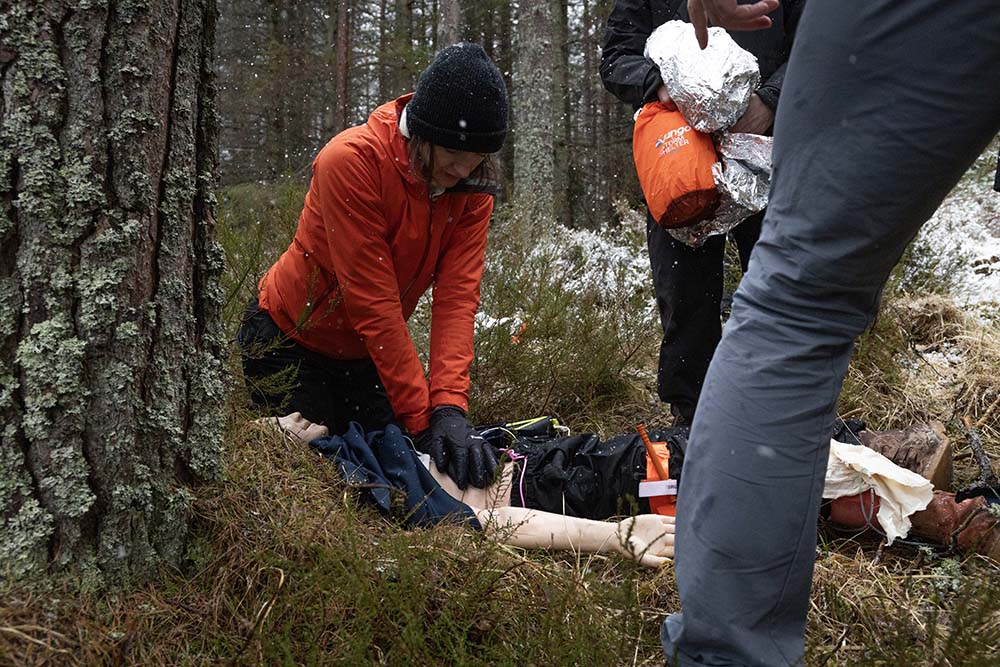
What actually matters under pressure
Throughout the day, the instructors kept returning to the same core questions. Not technical, theoretical questions, but practical ones.
Can you tell someone exactly where you are?
Can you keep yourself, or someone else, warm and dry for an extended period?
Can you stop serious bleeding and carry out CPR?
Can you remember what to do first under pressure, without having to think too hard?
These are not abstract considerations. They are the realities people face when they are cold, stressed and often alone. The focus was on small, decisive actions that buy time. Thirty seconds saved by doing the right thing instinctively can make a genuine difference.
For me, this was where mountain safety messaging clicked into place. It is not about listing every possible scenario. It is about reinforcing a handful of actions so often that they become automatic.
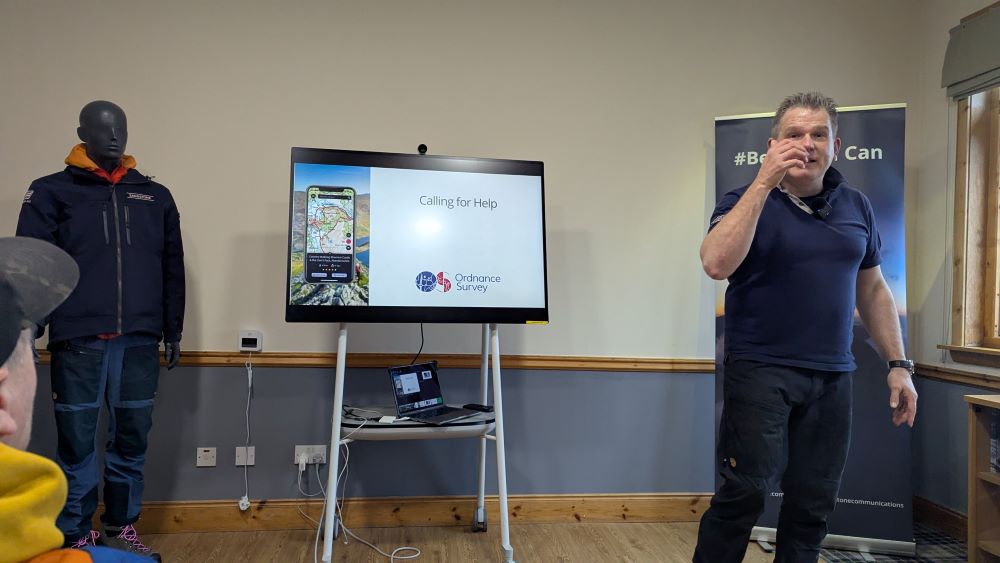
Location, memory and simple tools
One of the clearest lessons from the course was the importance of sharing your exact location quickly. Under stress, people forget place names, struggle to describe terrain and second guess themselves.
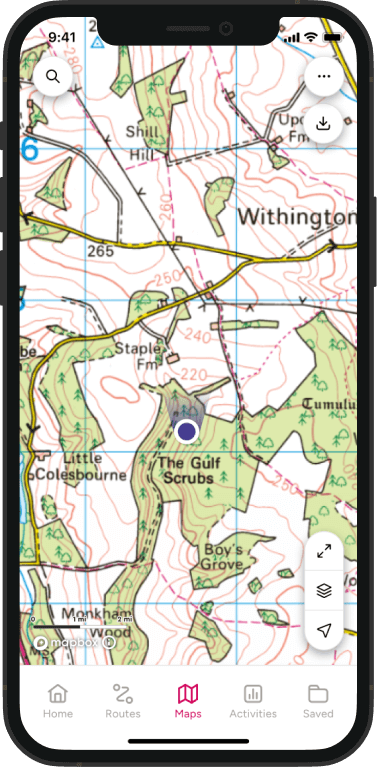
The OS Maps app includes a free feature called Locate Me, which provides an instant grid reference using your phone’s GPS. Used properly, it removes guesswork at the point where clarity matters most.
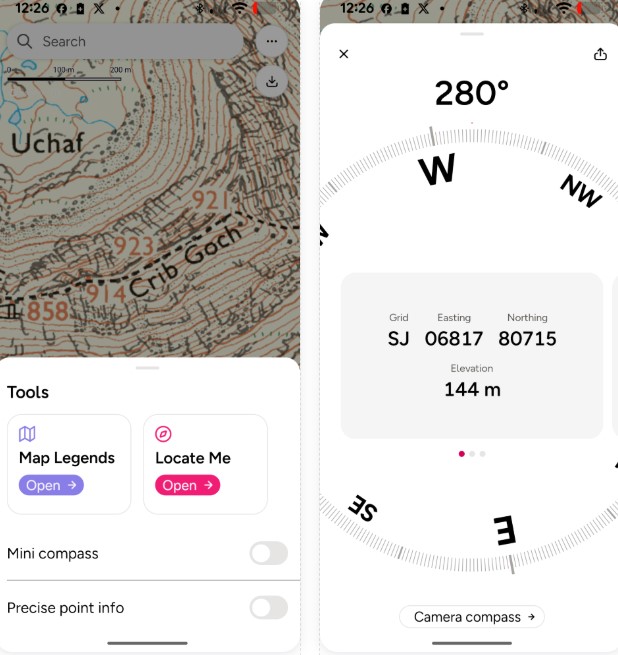
The key message here is not about relying on technology alone. Phones lose charge, get lost or dropped in streams . But when digital tools are positioned correctly, as a backup rather than a crutch, they can dramatically reduce stress and delay in an emergency.
The same principle applies to knowing how to contact Mountain Rescue. In the UK, that means dialling 999 or 112, asking for Police and then Mountain Rescue. It sounds simple, but only if you have seen or heard it enough times to recall it without hesitation.
This is exactly where repetition and clarity in outdoor storytelling matters.
Rethinking first aid and shelter
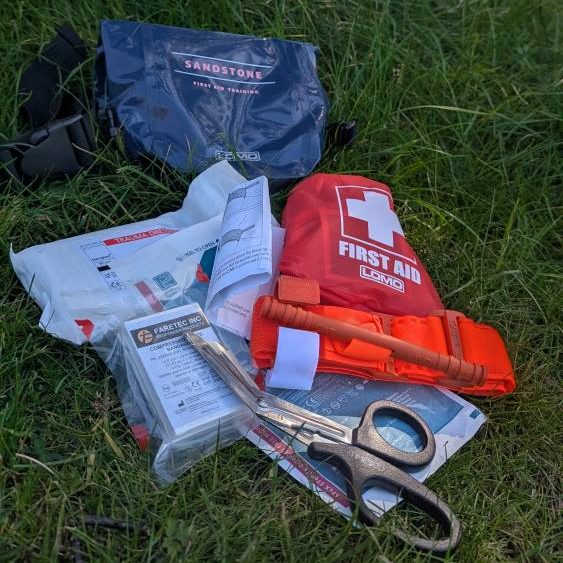
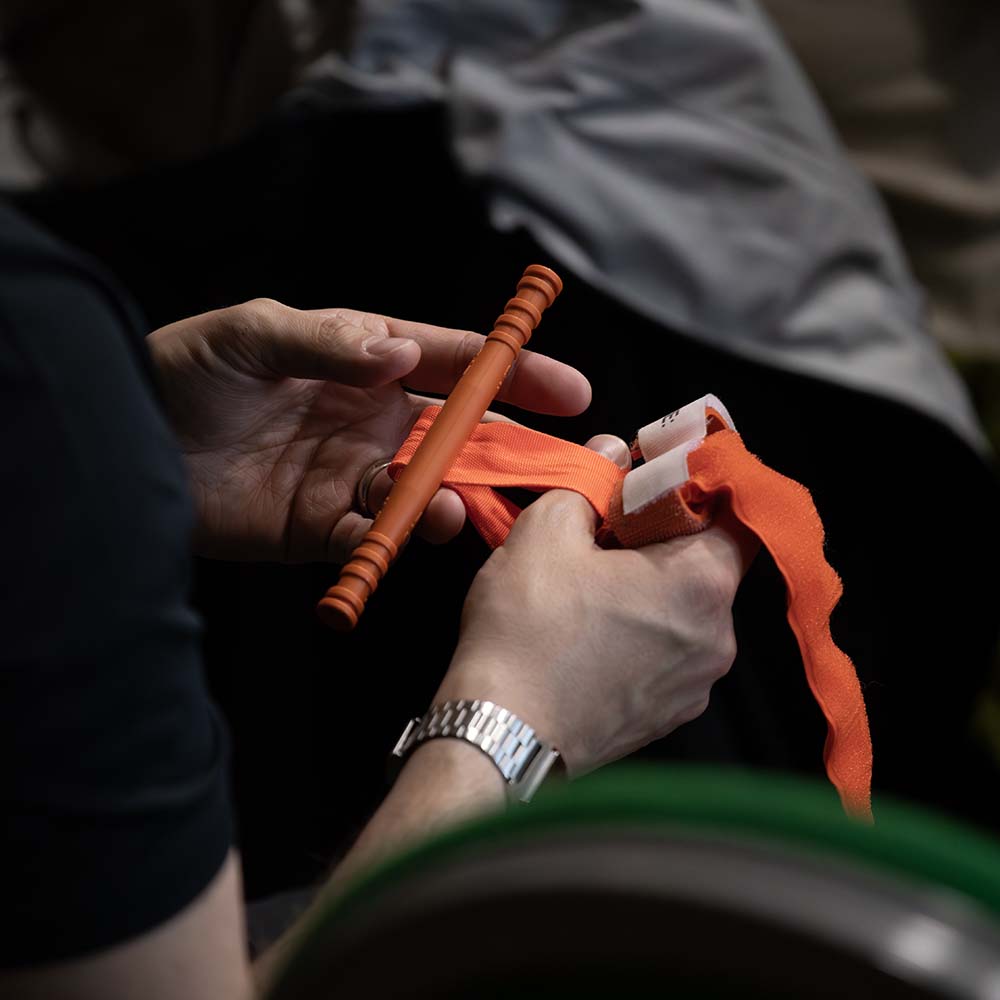
Many off the shelf first aid kits are designed for blisters and minor cuts, not for managing serious injuries while waiting hours for help. They can give a false sense of security.
One of the most practical lessons from the course was to think of first aid in terms of outcomes, not completeness. Can you stop bleeding. Can you do CPR. Can you protect someone from the elements. Can you maintain warmth. Can you do this for 5 hours on the side of a mountain?
The same is true of shelter. A lightweight storm shelter is not glamorous kit, but it can transform a situation, protecting both the injured person and those helping them while rescue teams make their way in. They’re also really useful if you just need a break from the weather to plan your next steps.
Attending a mountain safety first aid course and carrying the right kit is one of the best investments you could make. Your expensive Gortex jacket wont save your life… the right kit could.
The role of outdoor brands and storytellers (aka outdoor influencers)
Perhaps the most important takeaway from the Save A Life course came not from practical sessions, but from conversations with other journalists and the teams at Vango, Glenmore Lodge, Scottish Mountain Rescue and Sandstone Training.
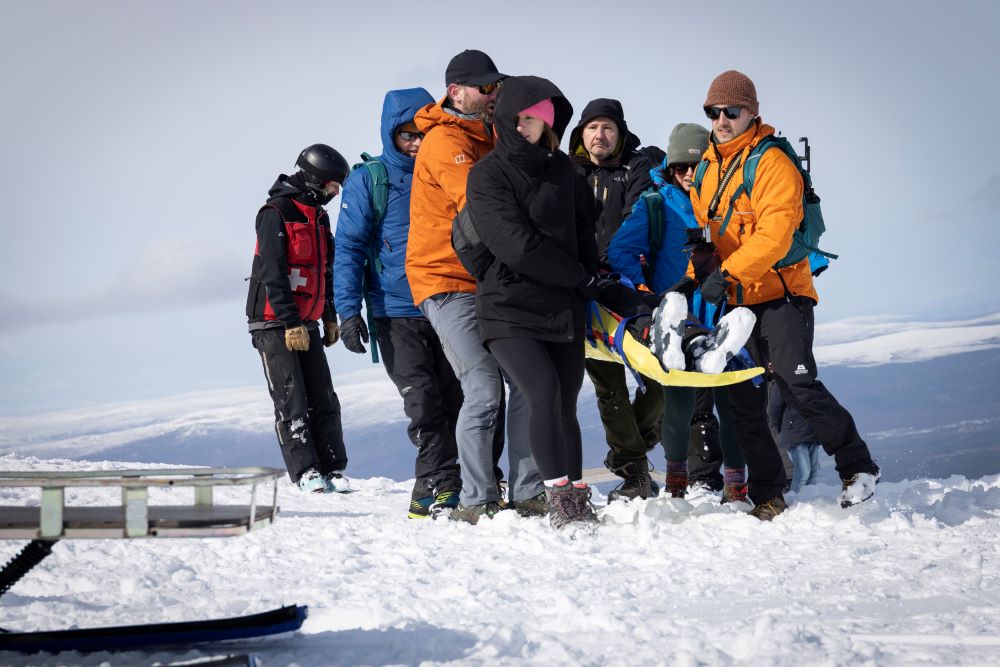
If we inspire people into the outdoors, we also influence how prepared they feel to be there. That carries responsibility. This doesn’t mean dampening enthusiasm or lecturing. It means weaving preparation, navigation skills, decision making and risk awareness into our stories in ways that feel relevant, achievable and normal.
We already publish a range of safety focused content and we are working to improve this to give it a wider reach. Our aim is to update the messaging around navigation skills with more lived experience stories that will resonate with people heading out into remote spaces. If you have a story to share please get in touch – hilary.pullen@os.uk
Taking mountain safety seriously…
I never grew up in an “outdoorsy family” – we never went hiking, and if we ever went walking or cycling, we never went far from the pavement, so mountain safety wasn’t even a thought in my mind. But the course with Sandstone taught me that it needs to be taken seriously by those who want to go on adventures in remote places (something I now do after being inspired by those I see on social media), because accidents can so easily happen, and they can happen to anyone – even if you think “the hike isn’t that hard” or “everyone does this route – India Paine -Freelance Outdoor Journalist
As Vango marks 60 years in the outdoors, investing in education and partnerships like this feels both timely and necessary. The challenge for all of us who attended is to carry these messages beyond the Cairngorms and find ways to make them resonate with the people who read our work, follow our recommendations and head out inspired by what they see.
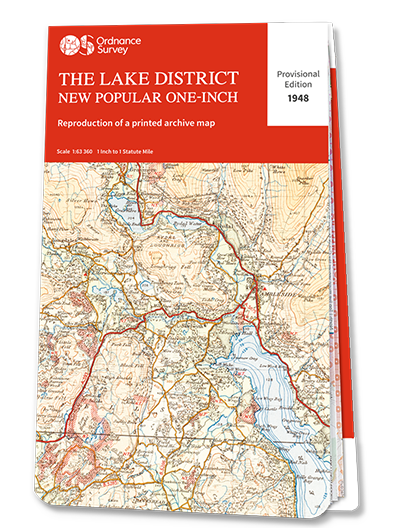
Get a FREE Collector's Edition Vintage Lake District Map when you spend over £30
By Hilary Pullen
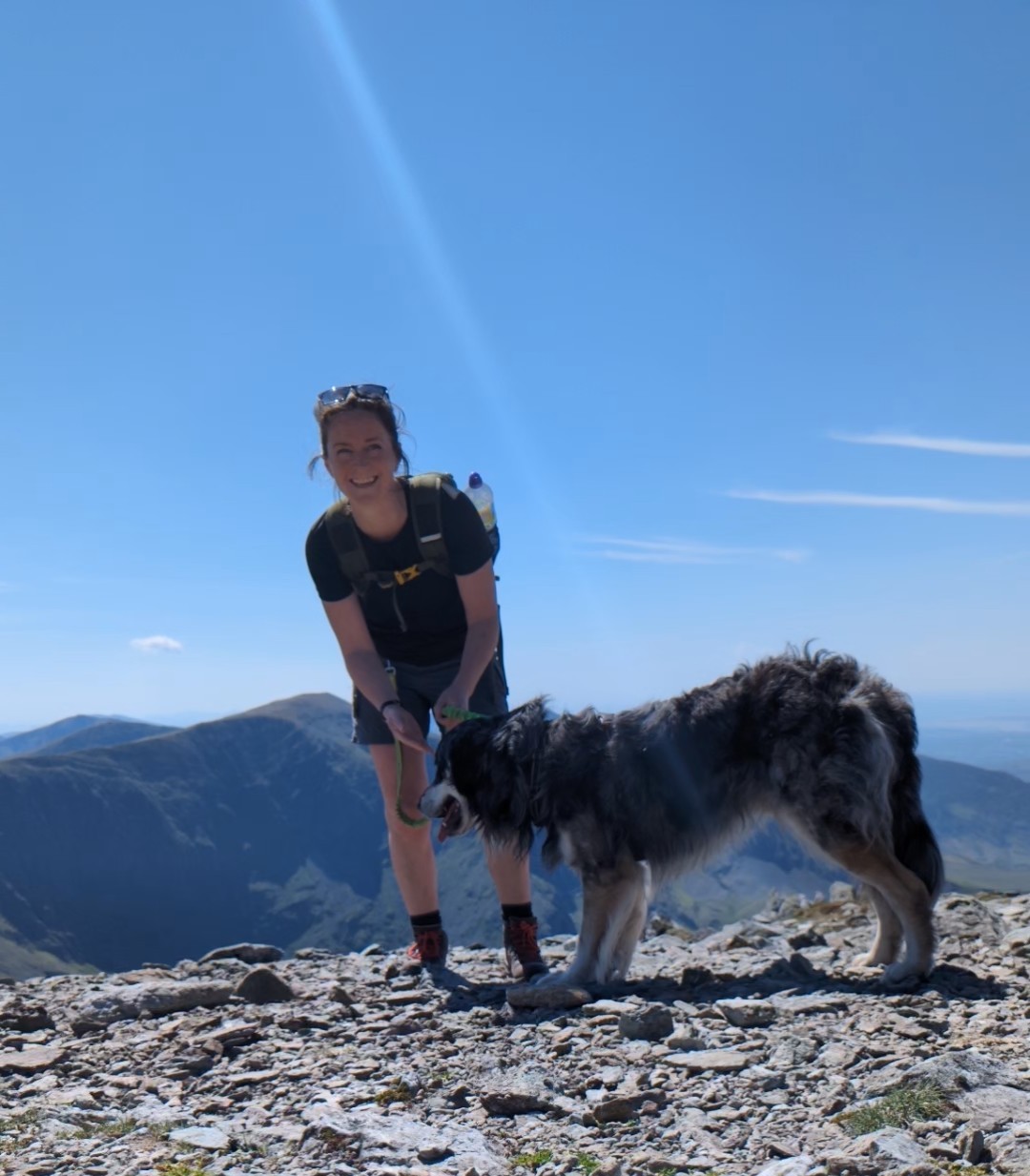
Meet Hilary, Editor of OS Maps Discover. Hilary is based in North Wales and loves hiking with her dogs in the mountains of Eryri and Bryniau Clwyd, you can find her on Instagram @nearlyuphill and read her guides to walking in North Wales.
If you would like to be a featured OS Author and write an article or route guide find out more here – how to submit an article idea