What is skyrunning?
When I told friends I was going to do a sky race I was met with the same question. What’s that?
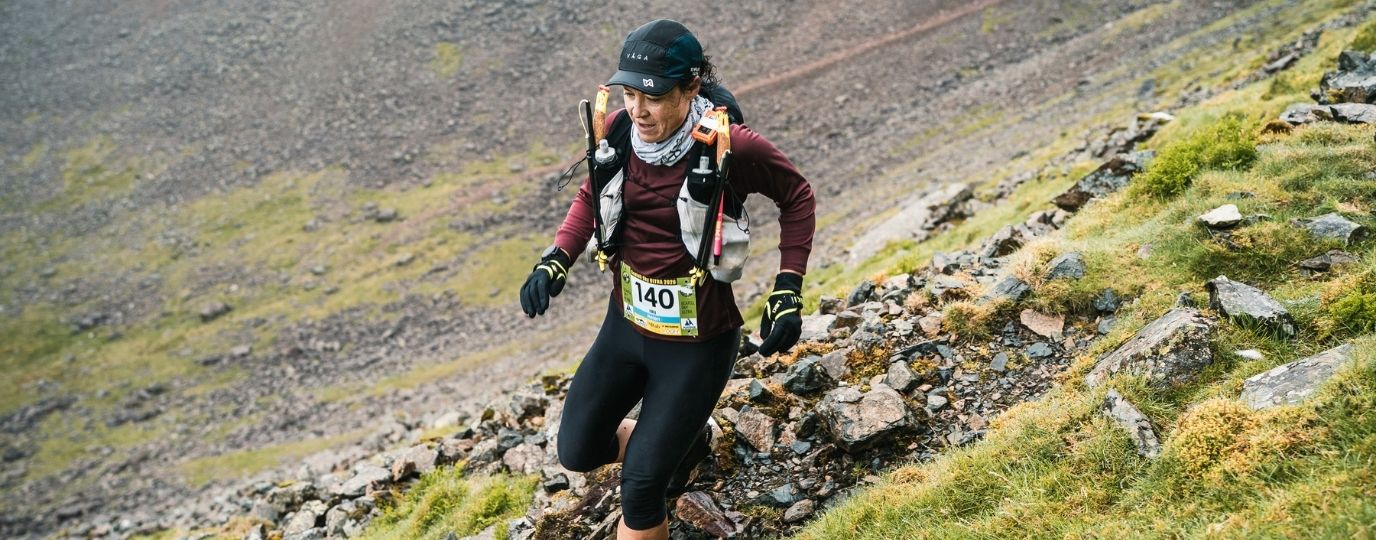
Founded in 1992, skyrunning is a type of mountain running that involves gnarly technical terrain, exposed ridgelines and scrambling using both your hands and feet. It’s not for the faint-hearted and will certainly get your adrenaline pumping. Here in the UK, you’ll find sky running races in the Lake District, Snowdonia and parts of Scotland, where mountainous terrain offers the best chance of running above the clouds and flying down the other side.
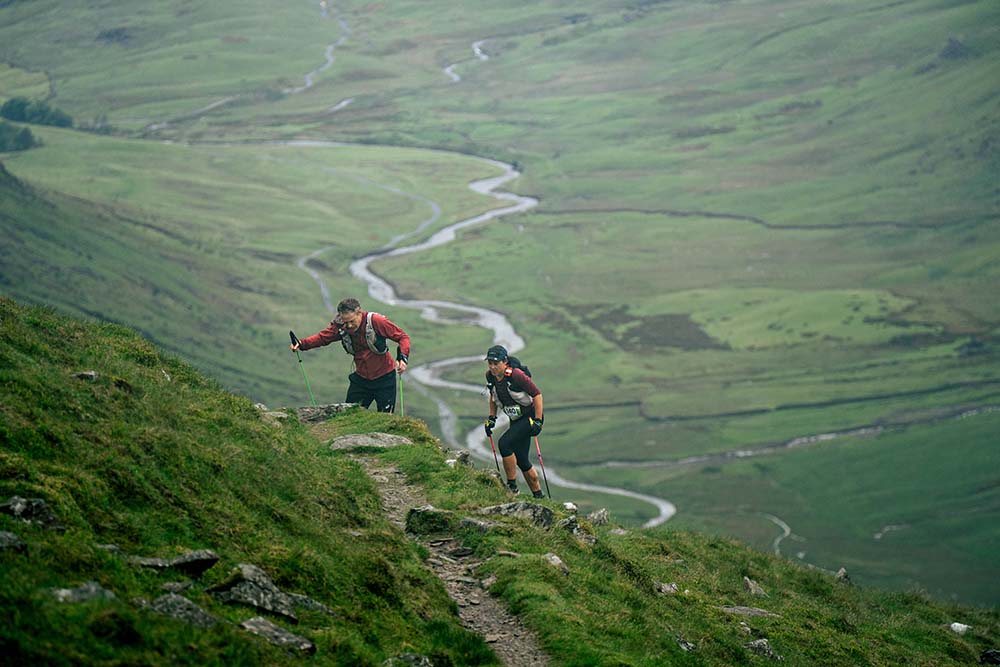
Skyrunning routes are designed to include significant elevation gain, often taking the most direct line to the summit regardless of terrain. A head for heights certainly helps, although you’ll likely find that regular exposure gradually builds confidence. As with trail running, embracing the power hike is essential.
Since 2008, the International Skyrunning Federation (ISF) has offered a ranking system and championship races, but you don’t need to be a pro to take part in one of the 2,000 races worldwide. The official classification by the ISF is “running in the mountains above 2,000m altitude where the climbing difficulty does not exceed II° grade and the incline is over 30%.”
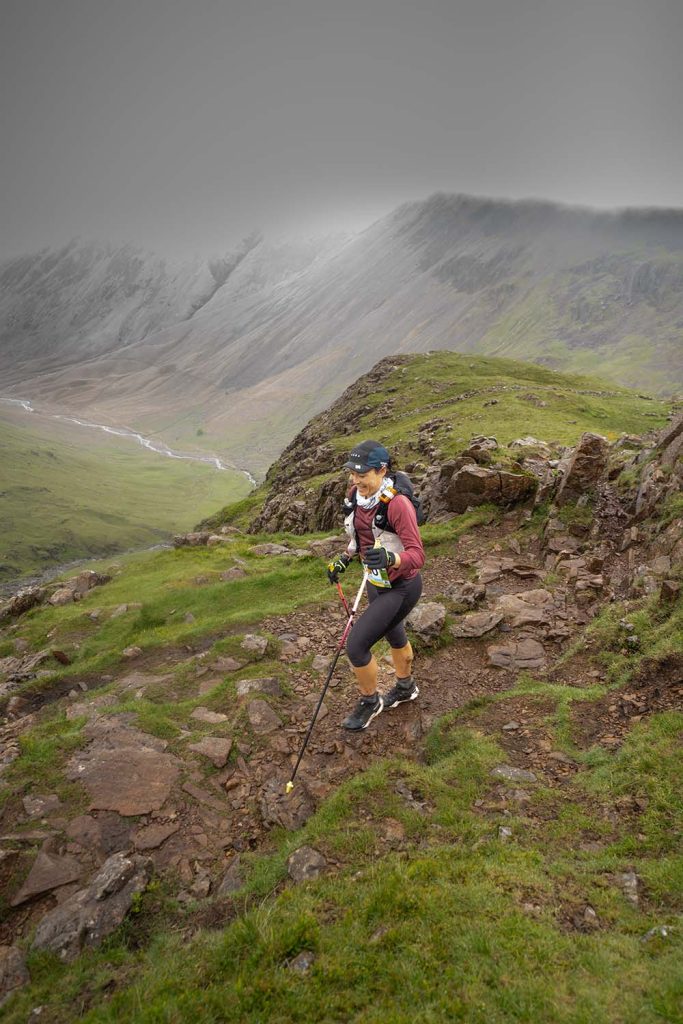
Most races offer a range of distances with different degrees of technicality, making them more inclusive – especially with the support of the race safety team. Globally there are certified Skysnow, Vertical, Stairclimbing, Sky and Sky Ultra events.
Fell running vs sky running: what’s the difference?
Good question. We have a long history of fell running here in the UK and most runners will have heard of it. Both are similar when it comes to terrain, with the Lakes, Scotland and Snowdonia being our top spots.
The main difference comes down to routes and navigation. A skyrunning route typically follows a steep, direct line up and over the mountains and is usually marked with flags that runners must follow. In British fell running, you choose your own way. How you reach each checkpoint, usually a mountain summit, is completely up to you – path or no path. When it comes to navigation, skyrunning events typically provide a GPX file of the course along with route markings. In fell running, GPX navigation and the use of digital mapping is not allowed, and you’ll need to rely on an old school map and compass if you lose your way.
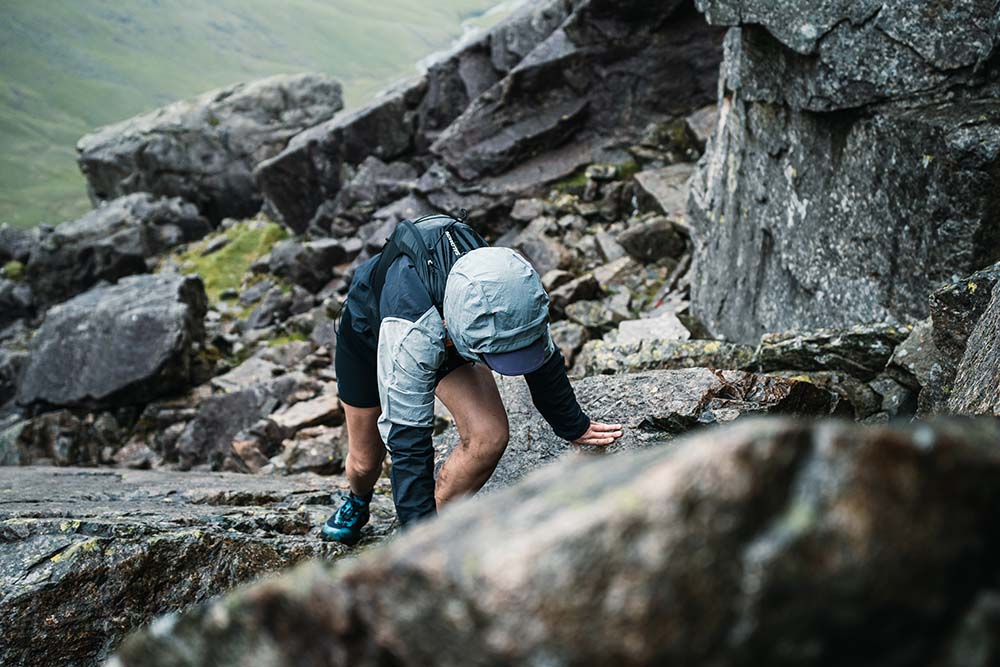
There are other differences too. Fell running encapsulates low-key, British running in its rawest form. You’ll find fell runners without poles or tonnes of gear, little in the way of technology and events are low cost and local. Your low-cost entry fee may even include a pie and pint at the local pub. You’ll make your way across peatland and bogs as well as mountain summits. Skyrunning usually takes place above the tree line. You’ll run down scree, over boulder fields and jagged rocks. Sky runners will have more gear including poles, gloves and GPX watches.
Skyrunning 101
If the thought of exposed ridgelines, sharp and fast descents and breath-taking views is for you, then you should absolutely step out of your comfort zone and take part in a sky running event. But, before you dip your toe into the world of skyrunning, there are a few things to help you get the very best out of the experience.
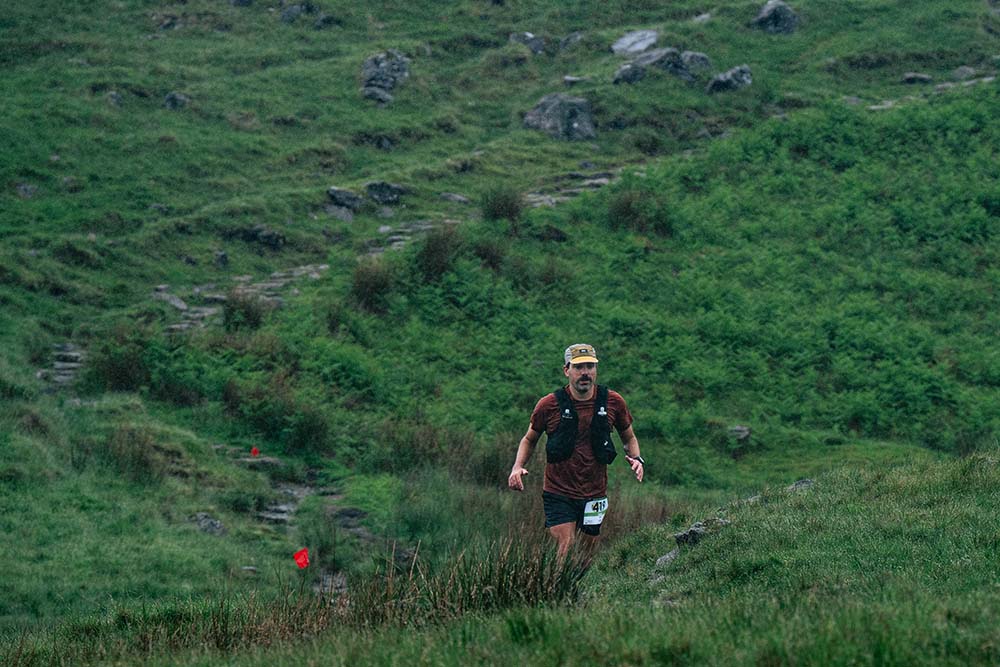
Embrace the power hike
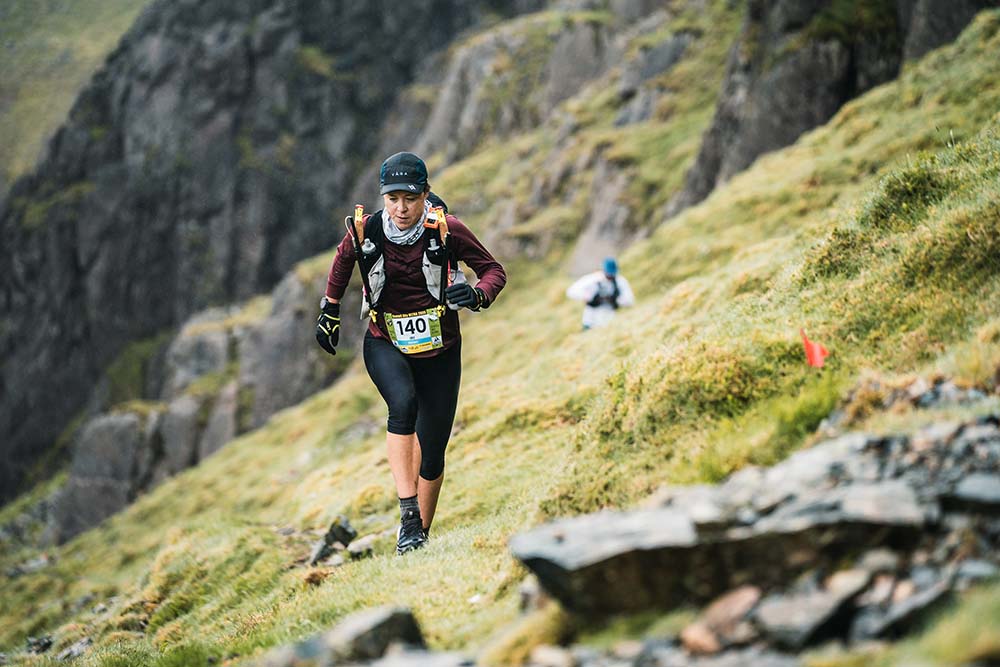
Let’s face it, most of us can’t run up a mountain, especially on rugged trails. So don’t be surprised if you find yourself hiking more than usual when taking on a sky running event. The key to success, or at least making the cut-offs, is to walk with purpose. Whether you’re loyal to your poles or prefer the hands-on thighs technique, it’s important you keep moving. There’s a huge difference between dawdling your way to the summit and walking with purpose – you’ll often find the latter just as fast as running. Never underestimate the power of hiking – it saves energy and uses different muscles – and if you can, practice it as part of your training. It’s a great way to add mileage while keeping tabs on the impact and fatigue that comes with running.
Building stronger legs
Having a solid cardio base is vital as a runner but strength can be equally as important when it comes to mountain running. As mentioned, there will be a fair bit of uphill power hiking, so you’ll want to bullet proof your legs to handle that. Building stronger legs will help make climbing feel less of a slog while reducing injury risk both on the mountain and after you’ve finished. There are a range of floor exercises and machines at the gym, but leg work can also be done in your own home. Starting with your own bodyweight and progressing to dumbbells you can try these exercises at home to build strength in your legs:
- Romanian deadlifts
- Hip thrusts or glute bridges
- Calf raises on the stairs
- Bulgarian split squats
And if finding time for this in your busy schedule is too much, set yourself some day-to-day rules like taking the stairs whenever possible and cycling to the supermarket. You can also do some of the more basic exercises, like calf raises, while you clean your teeth. This way it becomes part of your routine and more likely to stick.
Moving over technical terrain
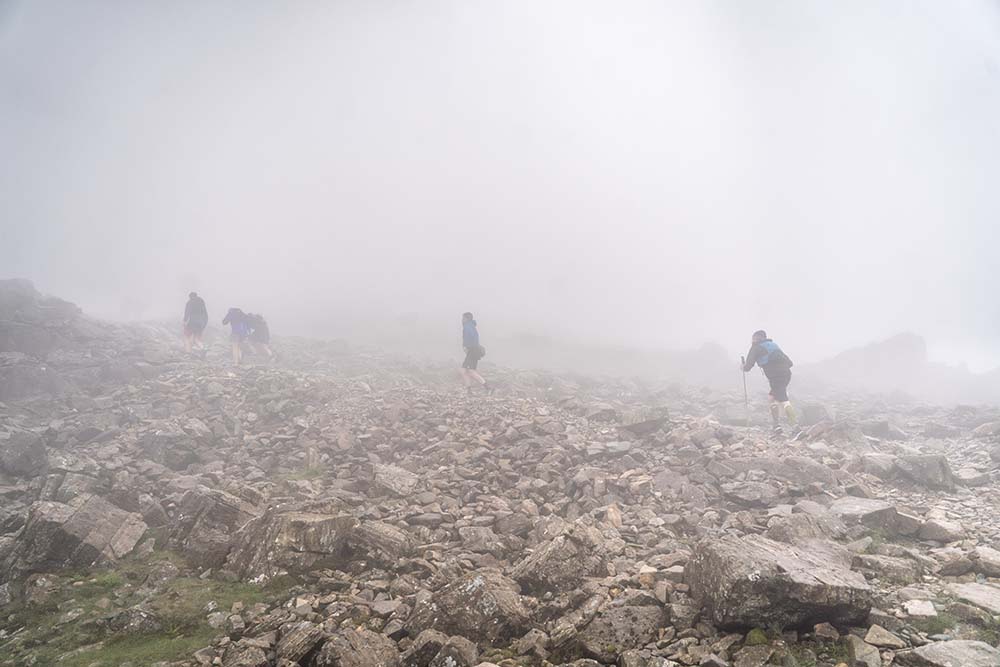
Moving efficiently over technical terrain is a skill that needs practice. Running 30km in a sky running event is not the same as running 30km on rolling hills. You’ll be met with loose scree, boulder fields, sharp rocks and drops you’ll need to lower yourself down.
The only way to get used to this is to take a trip to the mountains and surround yourself with similar terrain. Even if you don’t live nearby, a weekend or two in the mountains will give you the confidence you need to take on your first sky running event.
If you’ve experienced what it’s like underfoot and get a good idea of how fast you can move over these types of trails – and whether you can make the cut offs – you’ll feel far better prepared. Attempting this alone can be nerve-racking but there are several mountain running courses and recce days that offer a chance to learn new skills, gain confidence and meet like-minded people.
Learn to love exposure
When it comes to downwards views and gnarly heights, Crib Goch must be one of the UK’s best. But not everyone has a love of exposed ridges, and it can be a real barrier for some. Like with any kind of fear, gradual exposure is one of the most effective ways to become more comfortable with heights.
Start with small steps, like taking the steepest path up your nearest hill or spending time on slightly more exposed sections of trail. It’s an uncomfortable feeling but with a bit of practice it will become less of a big deal. Whenever we step outside of our comfort zone, however we do it, it always takes a bit of practice before we start feeling comfortable.
Finding your first sky event
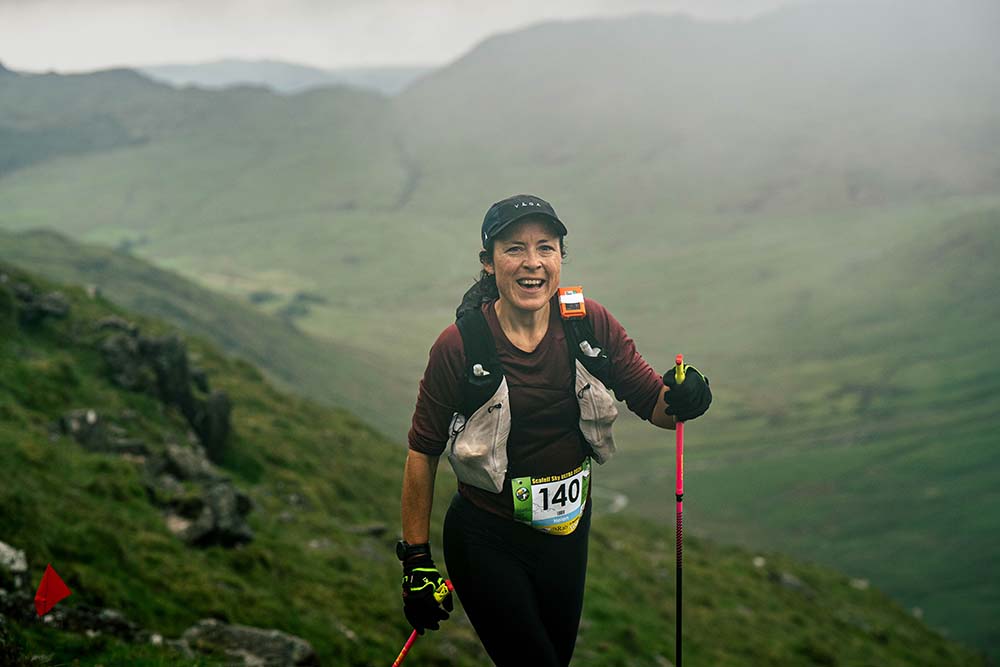
Skyrunning UK is a great place to start, with events ranging from short vertical races to demanding ultra-distance challenges. The Lake District Sky Trails series is a personal favourite, taking in the very best of the Lake District and providing an incredible race day atmosphere. Courses are fully marked and mountain support is second to none. Each event offers a range of distances for different abilities ranging from a 2.4km uphill Vertical race to a 65km Sky Ultra. Some of the shorter races like the Great Langdale 21 and Place Fell 15 are not classified as sky races but offer a good introduction into the world of skyrunning.
By OS Champion Helen Newman. Photos from the Scafell Sky Ultra 2026.