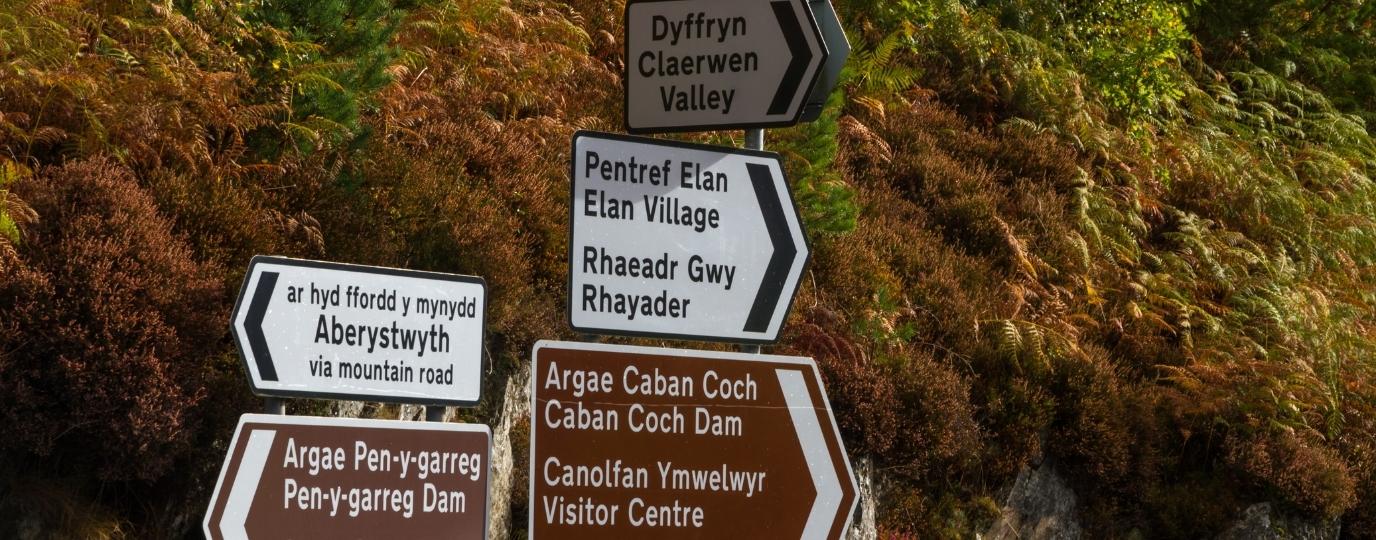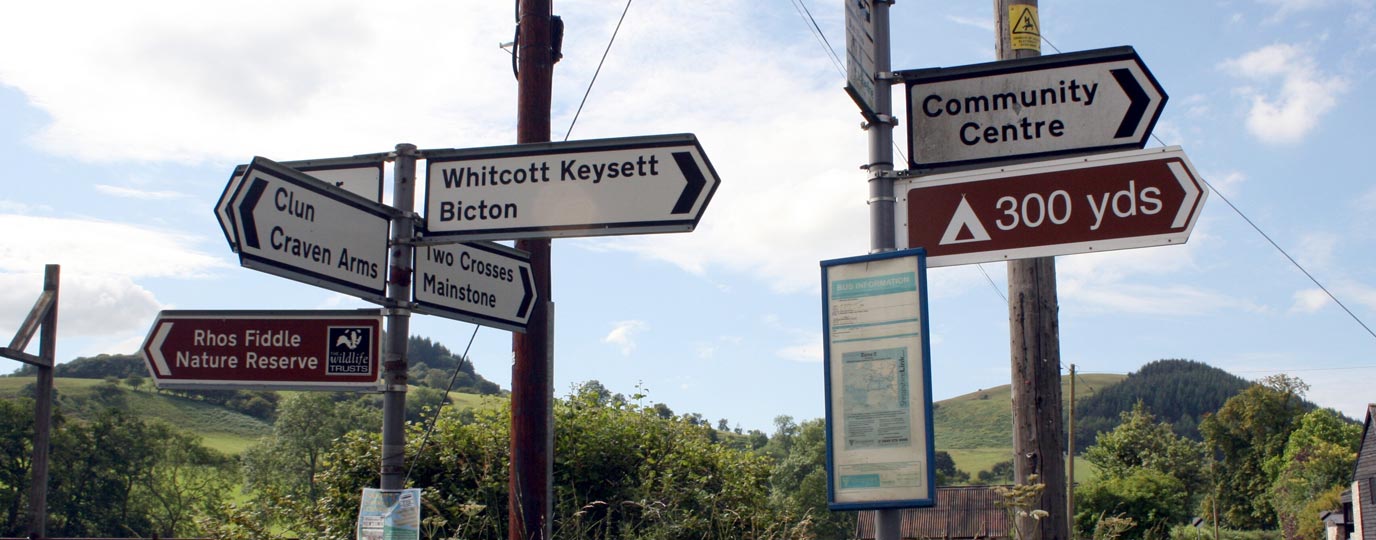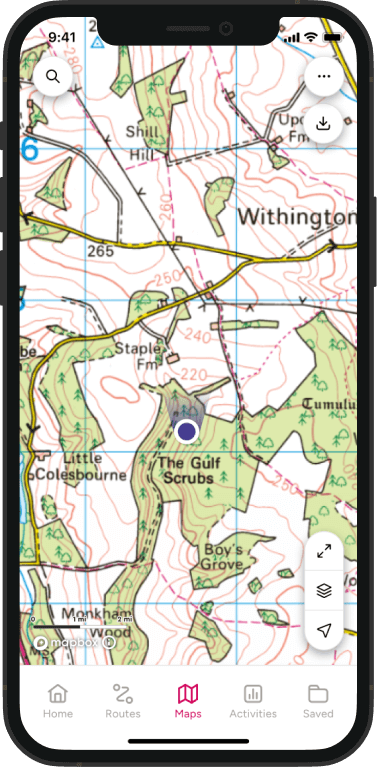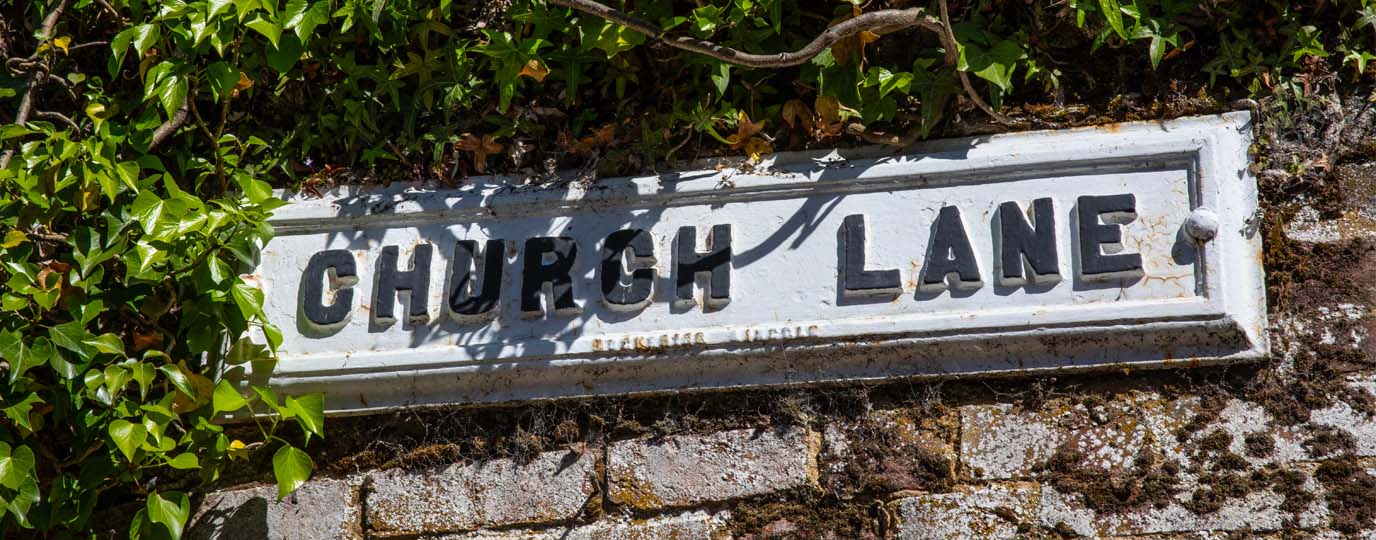
Road, Lane, Street… we’ve all seen these road names on maps and signposts, but have you ever wondered where they come from, or what the difference is?
Here’s a rundown on some of the common road names you will see, and thier origins.
Road
From the Old English rād (“a ride” or “journey on horseback”). Usually a main route connecting places, and will often be named after the destination i.e. London Road.
Street
From the Latin strata (or “paved road”). Typically a main thoroughfare, generally in a town or city, from a time when only important and well-used roads were paved. Some indeed date back to Roman times.
Lane
From the Old English “lanu”, which was a narrow path or track between hedges. You’ll most often see this in the countryside (or places that were in the country before urbanisation). Lanes don’t necessarily connect places as they may have formed just for field or farm access.
Way
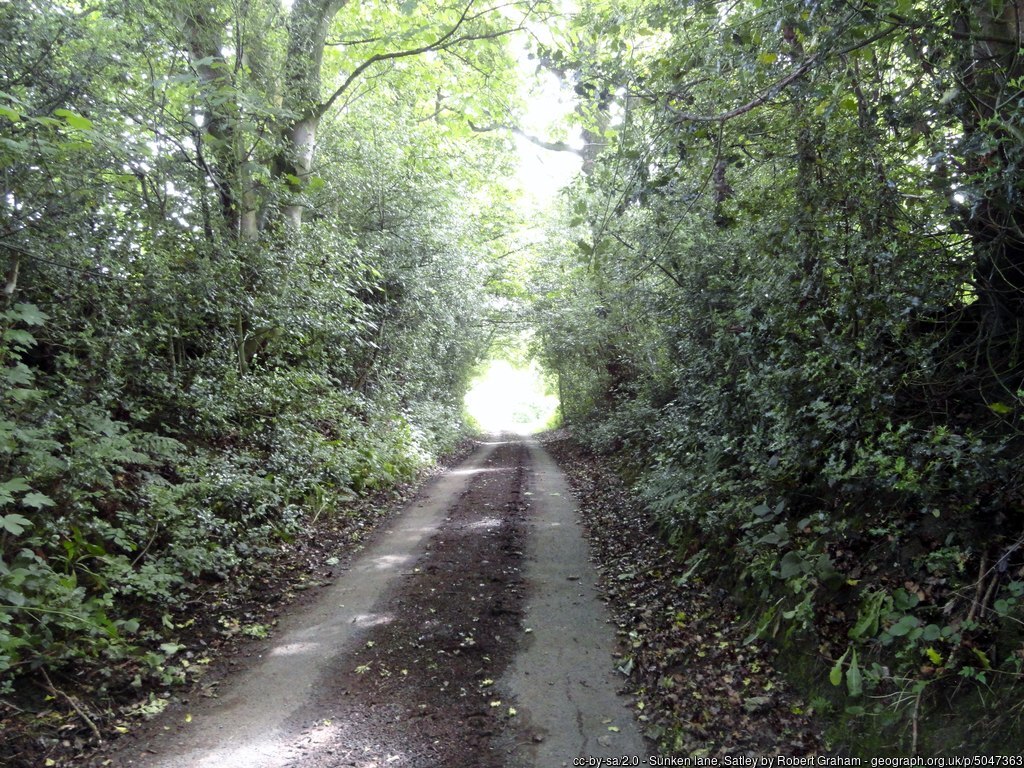
From Old English “weg” meaning “path” or “route”. Similar to road, it’s usually used for roads connecting places. ‘Ways’ may have been converted to a road for vehicles, or remain as a footpath and can be among the older paths in continuous use, such as the Ridgeway in Wiltshire, thought to date back at least 5000 years. You will often find Rights of Way still on them.
Avenue
From the French word, an Avenue is a tree-lined road, normally urban. They started appearing as roads up to grand houses in the 17th century, but in 1870s started to appear in cities as wide, leafy roads generally in the more expensive parts of London and Hull.
Drive
A Drive was originally a route animals were driven to market, this only really started appearing in our towns and cities relatively recently. Very few Drives will be on old routes, typically being new build estates.
Close
From the Latin clausum (“closed place”), this means a private or dead end road, also known by the French cul-de-sac. Originally used in medieval times to indicate a private road, often on church grounds, it soon came to mean any dead end path or road.
Crescent
From the Latin crescere (“crescent moon shaped”), it’s a curved or semi-circular road, usually one that branches off a main road and then re-joins. Most of these started appearing in the 18th century with planned urban expansion.
Terrace, Row
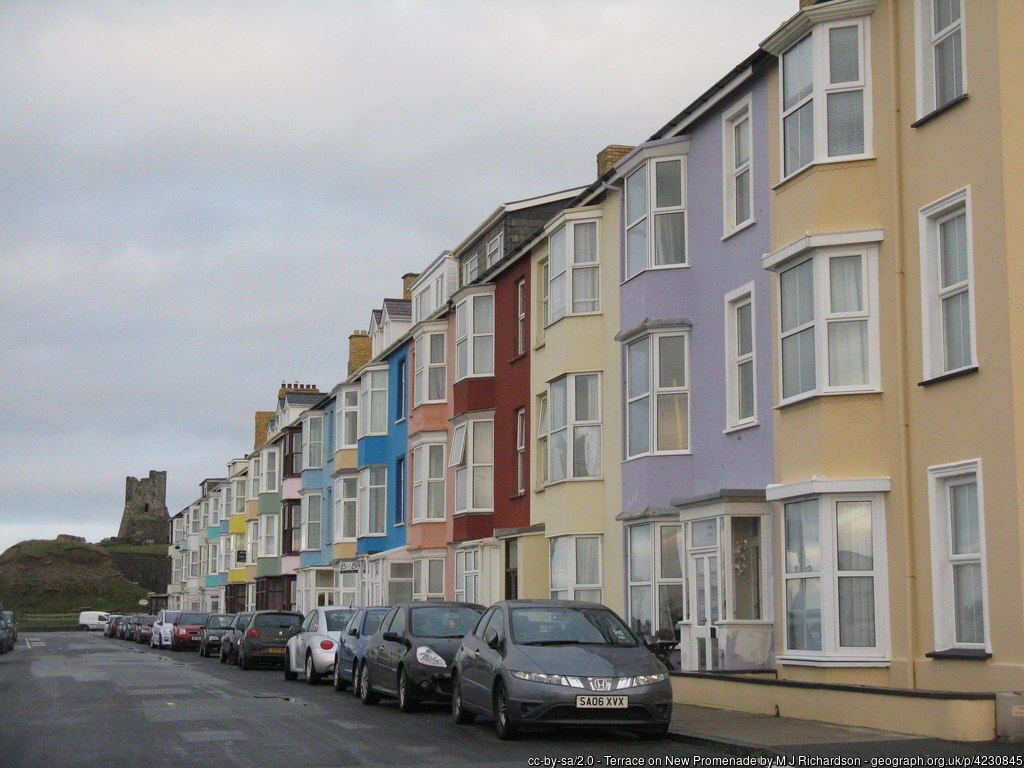
From the French “terrasse” meaning “row” and related to the bank of earth used for growing grapes, this designates a row of identical houses. These appeared with industrialisation when large numbers of houses were needed for workers close to the new factories. In some places the terraced housing is gone, but the road name remains.
Place, Square
From the French “place” meaning “square” or “open space”, this is again a more modern term used in (relatively) new build estates, even ones that are not square. You do also occasionally see use of anglicised “Square” in road names, sometime associated with old market squares.
Alley
From the Old French word “alee” , taken from the verb meaning “to go”. First used in the 1300s to describe a specific pathway, corridor, or walkway in a garden. As cities grew and buildings became more densely packed, the term shifted to describe the narrow passageways between and behind buildings, sometimes evolving again into roads.
Path
Nowadays, road naming conventions mean a new road will never be called “path” to prevent confusion, but there are still some roads that will have followed old footpaths that still have this name.
Grove, Gardens, Dene, Copse, Spinney
Local geography based names indicating there used to be a woods in the area.
Brook, Bank, Beck
Local geography based names indicating there used to be a river or stream in the area.
Vale, Dale, Hill, Rise, Glen (Scotland), Side
Indicate road in or along a valley or up a hill. Confusingly, some might just have a view of a local hill.
Mead, Meadow, Ley, Leigh
Indicates a meadow or grassland, usually former pasture land.
Park, Chase
Usually indicates a former private estate gardens or hunting ground
Of course, more recently you will find councils and developers will pick names they think are attractive or will sell well whatever the local history and geography, but you can sometimes still see the origins of a place based on the types of road names that appear, especially in older parts of our towns and cities.
Bonus: How do councils choose new road names?
I checked with Litchfield District Council on how names for new roads are chosen, and this is what they said:
“Where possible names are chosen to reflect the history or geography of the area.
In addition:
- Names cannot be duplicated in the district
- Names of living people are not normally allowed
- Names that could be seen as advertising are not allowed
- Suggested names need to be sufficiently unique to avoid confusion or misunderstanding
- Names that could be considered offensive will not be accepted
We encourage developers to suggest suitable names when they apply to us and then work with the local parish council to choose a name for any new roads.”