Progressing to lead climbing and belaying
If you’re still fairly new to climbing but feel you’ve got your head around the basics – key movement skills, tying in and top-rope belaying – this post will hopefully give you a few ideas on how to step things up a level.
In the first post of this rock climbing for women series, I was talking about discovering climbing for the first time and the different ways to get more involved and make it a regular part of your life. This time, I want to share some thoughts on transitioning to lead climbing and – arguably the more significant shift – lead belaying, as you progress towards becoming more independent.
Once you’ve learned the foundational skills that allow you to climb and belay competently on a top-rope, you’ll probably start looking for some regular climbing buddies so you can keep building on that knowledge. It can feel awkward, initially, to break into an unfamiliar community, but it’s worth persevering because once you’re known for being keen and reliable, people will usually want to meet up with you more often.
When I first started climbing in 2019, I didn’t know anyone else who climbed, so it took a little trial and error to make enough friends whose schedules and personalities aligned with mine so that I could establish a routine. Some of my early climbing partners were friends I’d made through the Thursday night women’s social at my local wall, and others were people I’d randomly got chatting to or had met through my growing circle of friends. One of them was a trainee instructor, and she and I started a WhatsApp group for women who wanted to grow their network of belay buddies, so that we could arrange climbing sessions and get as much wall-time as possible.
One of the many great things about climbing as a sport is that you don’t need to be able to climb at the same level as your partner to have a brilliant session; if you’re new and climbing routes graded in the 4-5 range, you can still belay an experienced climber who’s focusing on 6s and 7s, and vice versa. The only real distinction is between those who are only able to belay someone on a top-rope (technically a bottom-rope but that term is rarely used for indoor climbing) and those who can also belay a lead climber, which is a bit more involved and carries a higher risk of injury if done incorrectly. For this reason, children and novices need to spend a good while getting comfortable with top-rope belaying before progressing to lead belaying.
Learning this skill opens up a lot of additional options for you, because once you can belay a lead climber, they can set up a top-rope for you to climb the same line (which will likely have several routes of varying grades). Climbing walls tend to have specific lines or areas that are set aside for lead or top-rope climbing, although sometimes you can do either on the same line. Overhanging sections are almost always for lead climbing only, for safety reasons, so if you want to play on the steeper angled walls but aren’t yet ready to lead those routes, you’ll need someone else to put up a rope first. Additionally, lead belaying is a fundamental skill for outdoor sport and trad climbing, so it really is a crucial step in a climber’s development.
My personal belief is that lead climbing and belaying should ideally be taught by a qualified instructor, to ensure that novices learn the safest, most up-to-date methods from the beginning. There are some subtle technical details involved that can make a huge difference to the safety of both partners, and an instructor has the experience to gauge when someone is ready to belay independently, without another person tailing* the rope.
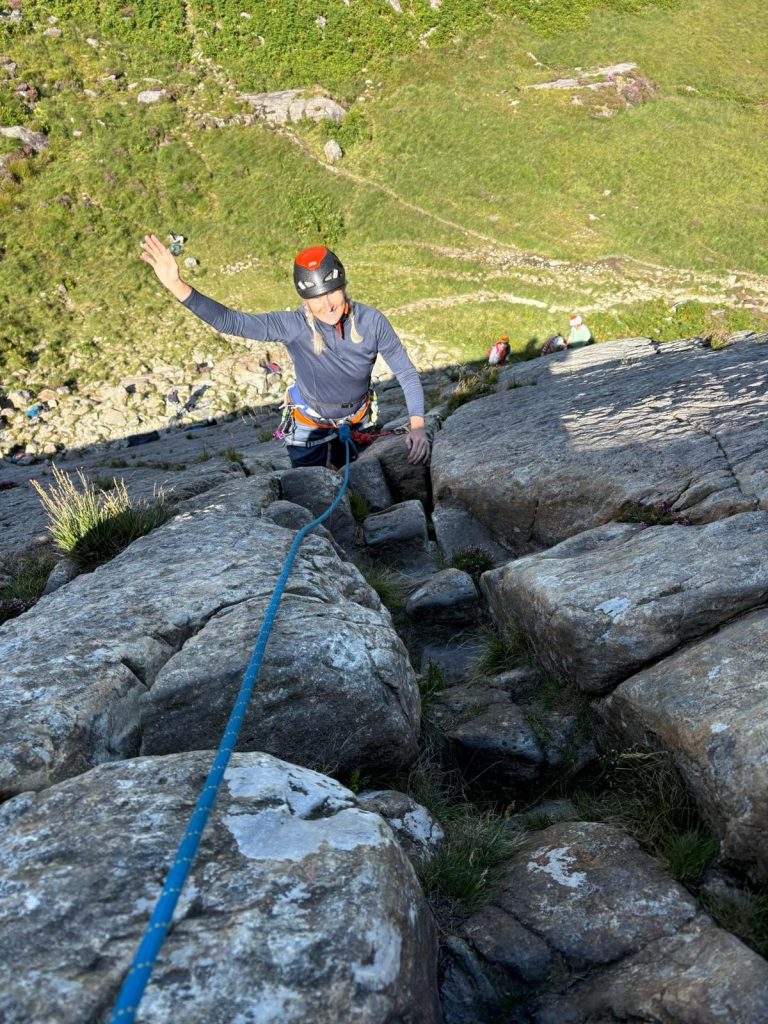
What this translates to, in practical terms, is whether the belayer is capable of safely catching unexpected falls, which can be a very different prospect with lead climbing in comparison to top-roping. If a lead climber falls on a lower section of the wall – with the rope only clipped into one or two quickdraws – a novice can easily be yanked off their feet and/ or lose control of the rope, resulting in potentially serious physical and psychological harm for all concerned. Alternatively, if the climber falls low down and there is too much slack in the system – which could be down to either partner – they could hit the ground and get seriously hurt, or worse.
Don’t get me wrong, I’ve been that person teaching others how to lead climb and belay without fully appreciating the risks. Before training as an instructor, I helped several friends progress from top-roping to leading, which is how I was taught and is also the reason I decided to go down the qualification route. I love passing on knowledge that empowers people to climb, so I’d never condemn anyone for doing the same thing for their friends and family. But I do believe that knowledge needs to be passed on in the safest and most responsible way possible – a way that supports gradual, individualised development, with the risks and responsibilities being clearly communicated and effectively managed so that the process is enjoyable and safe for everyone involved.
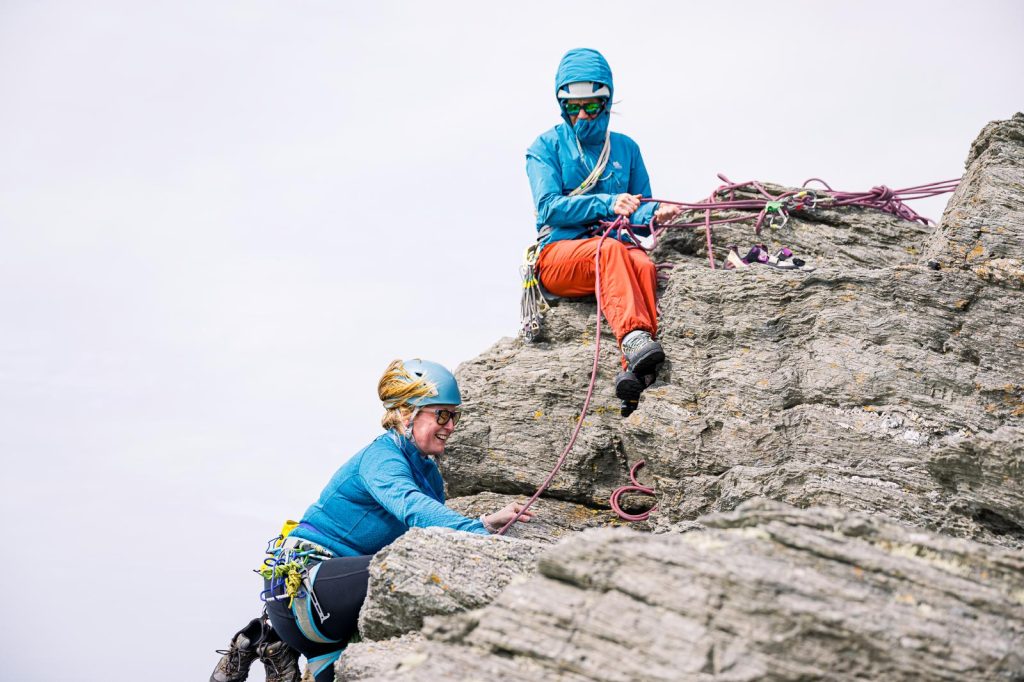
Lead Climbing and Belaying Advice
With that in mind, here are some ideas to help you get started with lead climbing and belaying:
1. Sign up for a learn-to-lead course at your local climbing wall. Depending on the venue, you can either book onto a scheduled course as an individual or you can arrange a session and split the course fee between several people.
2. Take a longer course, like the 5-day Introduction to Rock Climbing course at Plas y Brenin, to learn a wider range of skills and gain more confidence both indoors and outdoors.
3. Chat to some experienced climbers at the wall, to see if they’re willing to tail the rope while you practise lead belaying.
4. Ask some lead climbers if you can have a go at seconding them (following them up a lead route and unclipping the rope from the quickdraws as you go), which will get you thinking more about body positioning and economy of movement.
5. When you’re top-roping, start using a ‘ghost rope’ to clip into the quickdraws as you climb, as practice for when you start leading.
6. Watch the more advanced climbers (especially instructors) lead belaying and see how they manage the rope, communicate with the climber and position themselves in relation to the wall.
7. See if there are some ground-level quickdraws placed somewhere in the climbing wall, so you can practise clipping the rope in – with either hand and from either direction – in one fluid motion. This will make for safer clipping when you’re leading, as you won’t need to fumble around with a load of slack in the system.
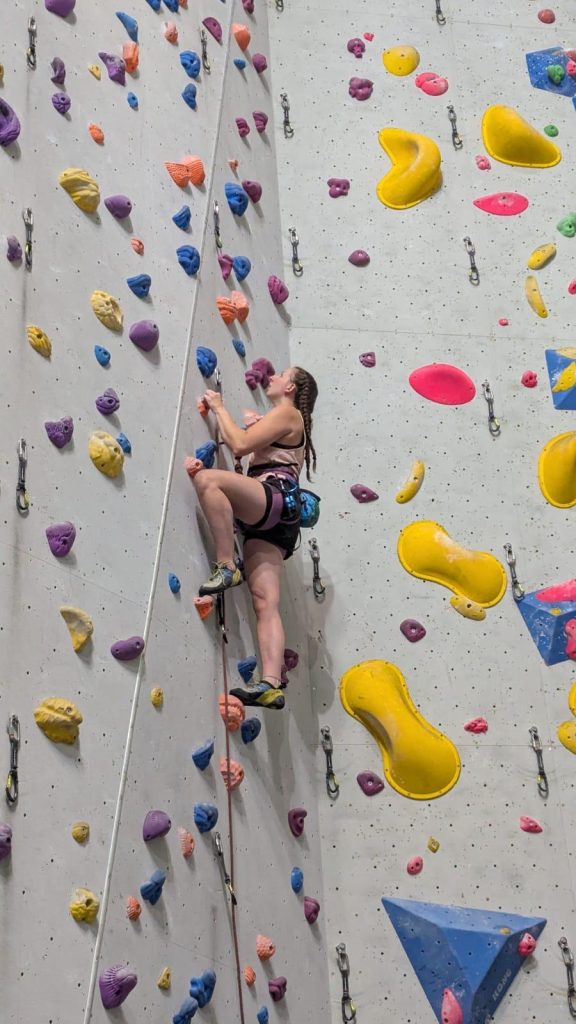
As with other aspects of climbing, learning to lead climb and belay safely is a process. It takes time and lots of practice to be able to do it smoothly and competently, so resist the temptation to rush into it or try and find shortcuts.
Remember that human error is often the cause of climbing-related accidents, and even the most experienced people can have lapses in judgement or concentration, so it’s important to mitigate the risks as much as possible. After all, as a belayer you’re literally holding someone else’s life in your hands.
Avoid these common errors when learning to lead climb and belay
Here are some additional tips to help you avoid some common errors:
– Focus on one thing at a time. When you’re learning to lead, start off with easy routes so you can concentrate on clipping correctly instead of dividing your attention while climbing at your limit.
– Keep it simple. You may have heard of ‘dynamic belaying’ or ‘giving a soft catch’ and even have some idea of what that means, but if you’re just learning to lead belay then don’t over-complicate things. They’re advanced methods and can be dangerous if done incorrectly, so for now just stick to the basics.
– Prioritise safety over socialising. When belaying, it’s really important to avoid distractions, like chatting to other climbers, especially when your partner is still close to the ground. You risk distracting them as well if they know you’re not paying attention, so stay focused on the task at hand.
– Be honest with potential climbing partners about your level of competence. People are generally helpful and supportive if you’re just learning to (lead) climb and belay, but regardless, they won’t trust you if you overstate your skills or experience.
– Ask for what you need. Don’t be afraid to request more or less slack/ beta**/ encouragement, to seek further information or clarification, to rest on the rope, to take time figuring out the moves, to get a second opinion if something doesn’t seem right, or to prioritise fun over progression.
– Be patient. Take the time to get comfortable and confident with each new skill before moving on to the next thing. That way you can relax and enjoy the journey rather than constantly feeling like you’re out of your comfort zone.
– Respect climbing etiquette. When approaching people at the wall to ask if you can join them, it’s more polite to offer to belay someone than to ask them to belay you. Likewise, it’s considered bad manners to start climbing on a route right next to someone who’s already climbing, especially if they’re leading and extra-especially if the two routes overlap. It’s easy enough to ask if they mind, and if they do, just wait your turn or find a different route to climb.
Hopefully some of that is helpful. In the next post, we’ll explore options to get climbing outdoors and progress towards becoming more independent. If you like, go ahead and share any other tips and suggestions from your own experience of learning to lead climb – it’s always fascinating to hear about other people’s climbing journeys.
*tailing means holding onto the brake end of the rope while another person belays, so that you can provide backup if they accidentally let go.
**beta refers to the sequence of moves required to complete a route or section of a route.
Inspired? Join us at SheClimbs in August, or book a course with PYB – book a course
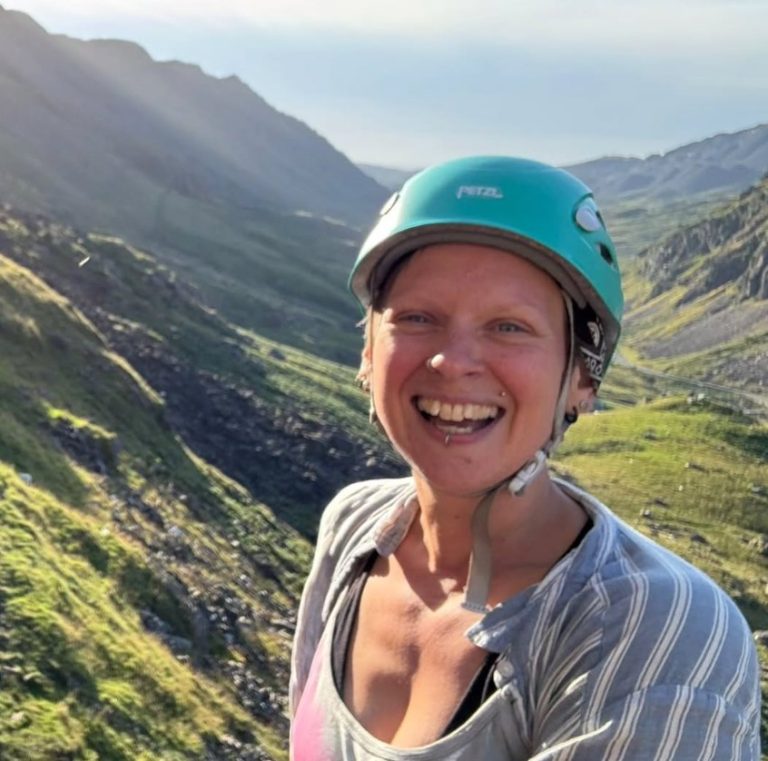
By Rosie James
Rosie James is a climber and writer based in Eryri. She started climbing and mountaineering in her late-thirties, while living in Shropshire, and decided to move to the mountains in 2024. She now works at Plas y Brenin and freelances as a Rock Climbing Instructor, with a passion for helping women and girls discover climbing and other outdoor activities.