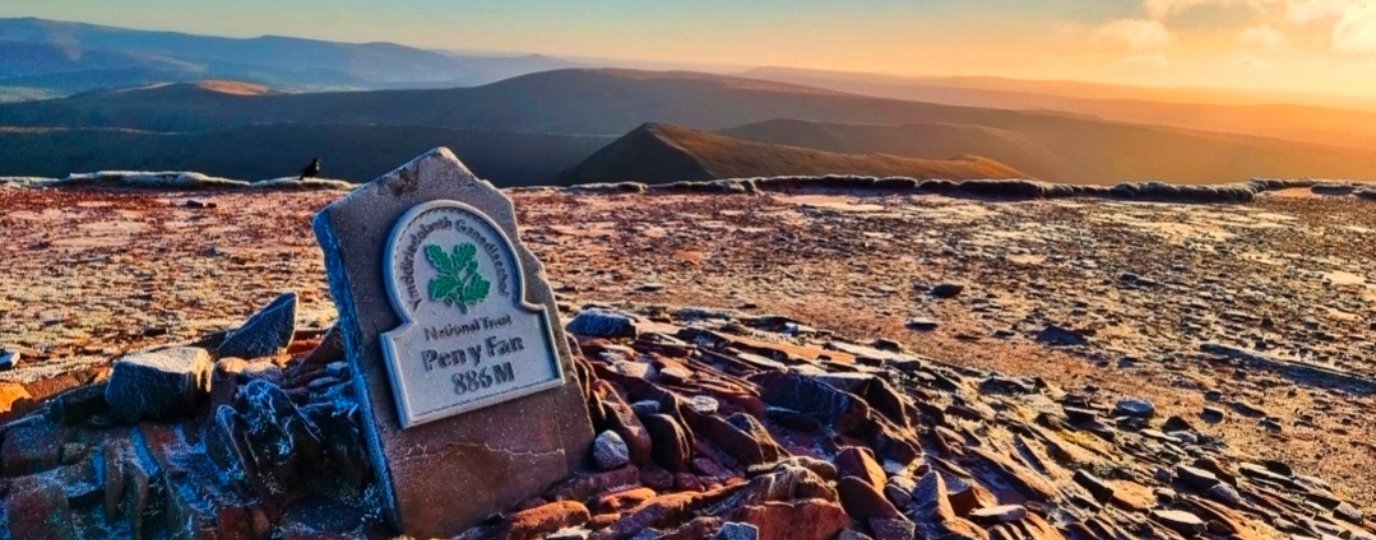
We often take for granted the path that leads us to the summit of Pen y Fan.
But this route requires an enormous amount of work to maintain, carried out by National Trust rangers and, when available, dedicated volunteers.
The path isn’t just there to make the ascent easier, it also protects the mountain’s fragile landscape by keeping walkers on a defined route and helping to limit further erosion.
With visitor numbers continuing to put pressure on the mountain, maintaining this path is becoming an increasing challenge.
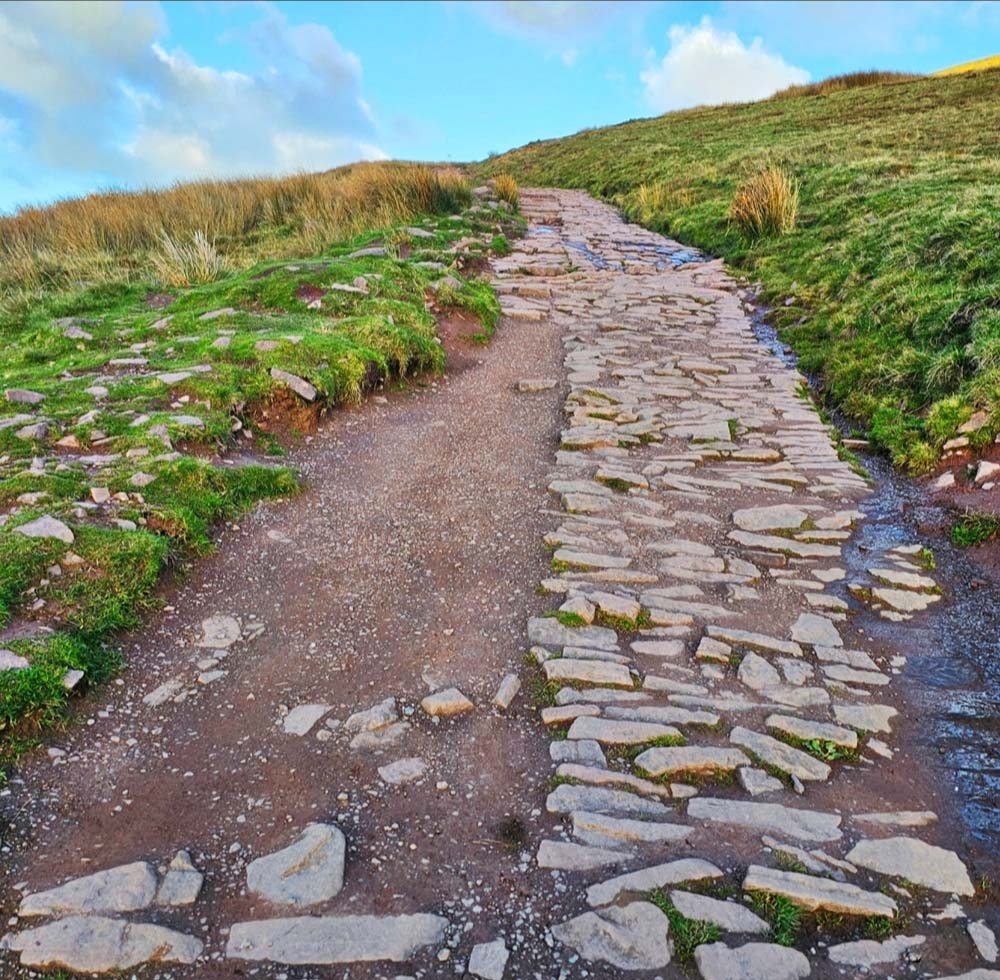
In places, erosion caused by footfall has almost doubled the width of the original path, as walkers spread out onto the surrounding ground.
How does path erosion on mountains happen?
It often starts with something called a desire line. We naturally look for what seems like the easiest route, stepping around a muddy patch or taking a shortcut along the edge. As more walkers follow the same line, a visible track begins to form, encouraging even more people to walk that way. Before long, another path develops, widening the damaged area and increasing erosion.
How do we prevent path erosion?
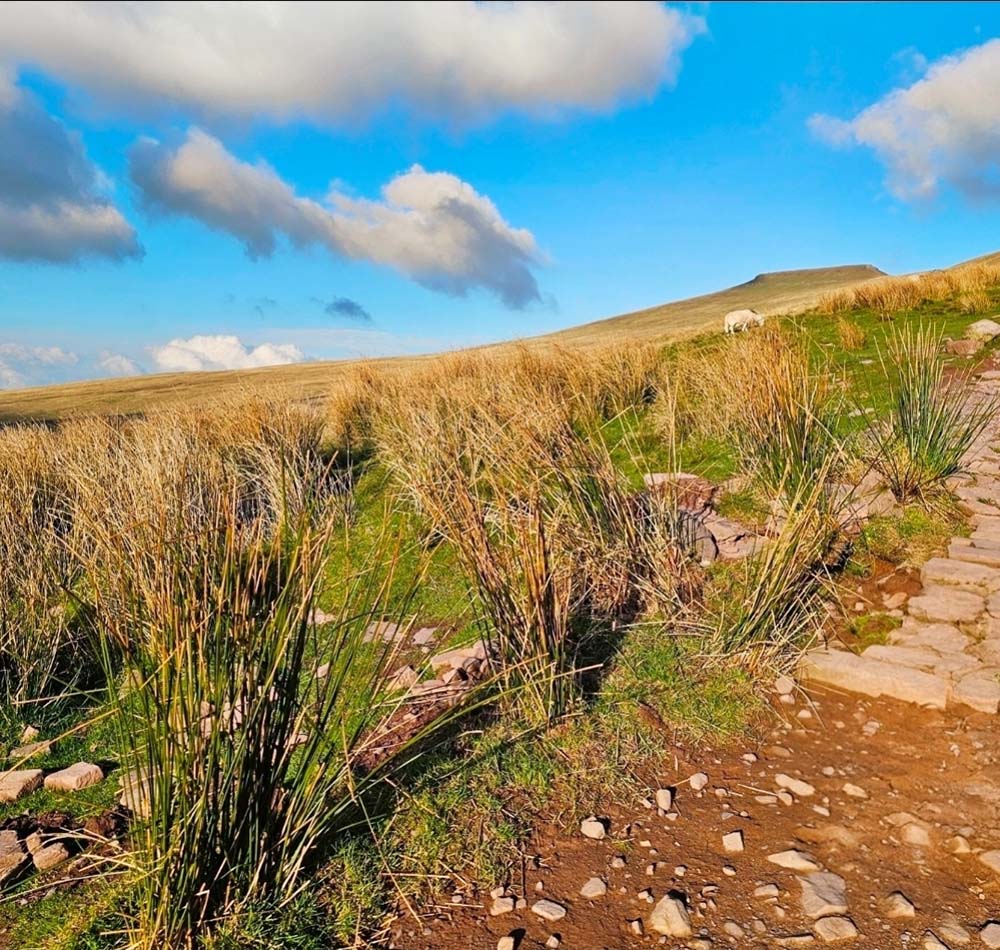
You might notice juncus, a type of rush, planted alongside the path. This acts as a natural deterrent, encouraging walkers to stay on the designated route rather than spreading onto the surrounding ground.
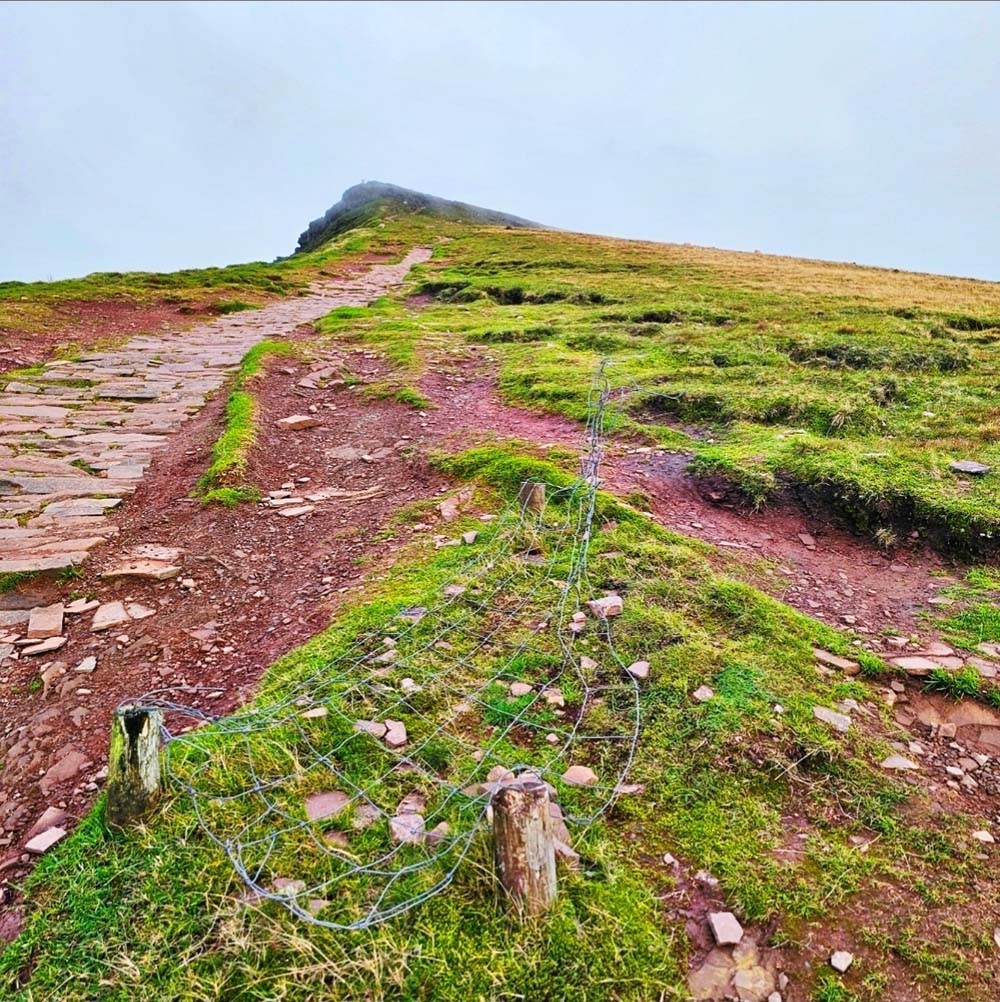
Livestock fencing is also laid flat across areas where desire lines have started to develop. The aim is to discourage people from creating new routes and guide them back onto the main path. Unfortunately, some walkers simply step over the fencing or walk around it, creating yet another track.
Wooden stakes are used in a similar way. These are barriers designed to deter people from leaving the path, not handrails to hold on to.
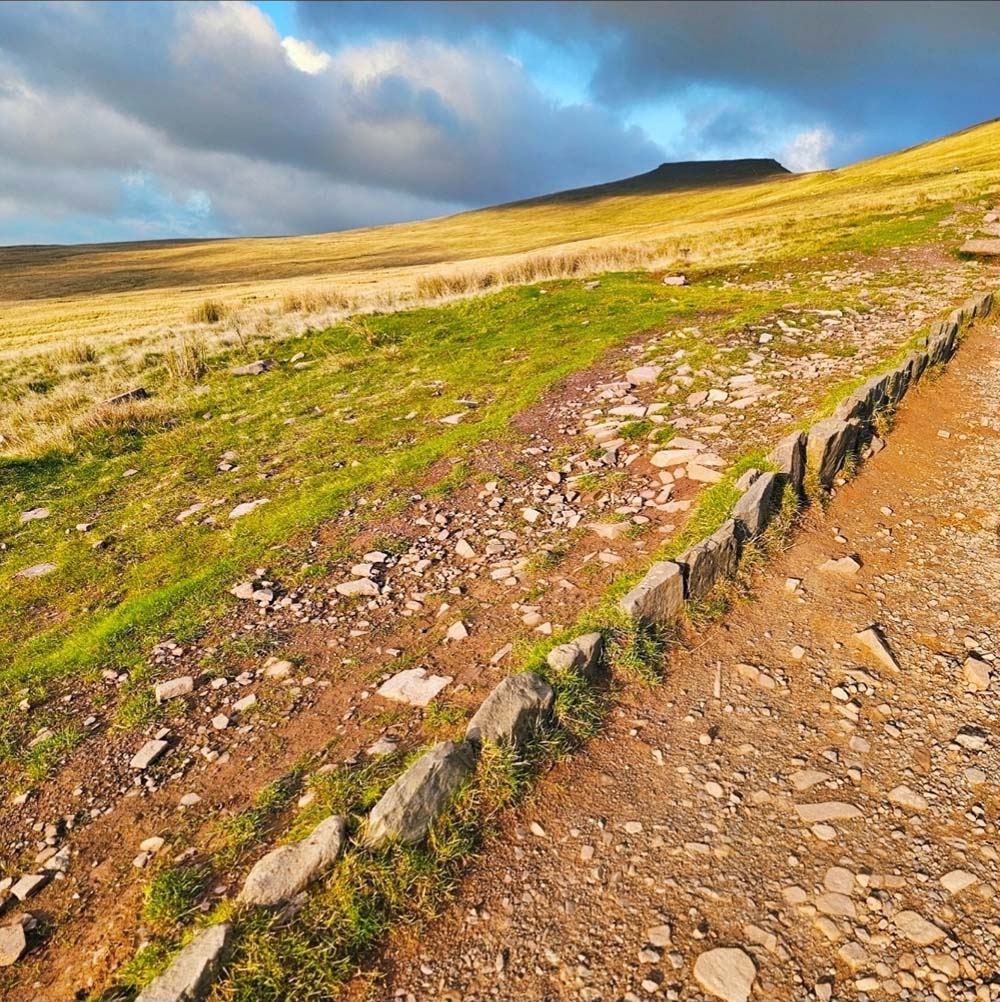
The edges of the path also need regular repair and re-vegetation to prevent erosion from spreading further.
Repairs must respect the natural environment too. Stone is carefully sourced and used in traditional stone-pitching techniques that have been used for centuries.
Large stones are set upright into the ground, with only a small portion visible above the surface. Smaller stones and soil are then tightly packed around them to create a durable, stable walking surface.
Drainage is equally important. There are many drainage ditches along this two-mile route, which help direct water away from the path, reducing water erosion and protecting the ground beneath our feet.
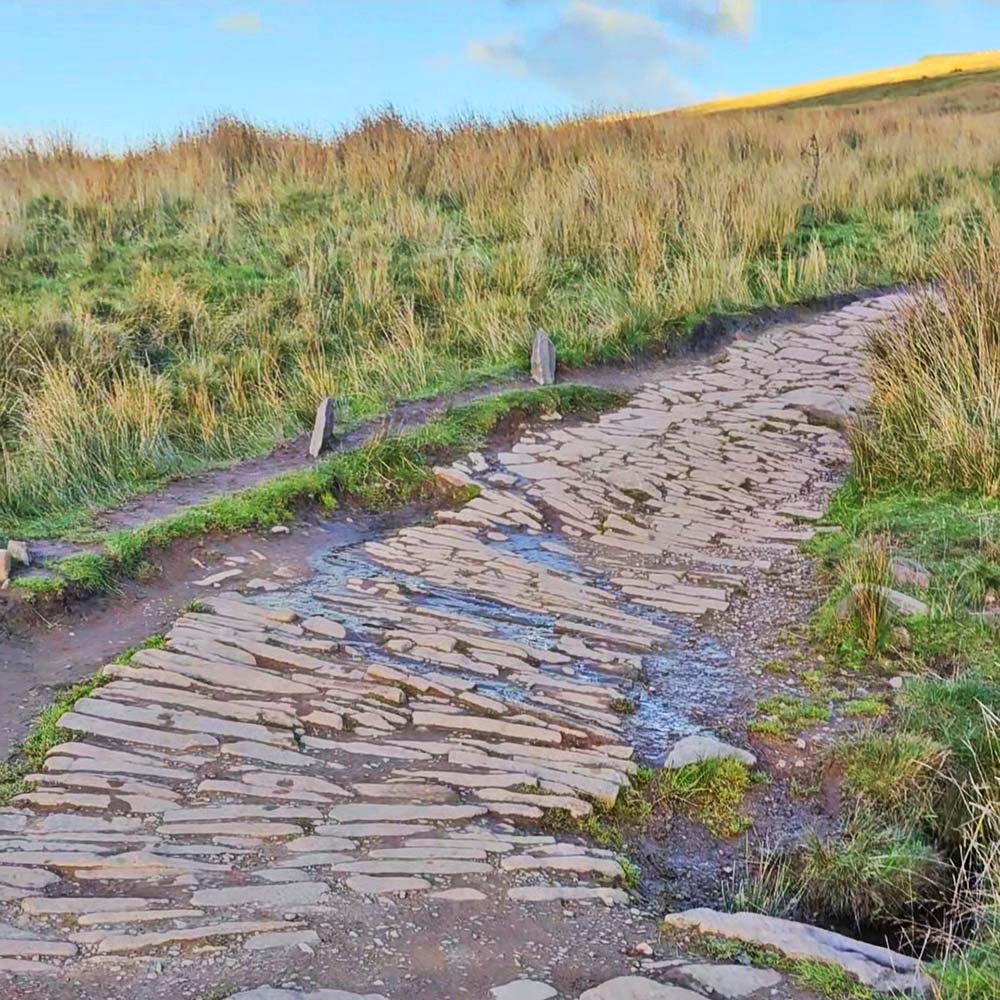
All of this work takes time, skill and ongoing maintenance to keep the route accessible while protecting the landscape around us.
So, next time you walk up Pen y Fan, take a moment to think about the work that goes into maintaining this path.
Stay on the designated route, avoid walking along the edges, and resist the temptation to take shortcuts.
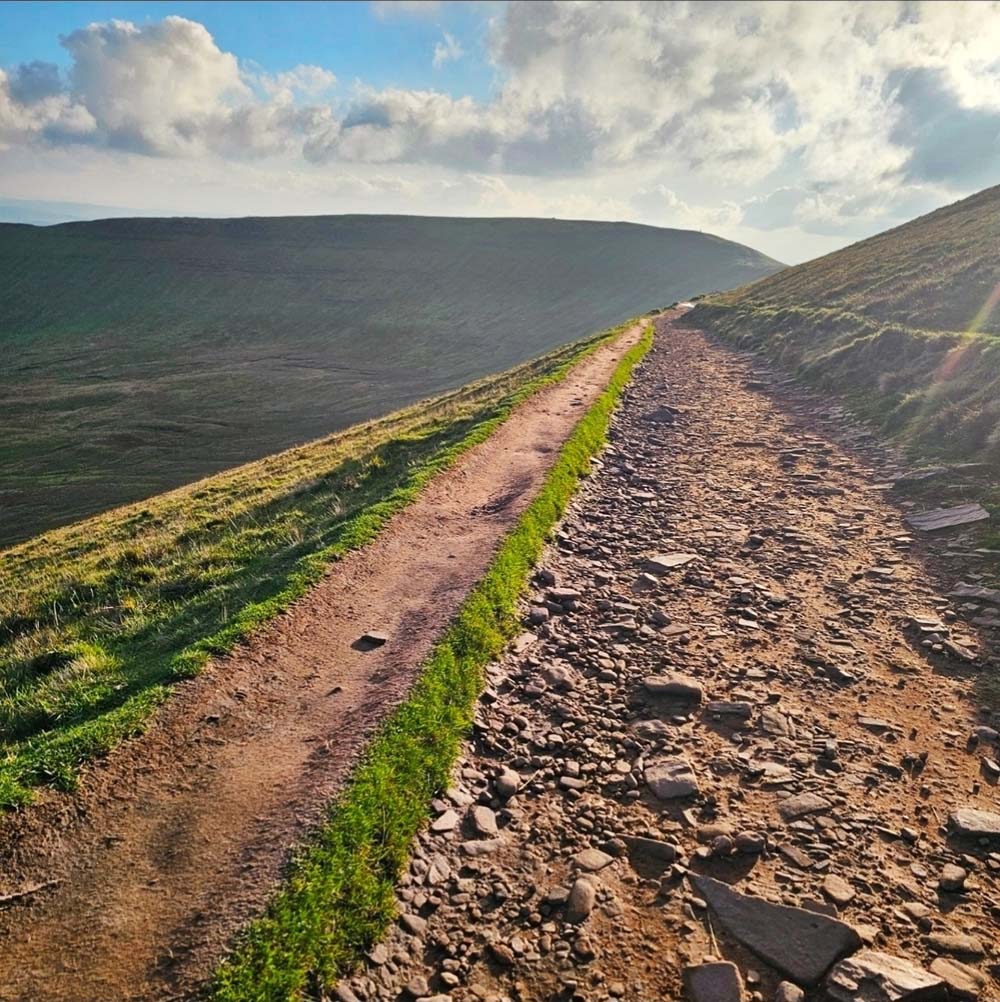
Every step we take makes a difference, and by sticking to the path, we can all help protect this incredible mountain for generations to come.

By Tracy Purnell
Tracy Purnell – OS Champion
Meet OS Champion Tracy Purnell – dog lover, trail runner and Brecon Beacons National Park Ambassador.