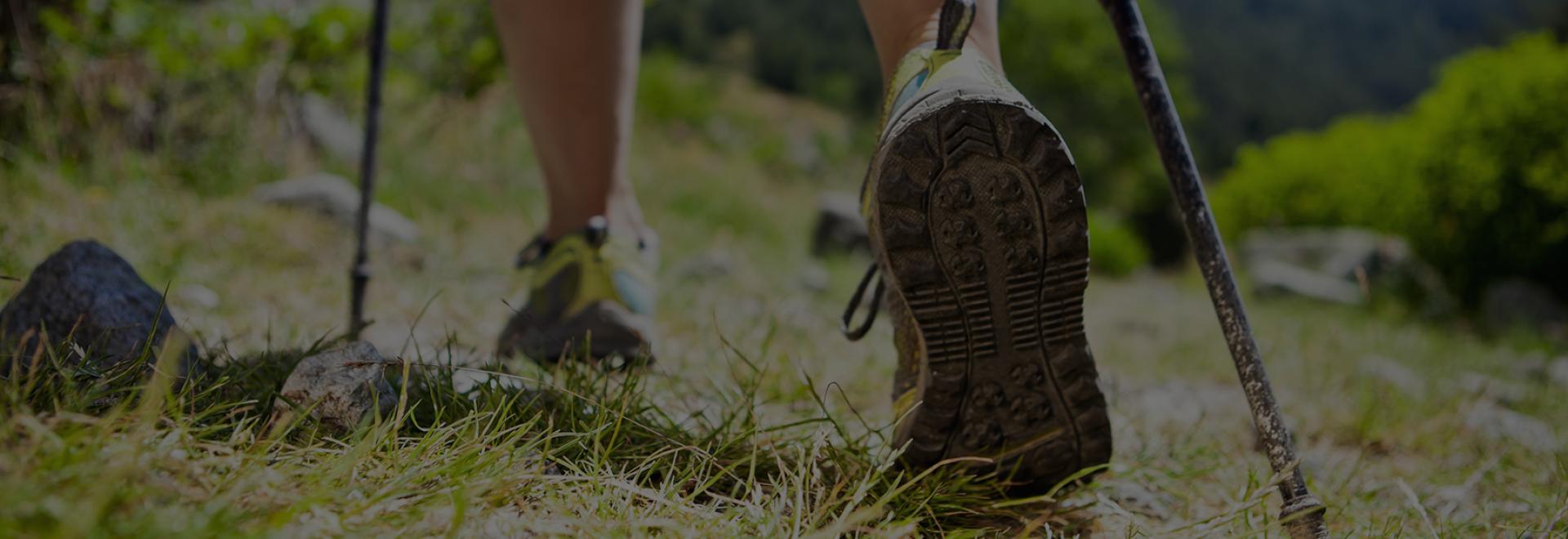
What is Nordic Walking?
Nordic walking is a walking technique that uses specially designed poles to engage your upper body as well as your legs. By planting and pushing through the poles with every stride, you can turn an everyday walk into a full-body workout.
Nordic walkers use the poles on every stride, planting and pushing off with reasonable force in order to work out their whole body. As this involves exercising the arms and not just legs, it can provide the kind of all-over workout that traditional walking simply could not achieve, while still remaining accessible to a wide range of ages and fitness levels.
Originally developed as an off-season training method for cross-country skiers, Nordic walking has grown into a popular activity in its own right. It’s enjoyed by people of all ages and abilities, from those looking to improve their fitness to walkers wanting to explore further and get more from their time outdoors.
Whether you’re looking to boost your fitness, discover new walking routes or simply spend more time outdoors, Nordic walking offers a sociable and enjoyable way to stay active.
So, what are the benefits of Nordic walking, and how can you get started?
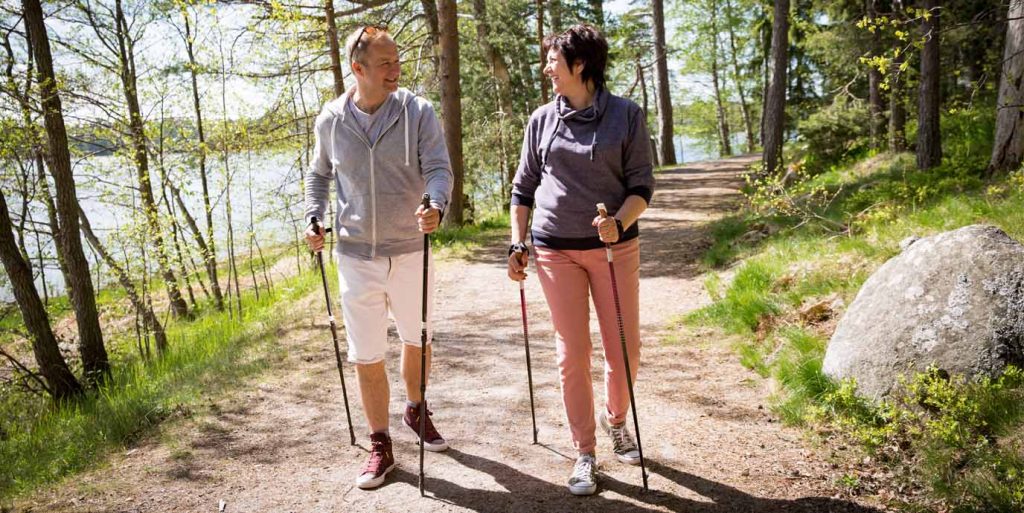
What are the benefits of Nordic Walking?
A number of studies have found that Nordic walking can bring about a 46 per cent increase in energy consumption compared to a more normal walk. So even if it may look as though it’s walking with an aid – and therefore being made easier – the poles actually provide a much better, more intensive workout.
The muscle groups worked by Nordic walking include most of those in the arms and upper torso, including the biceps, triceps, lats and pectorals. It also works out ‘core’ muscles and initiates a significant rise in average heart rate. On top of all this, some 90 per cent of the body’s skeletal muscles are used during Nordic walking, whilst pressure on the joints (especially the knees) is greatly reduced.
If these benefits weren’t enough, the rhythmic, gentle motion of Nordic walking is also beneficial to those suffering muscular conditions through their back and neck – such as torticollis. Furthermore, it can help walkers cover more distance, as the motion encourages people to speed up if they want to inject a little pace.
EXPLORE THE
OS Shop
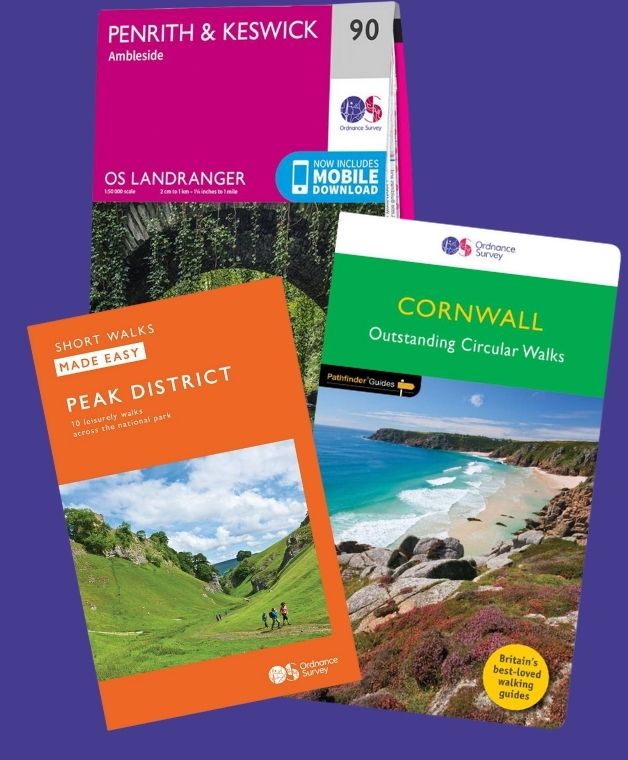
We are with you every step of the way. Shop our trusted walking and hiking maps and guidebooks so you can explore the outdoors with confidence.
Go to the shopHow do I start Nordic Walking?
Getting started with Nordic walking is surprisingly simple. Once you have a pair of Nordic walking poles, you can practise almost anywhere, from local parks and woodland trails to countryside footpaths and coastal paths.
If you’re new to Nordic walking, it’s worth learning the basic technique before heading out on longer routes. The aim is to use the poles to help propel you forwards, engaging your upper body and core while maintaining a natural walking stride.
Nordic walking poles are available at a range of price points, from affordable beginner models to lightweight performance options. While there is an initial investment, a good-quality pair of poles can provide years of use when looked after properly.
Top tip: Don’t confuse Nordic walking poles with trekking poles. Nordic walking poles are designed specifically to help propel you forwards and are used with a different technique.
Top tip
Don’t confuse Nordic walking poles with trekking poles. Nordic walking poles are designed specifically to help propel you forwards and are used with a different technique.
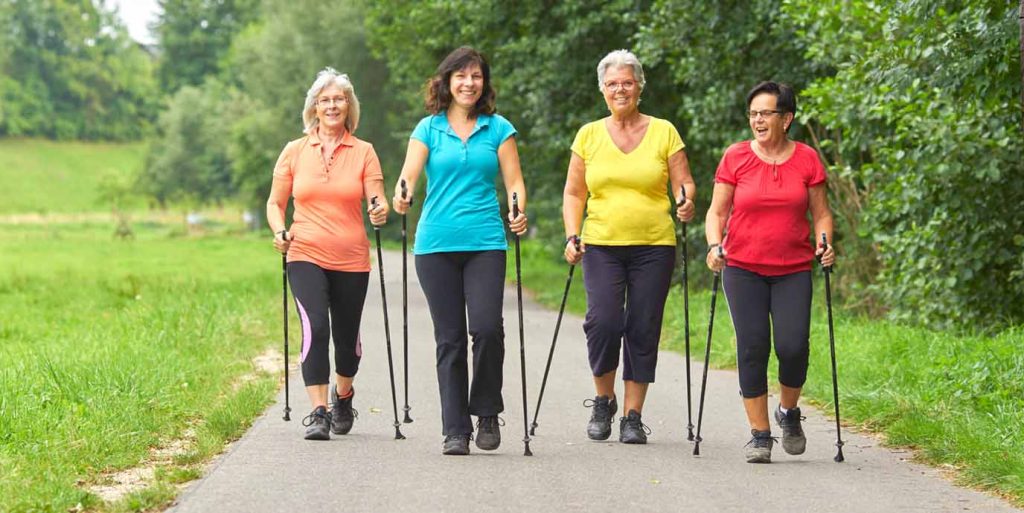
What is a Nordic Walking Pole?
A Nordic walking pole is a specially designed pole used to help propel you forwards while walking. They feature a lightweight shaft and a glove-like strap system that allows you to push through the pole and release your grip naturally as your arm swings behind you. This helps engage the muscles in your arms, shoulders, back and core, turning a regular walk into a full-body workout.
Most Nordic walking poles also come with removable rubber pads for use on hard surfaces such as pavements and roads. Removing the pads exposes a metal tip, which provides extra grip on trails, grass and softer ground.
When used correctly, Nordic walking poles can help improve posture, increase walking efficiency and provide additional stability, making them suitable for walkers of all ages and abilities.
How do I choose the right size Nordic Walking Pole?
Choosing the correct pole length is important for comfort and technique. A pole that’s too long or too short can make Nordic walking less effective and put unnecessary strain on your shoulders or back.
As a general guide, your pole should allow your elbow to sit at roughly a 90-degree angle when the tip of the pole is placed on the ground beside your foot.
A simple way to calculate the right length is:
Your height (cm) × 0.68 = recommended pole length
For example:
| Height | Recommended Pole Length |
| 150-160cm | 100cm |
| 160-170cm | 110cm |
| 170-180cm | 115-120cm |
| 180-190cm | 125cm |
| 190cm+ | 130cm |
If you’re between sizes, beginners may find a slightly shorter pole easier to control while learning the technique. Once you’ve built confidence, you can adjust the length to suit your walking style and the terrain.
Top tip
If you’re between sizes, beginners may find a slightly shorter pole easier to control while learning the technique. Once you’ve built confidence, you can adjust the length to suit your walking style and the terrain.
What should I wear for Nordic Walking?
The good news if you don’t need any specialist clothing to get started with Nordic walking. Comfortable, breathable layers and supportive footwear are usually all that’s required.
For most Nordic walking sessions, consider wearing:
- Lightweight, moisture-wicking base layers to help keep you dry and comfortable.
- A fleece or mid-layer that can be added or removed as conditions change.
- A waterproof jacket if rain is expected.
- Flexible walking trousers, leggings or shorts that allow a full range of movement.
- Comfortable walking shoes or trail shoes with good grip.
- Thin walking gloves in colder weather to improve comfort when using the poles.
- A hat, sunglasses and sunscreen on sunny days.
Unlike hillwalking, Nordic walking often involves a faster pace and more upper-body movement, so it’s worth choosing clothing that won’t restrict your arms and shoulders. Dressing in layers allows you to easily regulate your temperature as your heart rate rises.
Top tip
Avoid carrying heavy bags when possible. A lightweight backpack or hydration vest is ideal for longer walks.
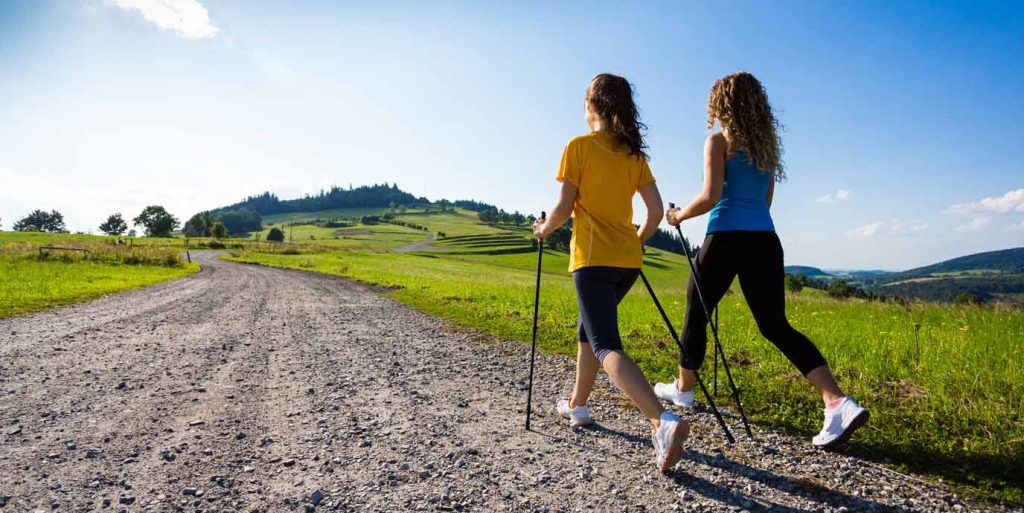
How do I do Nordic Walking?
Nordic walking is more than simply walking with poles. The technique uses your arms, shoulders and core to help propel you forwards, creating a full-body workout.
To get started:
1. Adjust your poles
Your poles should generally allow your elbow to sit at roughly a 90-degree angle when the tip is placed on the ground beside your foot.
2. Stand tall
Keep your head up, shoulders relaxed and maintain good posture. Avoid leaning forward or gripping the poles too tightly.
3. Use a natural walking motion
As your right foot steps forward, swing your left arm forward, and vice versa. This mirrors the natural arm movement we use when walking.
4. Plant the pole behind you
Rather than placing the pole in front of your body, aim to plant it slightly behind your opposite foot. Push through the strap and pole to help drive yourself forward.
5. Open your hand
As your arm swings backwards, briefly open your hand and allow the pole strap to support the pole. This encourages a smooth, efficient technique.
6. Keep a steady rhythm
Focus on maintaining a relaxed, consistent stride. As your confidence grows, you can increase your pace and cover longer distances.
For extra help in understanding the technique, it’s worth watching a video guide to see how the poles are used alongside the long stride.
EXPLORE THE
OS Shop
We are with you every step of the way. Shop our trusted walking and hiking maps and guidebooks so you can explore the outdoors with confidence.
Go to the shopWhere can I go Nordic Walking?
One of the best things about Nordic walking is that it can be enjoyed almost anywhere. From local parks to remote countryside trails, adding poles to your walk is a great way to explore the outdoors while giving your whole body a workout.
Beginners may find it easier to start on flat or gently rolling terrain while they get used to the technique. As your confidence grows, you can take on longer routes, steeper climbs and more varied landscapes.
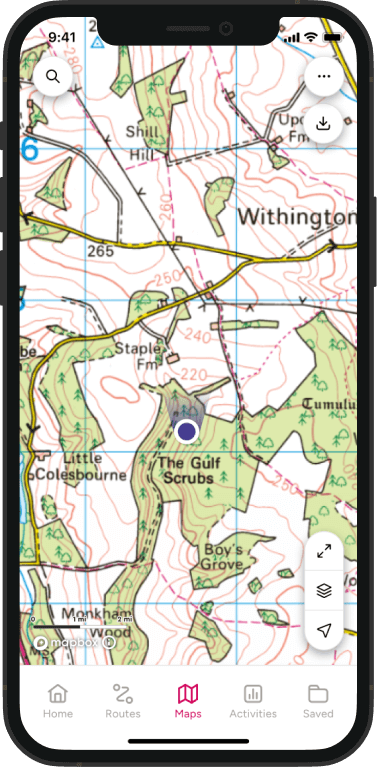
If you’re looking for looking for further inspiration or Nordic walking routes near you, you can visit OS Maps,. OS Maps is a great way to discover new places to practise Nordic walking, whether you’re looking for a gentle local walk, a scenic coastal route or a countryside adventure. Use the app to find footpaths, trails and routes near you, then head out and give Nordic walking a go.
If you want additional support learning Nordic walking, there are plenty of regular classes in operation across the UK which can be found at British Nordic Walking or Nordic Walking UK but many more could be operational on an occasional, hyper-local basis.
Today there are around 700 fully-qualified Nordic walking trainers operating in Britain, with thousands more participants enjoying the benefits it could offer. If you can’t spot any trainers near you, get in touch with rangers at local National or Country Parks to see if such events form part of their itinerary. Even if there’s nothing at the moment, ever-growing interest (to which your own request will only add) may then encourage rangers to get a timetable set up.
And if you feel like giving another walking technique a go, there are more options to help improve your health. Take a look at Japanese walking, which uses a combination of mindful walking and interval training to improve fitness.