How Trash Free Trails is shifting the conversation about litter in nature away from blame and towards connection, evidence and long term change
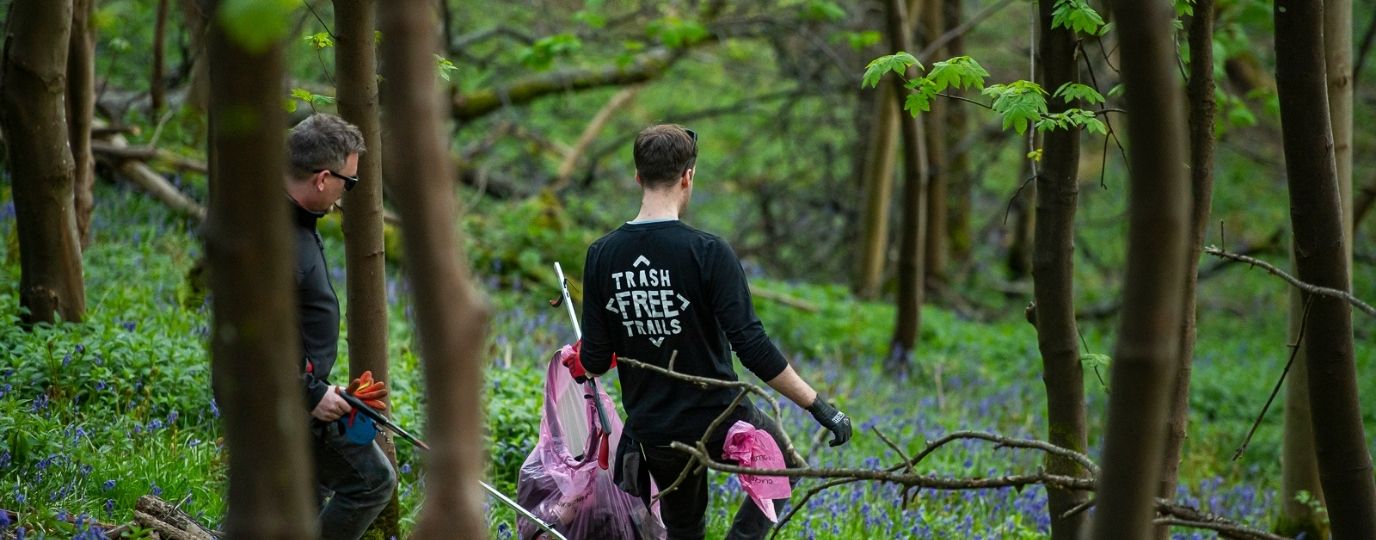
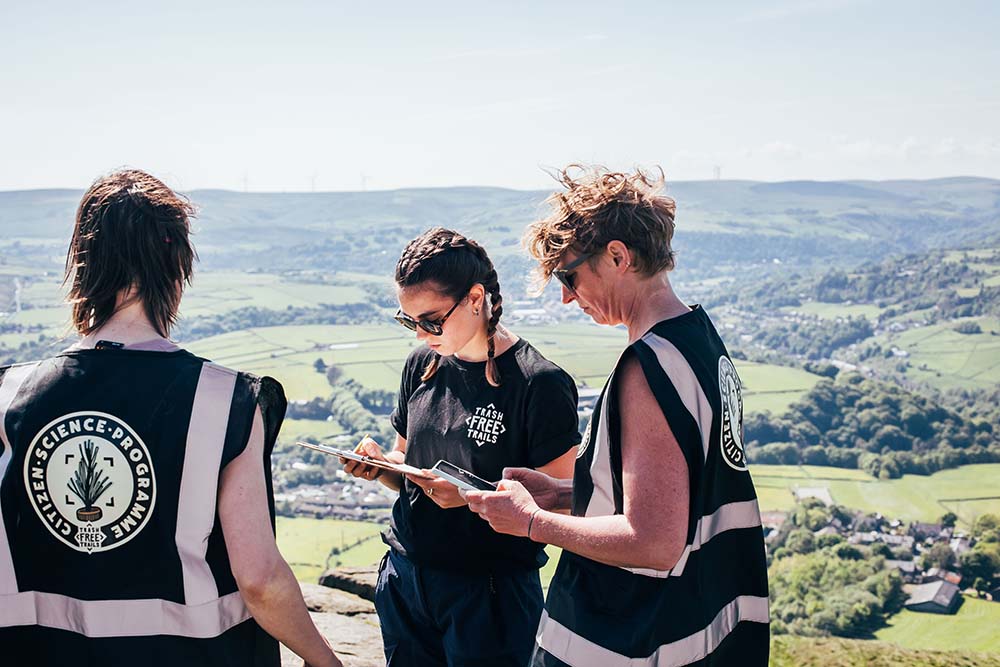
I caught up with Sarah Jane Brown from Trash Free Trails to talk about the work happening beyond the grabbers and bin bags. At first glance, their mission looks familiar with smiling volunteers heading out onto footpaths, picking up what does not belong, and leaving places better than they found them.
But this team of volunteers is actually doing things very differently and using science and data to make real change and expose the growing crisis of disconection with our environment.
We’re tackling a crisis of disconnection…
“No one will protect what they don’t care about, and no one will care about what they haven’t experienced” – David Attenborough
Trash Free Trails is not just about cleaning up. It is about understanding why litter appears in the first place, how it spreads, and what actually changes behaviour in the outdoors. From detailed data collection to behaviour science experiments like ‘nudge theory’, their work is shifting the conversation away from blame and towards connection, evidence and long term change.
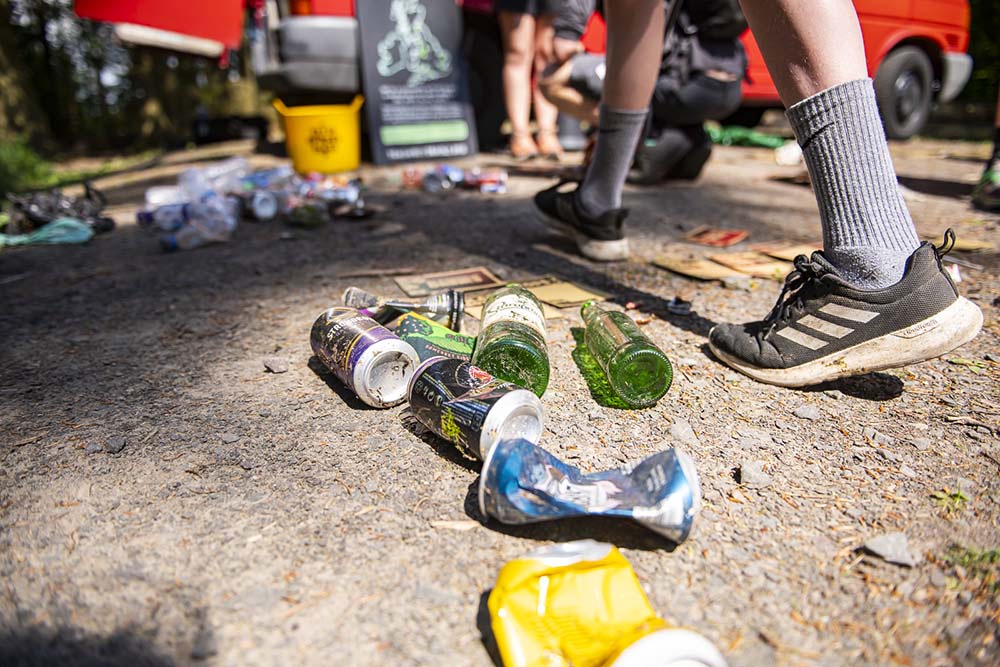
Litter is not the problem they are trying to solve. It is a signal of something deeper.
Can you tell us a little bit about how Trash Free Trails came about.
Trash Free Trails was born out of a pure love for protecting the outdoor playgrounds that give us so much. Trails aren’t just places we go to explore, they’re essential for wellbeing, community and connection. Those that use these places have a huge role to play in keeping them clean, and inspiring others to do the same. Here we discover how one individual with the help of an army of likeminded friends has done just that.
Dom Ferris, the Founder of Trash Free Trails, was previously the Head of Community and Engagement at marine conservation charity Surfers Against Sewage. Dom, also a mountain biker, saw first hand how quickly the awareness around tackling marine plastic pollution was growing, but care for our terrestrial wild places was somewhat silent in comparison. And so began his journey to grow understanding and action.
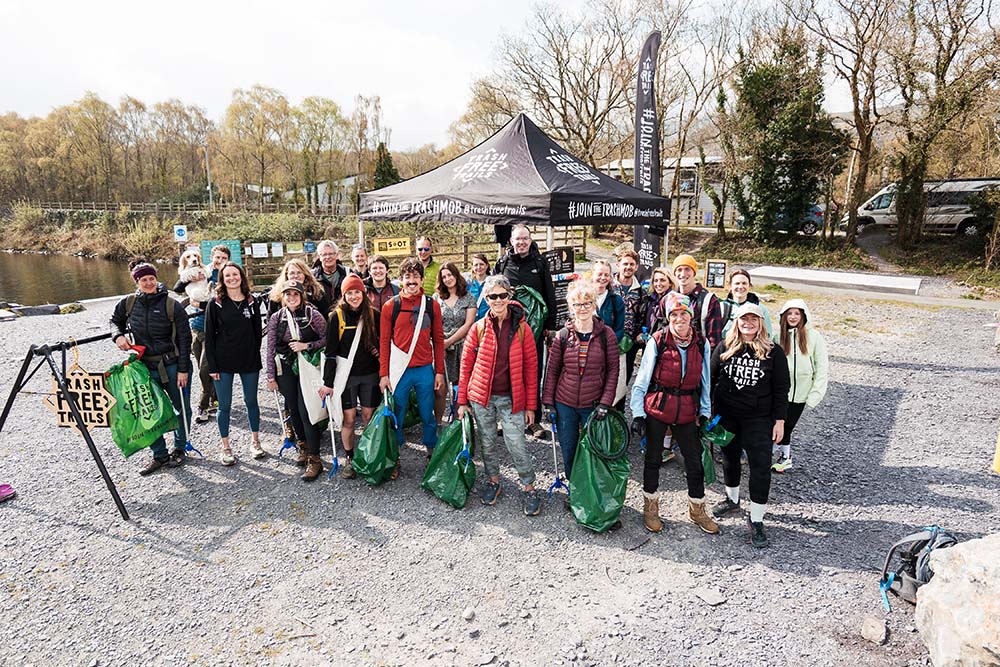
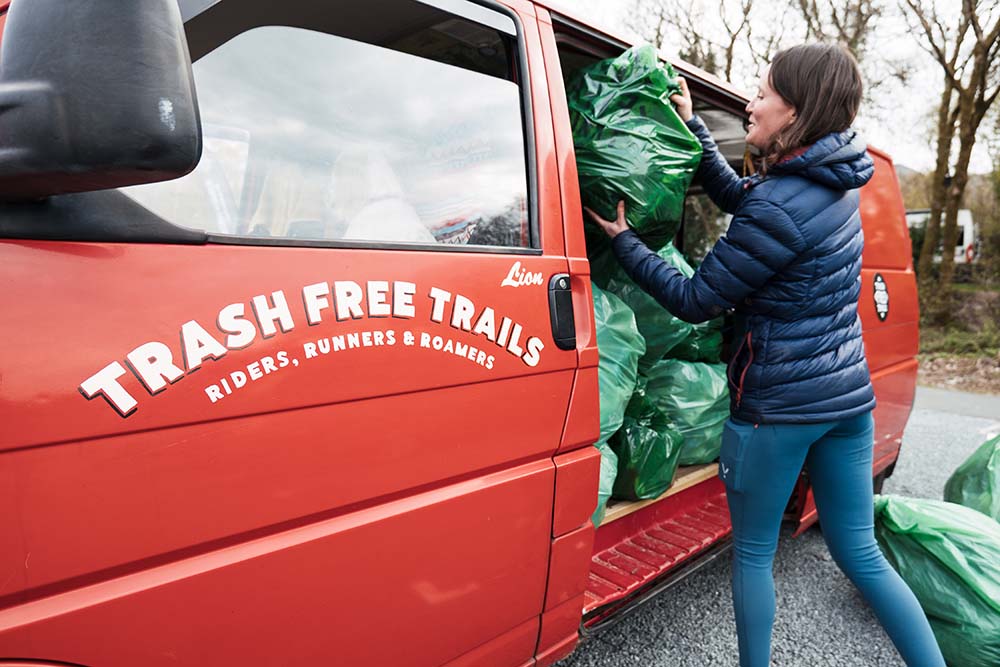
In 2019 Trash Free Trails was born – with a mission to (re)connect people with nature through the simple act of removing single-use pollution from wild places. Since then, it has grown into a community-led movement working across conservation, education, events and research.
Trash Free Trails often talks about litter as a symptom, not the problem itself. What sits underneath it?
We’re tackling a crisis of disconnection. Disconnection can stem from a variety of factors, including political relations, sociocultural norms, and industry standards. This disconnection is experienced from an individual level to a societal level.
We believe that single-use pollution is a symptom of all levels of disconnection, but particularly a sense of disconnection from society and nature.
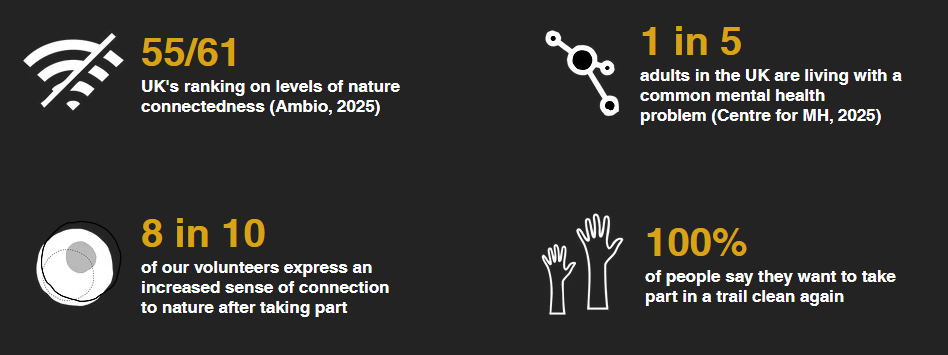
As an example, loss of wildlife is contributing to an ‘extinction of experience’, resulting in lower levels of connection with nature. Put simply, if we don’t see or experience nature, we are less aware of it, and inevitably feel less ‘connected’. In a recent study, the UK ranked lowest out of 14 European countries for nature connectedness, and. is currently classified as one of the world’s most nature depleted countries.
One of our favourite quotes from one of our favourite people sums this position up perfectly:
“No one will protect what they don’t care about, and no one will care about what they haven’t experienced” – David Attenborough
And so to get ahead of this problem, we need to enable more people to experience our trails – because when we experience a place, we build a relationship with it that’s worth protecting.
What surprised you most when you first started analysing litter data rather than just collecting rubbish?
That people can’t believe we actually count everything! For TFT the analysis and collection has always come together, so much so that doing one without the other feels somewhat strange. When you do something for so long, you sometimes forget that people who do it for the first time find it utterly mind-bogglingly fascinating. An example of this comes from a real experience one of our A-TEAMers had during his Spring Trail Clean:
Investing time in data collection…
I went into the spring clean without over advertising it. The Easter holidays hindered the turn out however those that came were really invested in what we were doing. The volunteers didn’t realise how much time I invest in trail cleans and were gobsmacked when they realised that I recorded and counted each item collected. – TFT A-Team Member
In your experience, what actually changes behaviour outdoors, guilt, education, social pressure, or a sense of belonging?
Positive proactive action. Specifically turning anger into action. In 2025 we set up a pilot project called ‘These Are My Trails’ built on a belief that when people feel connected to a place, they take care of it. We know that traditional anti-litter signage isn’t working. So, we wanted to focus on care as a behaviour in itself.
We utilised proven behavioural science approaches, such as nudge theory, to design, install and promote a set of powerfully positive ‘Signs of Care’ at 10 recreational trail locations across the UK. Installed in curated stages across the changing seasons, our signage focussed on celebrating pro-environmental behaviour and giving a voice to the animals and plants that call those places home.
Across the chosen locations, volunteers gave their time, energy, and creativity to make the project happen and 86% felt it had a positive impact on their community.
At one site in particular we saw a 90% reduction in single-use pollution. Whilst we’re still managing consistency, the early signs were clear: positive messaging can work, whilst acknowledging the fact that not everyone who walks past a sign will change their behaviour, not everyone will pick up a bag or log their actions. And that’s okay.
What common misconceptions do people have about what counts as litter in the outdoors?
When single-use pollution is present in a place, it can encourage further items to be dropped. The same goes for fruit peels and cores – these all still count as waste so we pick them up and categorise them on our survey sheet.
While it might seem straightforward to drop fruit peels, we are no strangers to challenging those to consider the long-term impact of its presence. Not only will it take up to 2 years to break down, it’ll encourage other trail users to drop single-use pollution – not all of which are organic. A simple way to think about this is ‘-if it don’t grow, don’t throw’
As we don’t get banana trees or orange trees in the UK, dropping their peel alters the pH and the fertility of the environment. This can mean that a small, mountain plant that has adapted to grow in very poor soil is then outcompeted by a more vigorous plant that needs more nutrients.
Who should take responsibility for single‑use pollution, and what role do producers need to play in addressing it?
We would love for producers of single-use, mass consumption products to formally acknowledge a shared moral responsibility for single-use pollution, alongside their consumers.
Extended Producer Responsibility (pEPR) is built on a simple concept: the polluter pays. But responsibility doesn’t end with producers and pEPR isn’t a cue for us to pack up our pickers and move on. Despite our and countless other organisations and volunteers’ efforts, single-use pollution is on the rise – and that isn’t because we’re picking it up less.
The issue is over production…
“We can’t keep cleaning up the same problem again and again. Volunteer action is powerful, but it was never meant to be the end solution to what is an over-production issue.” Dom Ferris – Founder of Trash Free Trails
What are the next steps for Trash Free Trails?
Global plastic production is continuing to rise. In 2010 264 million tons of plastic was produced around the world. In 2025 that went up to 460 million tons! Each year we sadly find the same brands on our trails – something has to change so it’s not escaping onto our trails in the first place.
We’ll never stop trail cleaning – but we think we should use our voice, the voice of our community, to do it a little differently.
As part of the new Roots to (Re)Connection Research Project, we’ll be developing a new style of trail cleaning focused on wellbeing, the human impacts of single-use pollution and how together, we can grow our skills as stewards of our trails.
Social Health and the 5-3-1 Guidelines
Understand the vital role of social health for a happy life and how Hiking Groups with the 5-3-1 approach can help combat loneliness

What is a Glimmer? How Small Outdoor Moments Can Lift Your Mood
A glimmer is the opposite of a trigger – find out how to train your brain to notice these moments of calm and safety
25 Science‑Backed Benefits of Hiking (and How to Start)
We share 25 RESEARCH BACKED benefits of hiking for heart, mind and wellbeing, plus easy tips, kit basics and how OS Maps can help you get outside.
By Hilary Pullen
Meet Hilary, Editor of OS Maps Discover. Hilary is based in North Wales and loves hiking with her dogs in the mountains of Eryri and Bryniau Clwyd, you can find her on Instagram @nearlyuphill and read her guides to walking in North Wales.
If you would like to be a featured OS Author and write an article or route guide find out more here – how to submit an article idea