Discover fascinating UK seabird walks with OS Maps
Seabird colonies are one of the most reliable ways to experience wildlife up close in the UK. With the right route, you can walk straight into landscapes where cliffs are crowded with guillemots, puffins and kittiwakes, often just metres from the path.
This guide brings together expert advice from RSPB plus a series of coastal walks where seabirds are a central part of the experience.
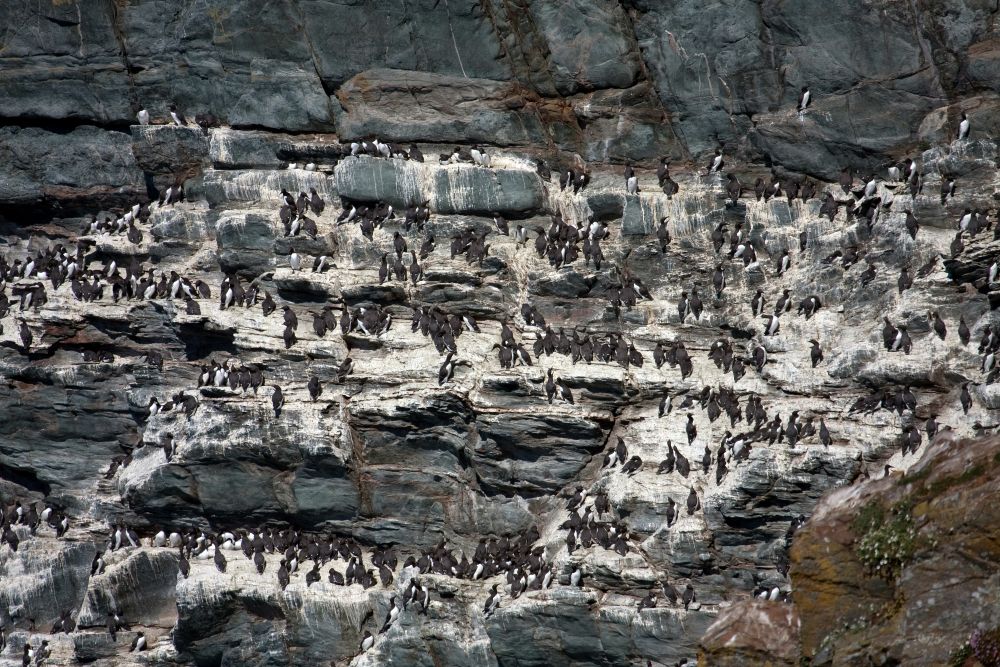
These UK seabird colonies are not random. Each one forms where the conditions are right, sheer cliffs for nesting, steady updrafts for flight and rich feeding grounds offshore.
Explore and plan a seabird colony walk with OS Maps
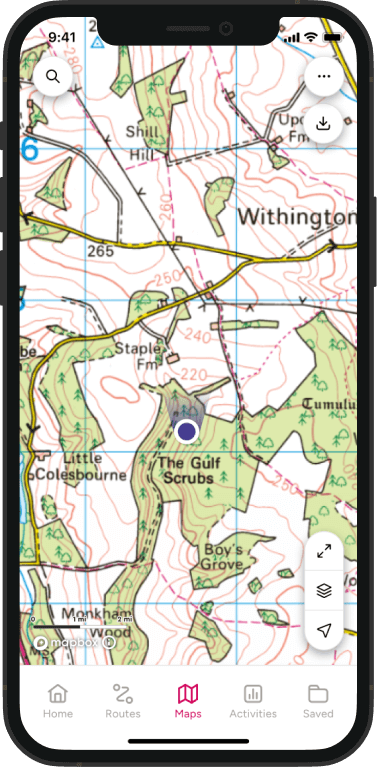
With a detailed map, you can do more than simply visit a viewpoint next to a carpark. You can plan where to walk, how to approach a site safely and where the best vantage points are likely to be. You can spot cliff edges, coastal paths, access points and alternative routes before you set off. Using our snap to path feature makes plotting a circular route easy.
We asked RSPB’s Dr Connie Tremlett for some recommendations
To make sure this guide reflects what is happening on these coasts right now, we caught up with Dr Connie Tremlett, a Marine Conservation Scientist at the RSPB. Her work focuses on UK seabird populations and the pressures they face, so she was the perfect person to talk us through where to go, what to look for and how to visit responsibly.
Which UK locations would you recommend are the best locations to visit for opportunities to see cliff-nesting seabirds and Puffins?
Dr Connie Tremlett: “There are lots of options! I strongly recommend that people make a trip if they can – it is truly spectacular to experience the noise and smell of cliff-nesting colonies, with thousands upon thousands packed together to breed.
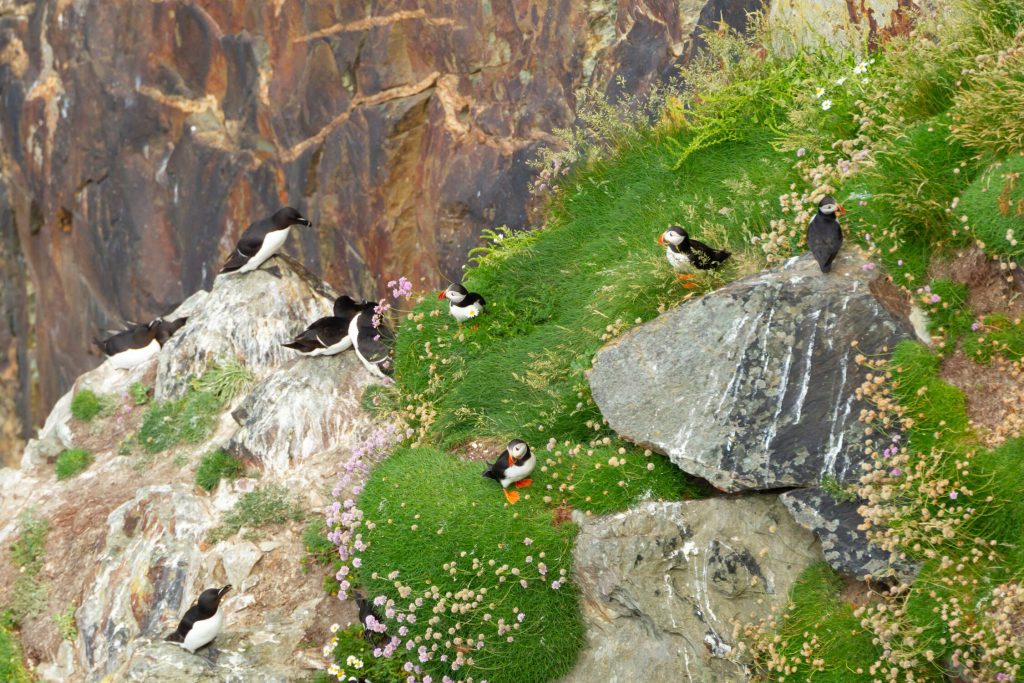
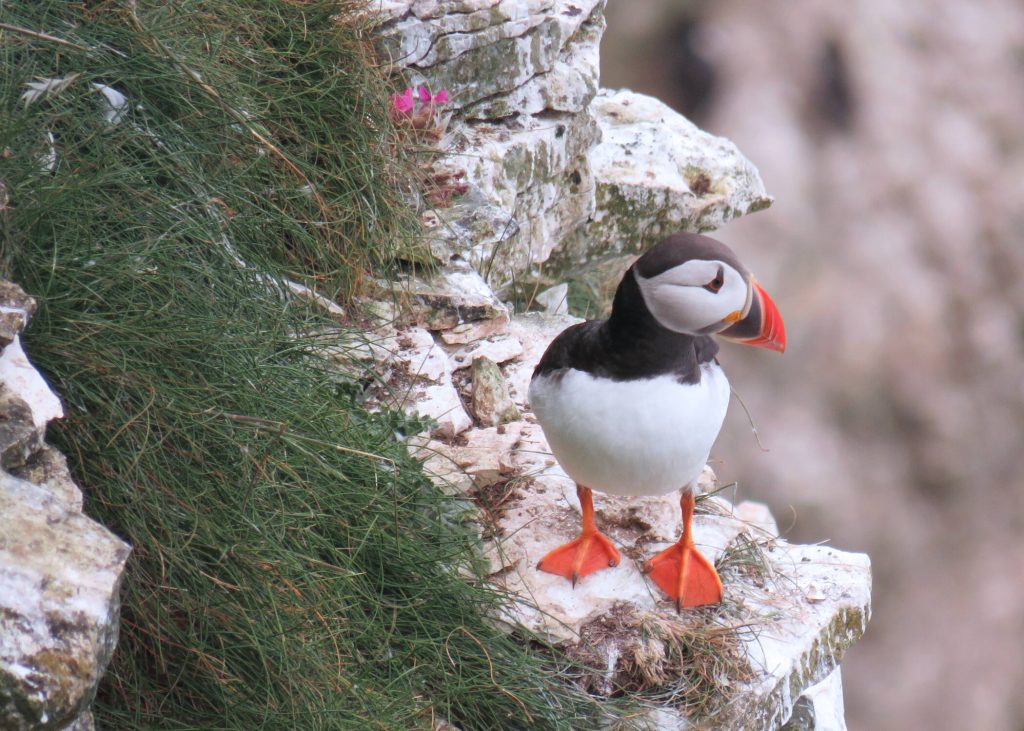
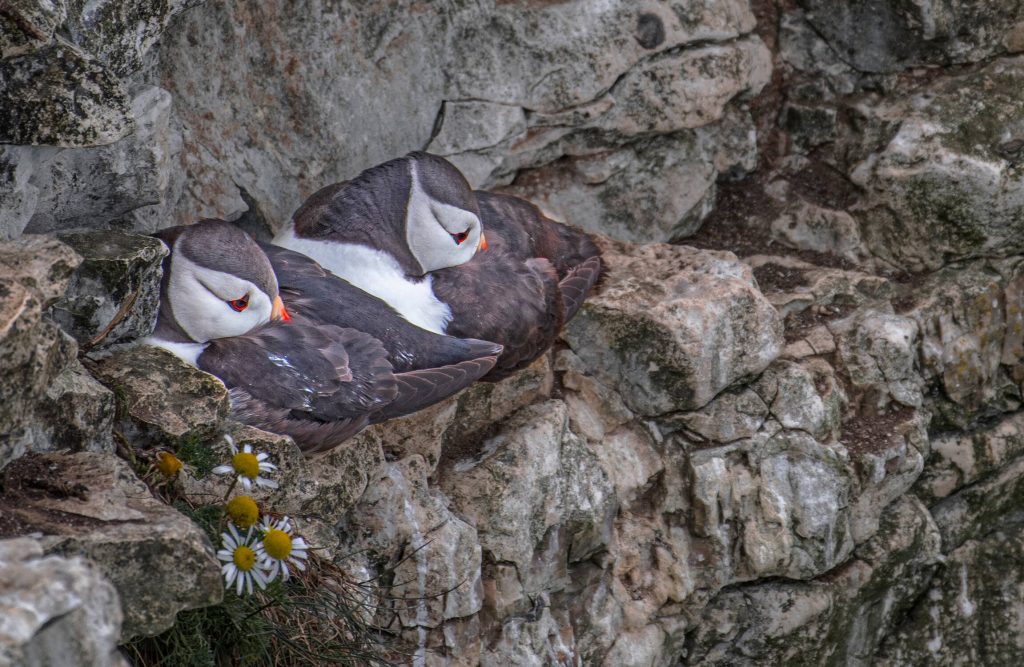
Whilst Puffins aren’t predominantly cliff-nesting birds, their burrows are sometimes found at cliff tops or within cliff crevices, as well as grassy slopes and boulder fields.
A few accessible, mainland suggestions to see puffins include: England – RSPB Bempton Cliffs; Scotland – RSPB Fowlsheugh, St Abbs, RSPB Troup Head, Wales – RSPB South Stack; Northern Ireland – Carrick-a-Rede.
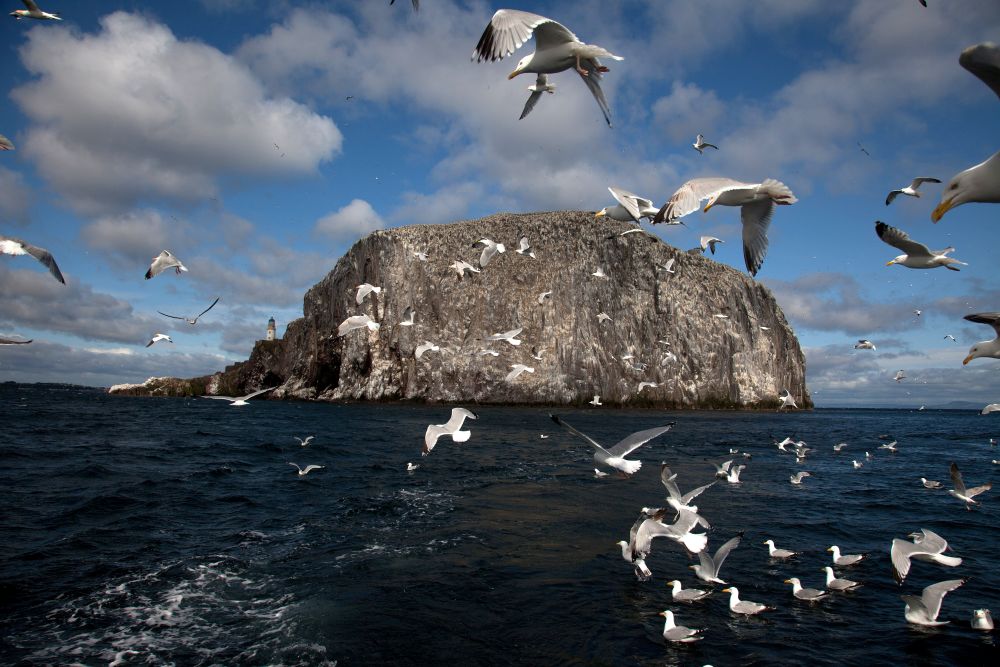
But of course, the strongholds for many of our seabirds are on British Islands, and boat trips are an excellent way to visit those. Some islands offer regular boat trips, such as Isle of May, Skomer, Lunga, Farne Islands, Bass Rock. Make sure to book in advance! Or there are those that can be accessed by ferry, such as RSPB Rathlin Island and RSPB Marwick Head.”
UK seabird hotspots with mapped coastal walking routes
These locations combine accessible coastal walking with some of the UK’s most important seabird colonies. Each includes a practical route idea to help you explore with confidence. Have a look on the map for coastal Nature reserves near you. Look out for the blue bird symbol to find your nearest.

RSPB Bempton Cliffs, East Yorkshire
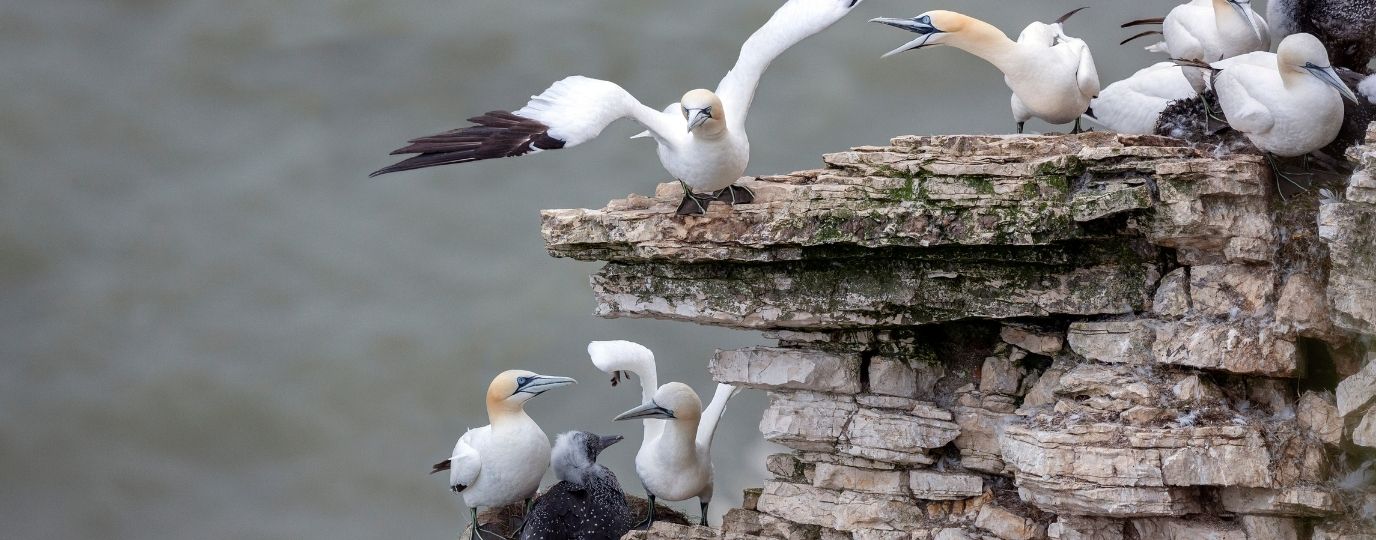
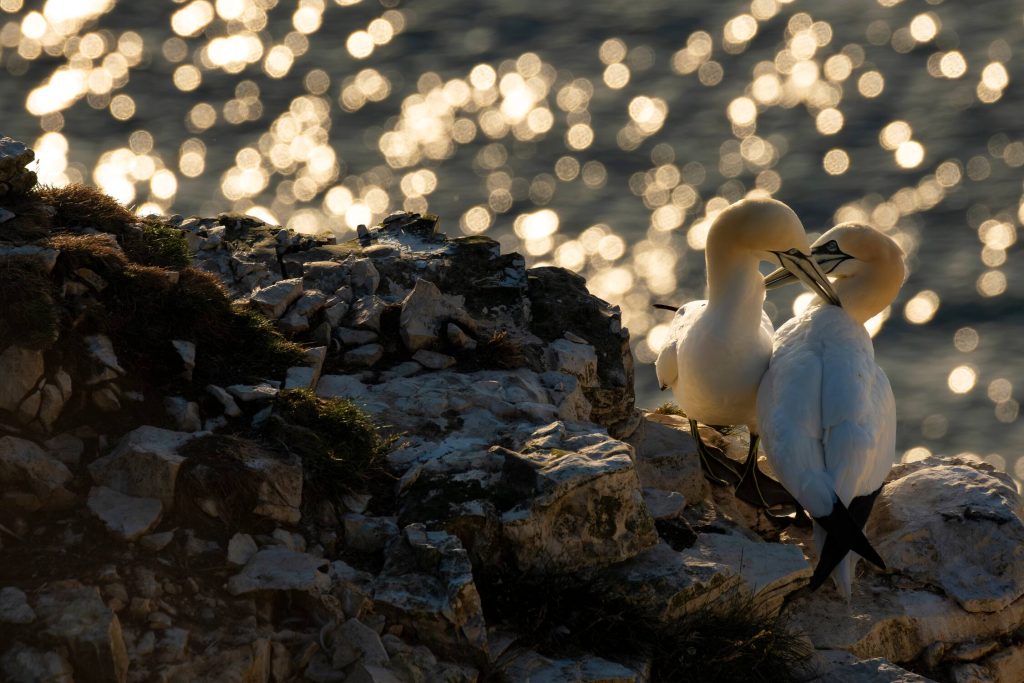
Towering chalk cliffs on the Yorkshire coast host one of the UK’s largest seabird colonies, with thousands of UK seabirds nesting on narrow ledges each spring and summer. The clifftop viewpoints give close, eye‑level views across the North Sea and the bustling “seabird city”.
Birds you might see at RSPB Bempton Cliffs
Gannet, Guillemot, Razorbill, Kittiwake, Fulmar, Puffin, Herring Gull, Shag. Around half a million seabirds gather here between March and August.
Bempton Cliffs Walk
- Distance: 10.5 km
- Terrain: Flat grass paths with exposed cliffs
- Navigation notes: Stay well back from edges in windy conditions
- Parking Options: By church or pond in Bempton, grid ref TA190720, YO15 1HL. Or at Bempton & Buckton Community Village Hall, High Street, and P&D at RSPB Bempton Cliffs
RSPB Fowlsheugh, Aberdeenshire
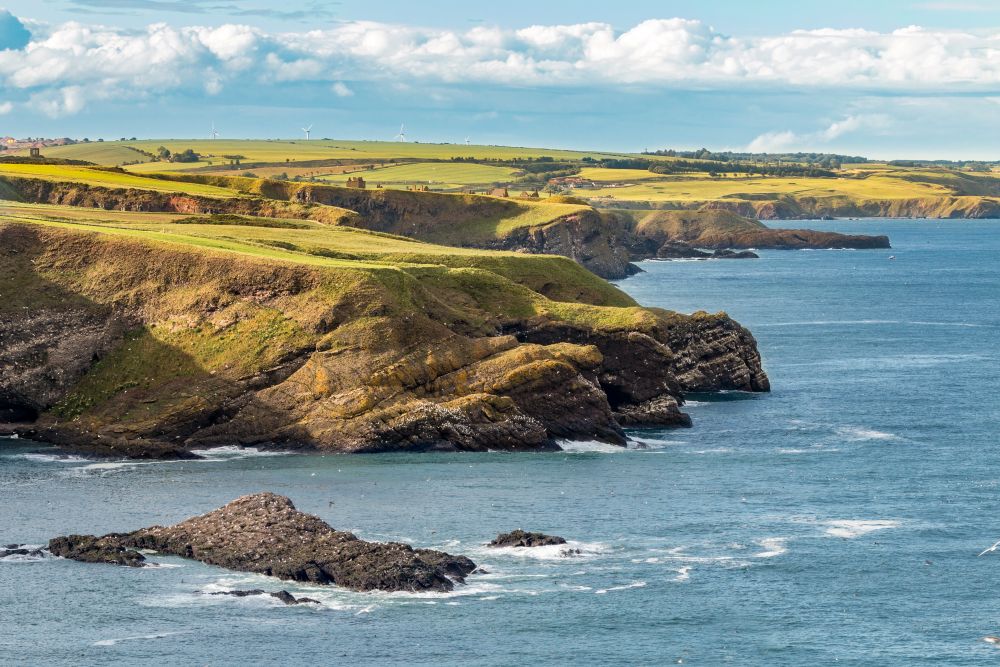
A dramatic stretch of rugged cliffs south of Stonehaven, Fowlsheugh is home to tens of thousands of breeding seabirds including guillemots, razorbills and puffins. In summer the cliffs come alive with noise and movement, while the cliff‑top path offers expansive coastal views.
Birds you might see at RSPB Fowlsheugh
115,000 breeding seabirds gather here during the spring and summer months. This is the largest mainland seabird colony on the east coast of Scotland, and the cliffs become crowded with Guillemots, Razorbills and Kittiwakes, along with a few Puffins and Fulmars too. If you’re lucky, you might also spot Grey Seals and dolphins in the water here.
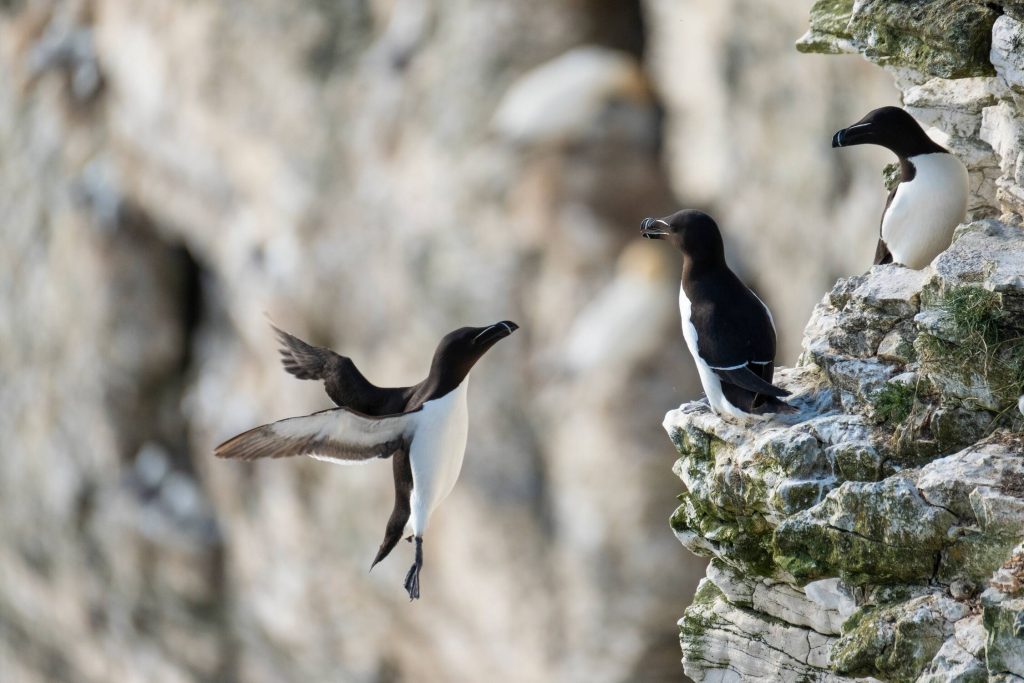
Crawton Bay and RSPB Fowlsheugh Walk
Although the walk itself is fairly short, it is a memorable one. During the seabird breeding season in late spring and summer, thousands of seabirds return from a winter at sea to gather on the 60 metre high cliffs.
- Distance: 2.6km
- Terrain: Narrow coastal paths with uneven ground
- Navigation notes: Use the mapped path line and field boundaries to stay on track
- Parki
RSPB South Stack, Anglesey
On Holyhead, Anglesey, this reserve blends heathland and farmland with sheer sea cliffs that host puffins, guillemots and razorbills, plus the rare chough. Viewpoints like Ellin’s Tower look out over the Irish Sea, making it one of Wales’ most accessible seabird sites.
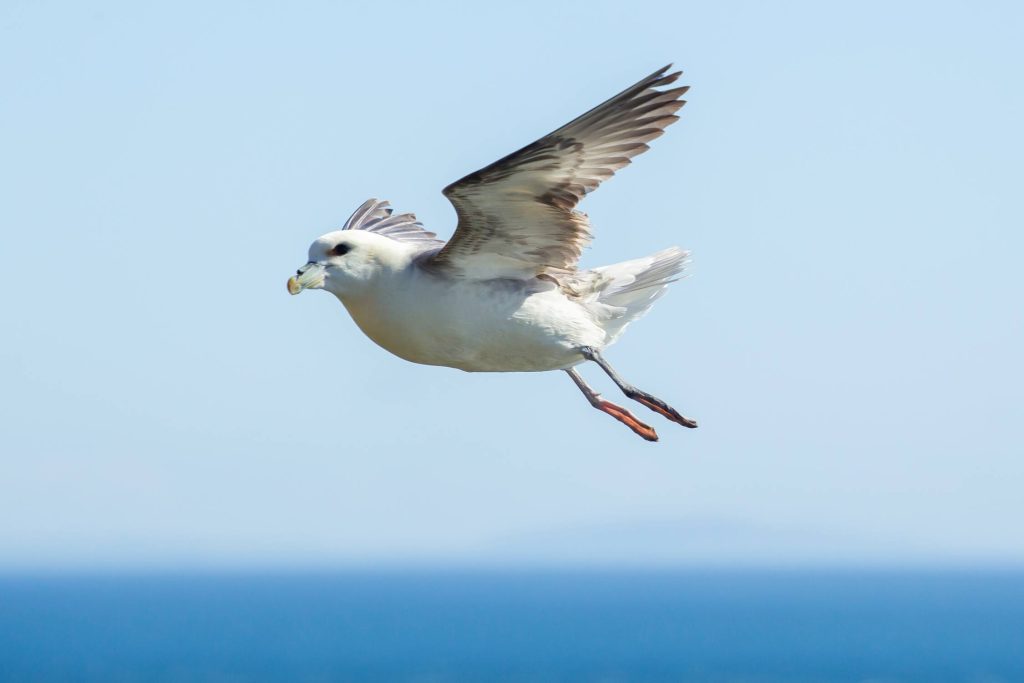
Seabirds you might spot at RSPB South Stack
Guillemots, Razorbills and (a few!) Puffins in spring. The rare Chough can be seen swooping along the cliffs all year round too.
Mynydd Twr (Holyhead Mountain) Circular Walk with South Stack and North Stack
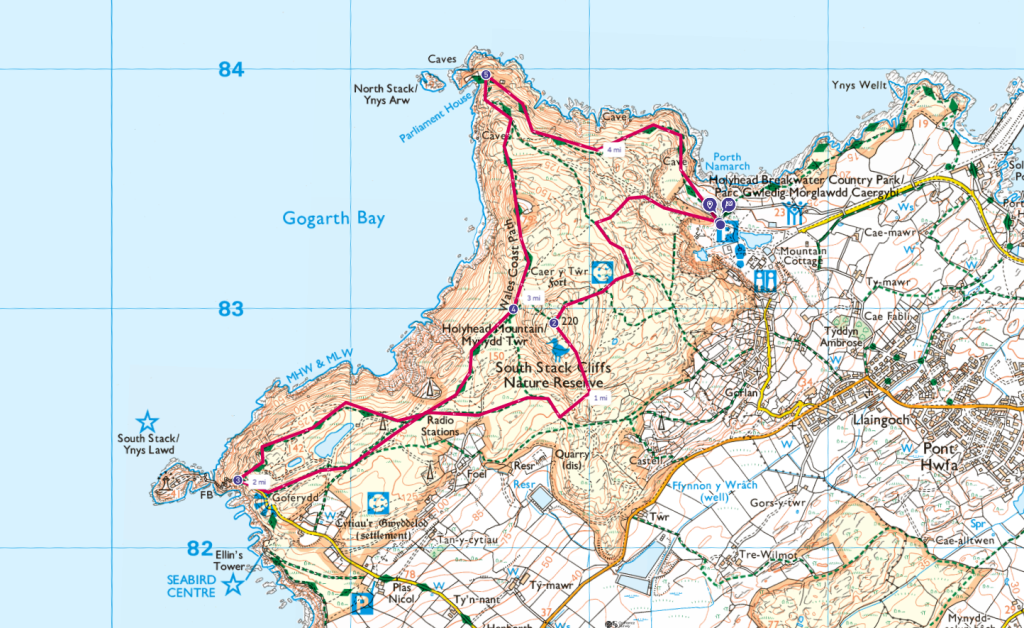
This beautiful circular walk takes you up to the summit of Mynydd Twr (Holyhead Mountain) and then onto the lighthouse at South Stack and around the coast to the fabulous cliffs at North Stack
- Distance: 7.3 km
- Terrain: Steep steps and rocky paths
- Navigation notes: Take care in low cloud
Parking options: Park at Holyhead Breakwater Country Park, SH 2254 8336
Carrick-a-Rede, County Antrim
A National Trust coastal site on the Causeway Coast, Carrick‑a‑Rede combines grassy cliff‑top paths with basalt headlands and seabird nesting sites. The famous rope bridge leads to a tiny offshore island, with sweeping views of Rathlin Island and the North Atlantic.
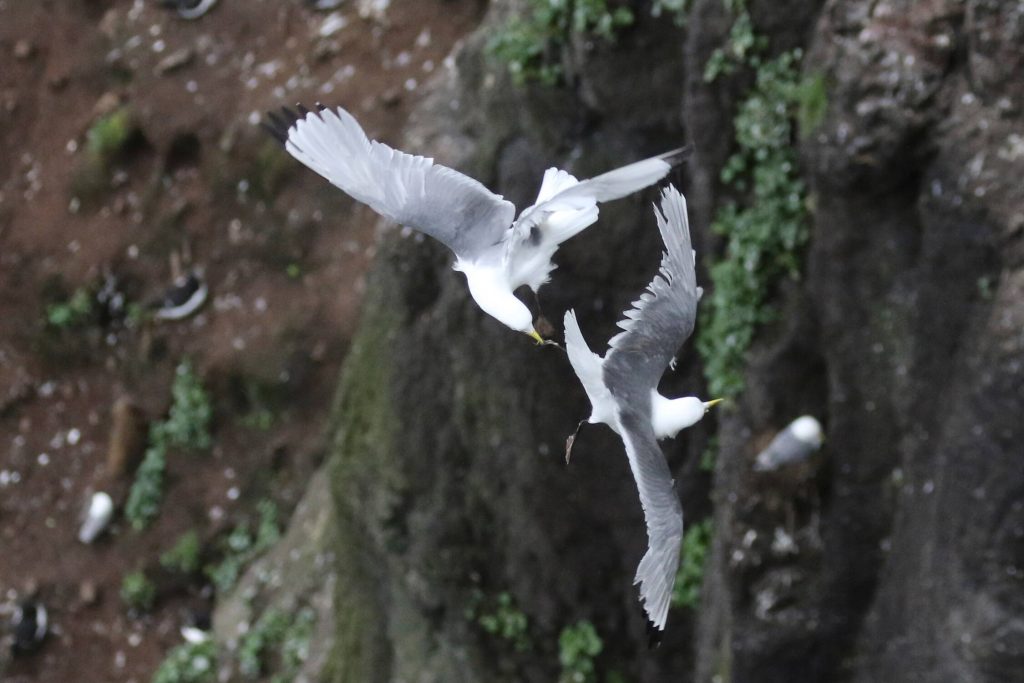
Seabirds you might spot at RSPB Carrick-a-Rede
Kittiwakes, Fulmars, Guillemots, Razorbills, gulls
Carrick-a-Rede Rope Bridge walk
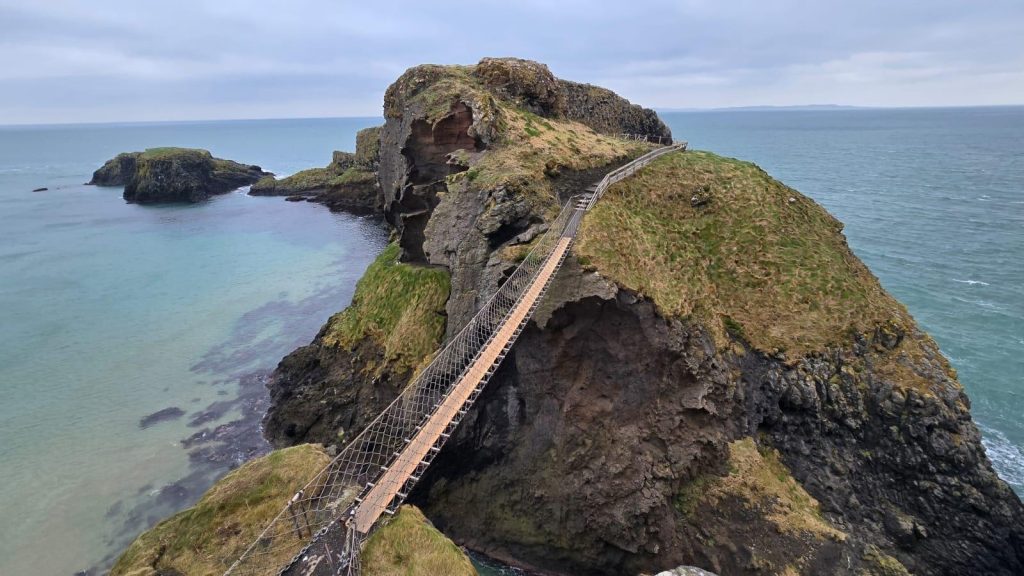
Beginning at a car park, this out and back route follows a path along the Antrim coastline and along the famous Carrick-a-Rede Bridge. This bridge was first built by salmon fishers in 1755 to reach the rocky island of Carrick-a-Rede without needing a boat.
- Distance: 2.5km
- Terrain: Well maintained paths
- Navigation notes:
What pressures are seabirds facing in the UK?
We asked Dr Connie about the biggest threats facing seabird populations today. It’s easy to listen to those big numbers and see the remaining colonies and underestimate the real threats.
Vulnerability to the following threats varies with species, but the main ones are:
- Reduced food availability, which is driven by oceanographic and climate change, and unsustainable fishing.
- Offshore renewable developments, which can cause direct mortality through collision, or displace birds from foraging grounds.
- Bycatch – thousands of seabirds die after being caught on fishing hooks, wrapped in ropes or tangled in nets
- Invasive predators such as mink, rats, cats, ferrets
- Ingestion of plastics
- Severe weather events related to climate change that can make it very difficult to find food, or nest safely
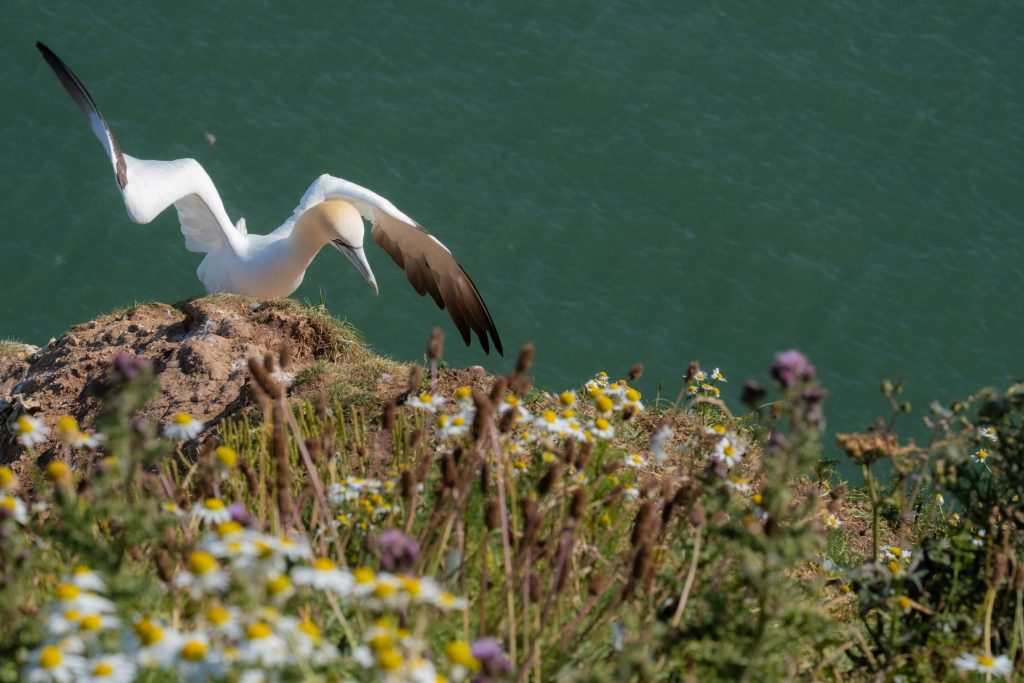
How to watch seabirds responsibly
To help protect these colonies, Connie shared some simple but important guidance.
- Keep to paths where appropriate.
- Ideally don’t take dogs into colonies, but at a minimum keep them on leads
- Avoid getting too close or spending too long taking your photo – if there is any sign that you are disturbing birds (e.g. they fly off, or Puffins with food are hanging around for a long time and not going into their burrow to feed a chick) then move away so the birds feel safe to return to the nest. It’s dangerous for eggs / chicks to be left unattended, as they can be predated, and Puffins carrying fish are also vulnerable to having all that hard work stolen by gulls or skuas.
- Keep your movements and noise to a minimum
- Watch where you are walking and never walk over a Puffin burrow – they can be very fragile and can collapse on top of the egg / chick
When is the best time to visit seabird colonies
Finally, we asked whether timing your visit during the day makes a difference.
There isn’t really a best time of day to see these species, which is one of the nice things about seabirds – no need to get up at the crack of dawn! For instance, the surveys that we do to census these species can be done at any time of day (though bad weather can make this task harder).
Leave No Trace – Follow The Countryside Code
Before you head home, take a moment to make sure your visit has left no trace. Following the Countryside Code is especially important at seabird colonies, where cliffs, paths and nesting areas are under pressure during the breeding season. Stick to marked routes, keep dogs under close control, take litter home and give wildlife plenty of space. A little care helps protect these fragile places, so future visitors can experience the same sights, sounds and sheer scale of life along the coast.
By Hilary Pullen
Meet Hilary, Editor of OS Maps Discover. Hilary is based in North Wales and loves hiking with her dogs in the mountains of Eryri and Bryniau Clwyd, you can find her on Instagram @nearlyuphill and read her guides to walking in North Wales.
If you would like to be a featured OS Author and write an article or route guide find out more here – how to submit an article idea