Wet weekend, mouldy kit? How to dry, wash and store camping gear after a soggy trip
If your tent came down in the rain on Sunday, it can be growing mildew by Monday.
Tent maker MSR says mildew can start forming on a wet, crumpled tent in as little as 24 hours, staining the fabric and weakening its waterproof coating.
OS Maps’ beginner’s guide to camping has the fix for a wet pack-up, which is to air and dry the tent as soon as you get home.
As co-founder of an Australian cleaning brand, I’d apply that rule to everything else that came home damp, from the base layers and sleeping bag to the walking boots.
Unpack it all within 24 hours
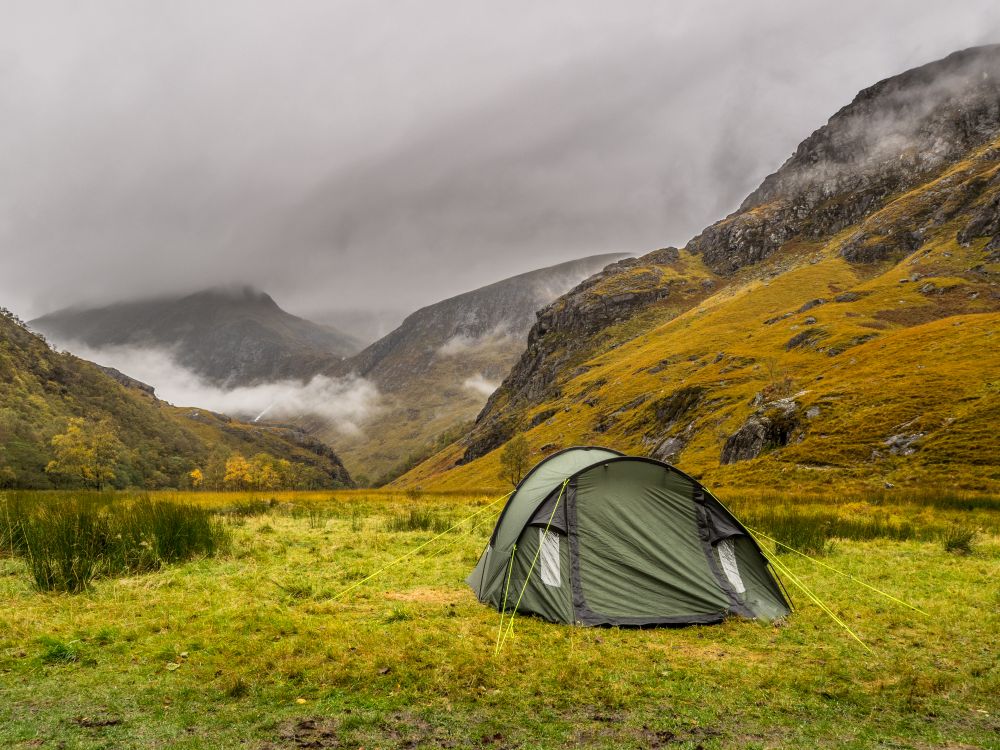
Empty the car the day you get home, however late it is. A wet tent rolled tight in its bag stays warm, dark and damp, which suits mould perfectly, and a car boot isn’t much better.
Work through the pile in roughly this order.
- Tent. Out of the bag and opened out over a couple of chairs, along the hallway floor or over the bath. Air moving around the fabric holds mould back until you can dry it properly.
- Sleeping bag. Out of its stuff sack, unzipped and hung over a door or banister for at least a full day.
- Anything you wore. Base layers and socks come out of the bag and onto an airer, even if they can’t be washed until tomorrow. Which? suggests letting sweaty kit air before it goes in the wash basket, so the sweat dries before odour bacteria take hold.
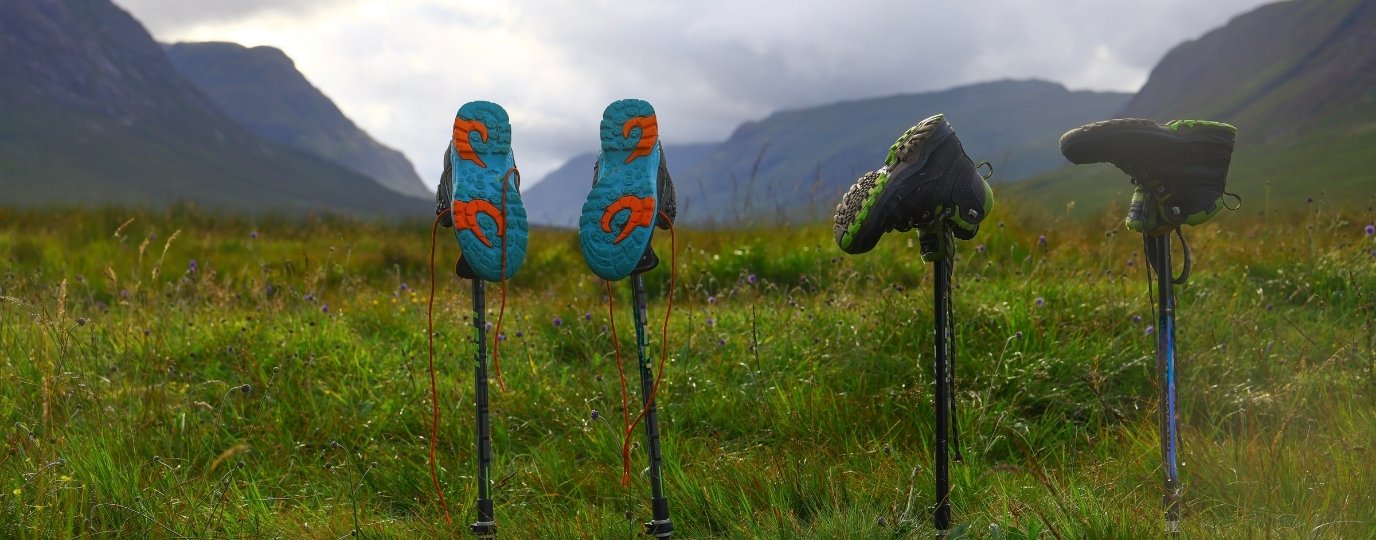
- Boots. Insoles out, laces loosened and crumpled newspaper inside.
- Cool box. Emptied, washed out and left to dry with the lid open. Store it with the lid ajar, and the drain plug open if it has one.
Cleaning and drying a tent without a garden
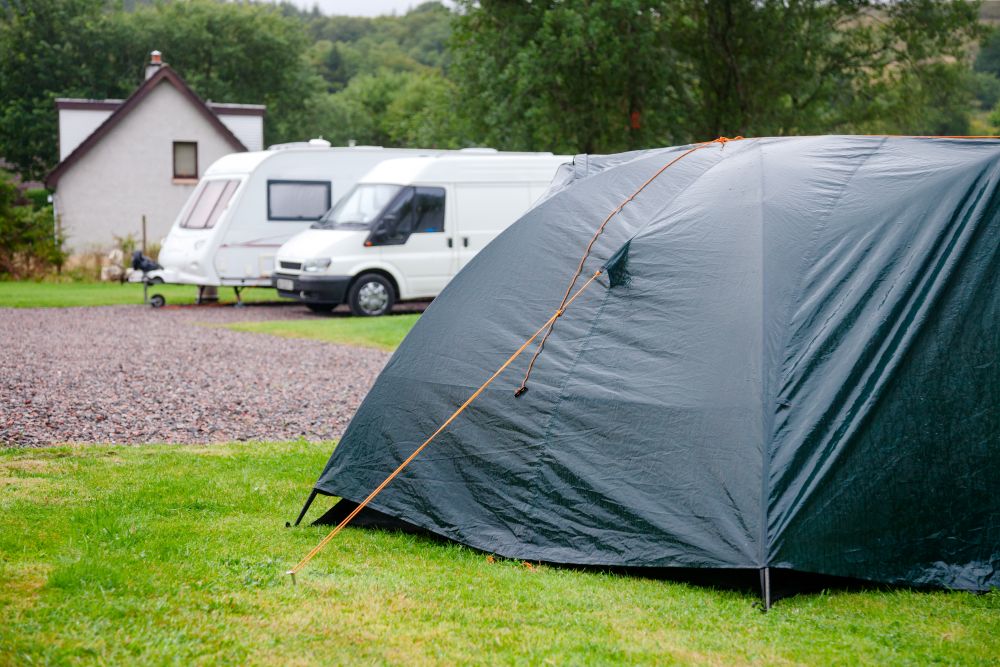
Start with the mud. Brush out the grit, then sponge the fabric with lukewarm water and nothing else. Outwell warns that soap, detergent and household cleaners can damage a tent’s water-repellent finish, and the same goes for washing-up liquid and bleach. MSR rules out the washing machine as well, since machine washing can strip the waterproof coatings.
While you’re sponging, look for black or grey speckles. That’s mildew, and it doesn’t wash out. Terra Nova warns that mildew can permanently damage the fabric and its proofing, so the aim is to stop it spreading. Check your tent maker’s care guide for what to treat it with, then dry the tent completely.
Pitching it on a dry, breezy day is still the quickest way to do that. Without a garden, or without that day in the forecast, the tent can dry indoors in sections, which Outwell says is fine as long as you have the space and ventilation.
For the ventilation, keep it all in one room with the door shut and a window open. That’s how the Centre for Sustainable Energy suggests drying washing indoors, so the moisture leaves through the window instead of settling as condensation around the rest of your home. A dehumidifier in the same room, with the window closed, does the job too.
Radiators, heaters and fires are off limits, though. Heat breaks down a tent’s waterproof coating and seam tape, and NEMO warns that a dryer’s heat can melt technical fabrics, which rules out the tumble dryer too.
With the room set up, separate the flysheet from the inner if your tent allows it. Drape the flysheet over a shower rail, a clothes airer or the banisters rather than hanging it by its corners, which strains the fabric, and spread the inner out somewhere else. Turn both every few hours so the folds get air too.
Webbing straps, zips and seams take longest to dry, so check those and the groundsheet before you call it done, and dry the tent bag as well.
Finish with the poles and pegs, wiping them down and letting them dry before they’re packed away. If you camped by the sea, Terra Nova suggests rinsing the poles in cold fresh water first.
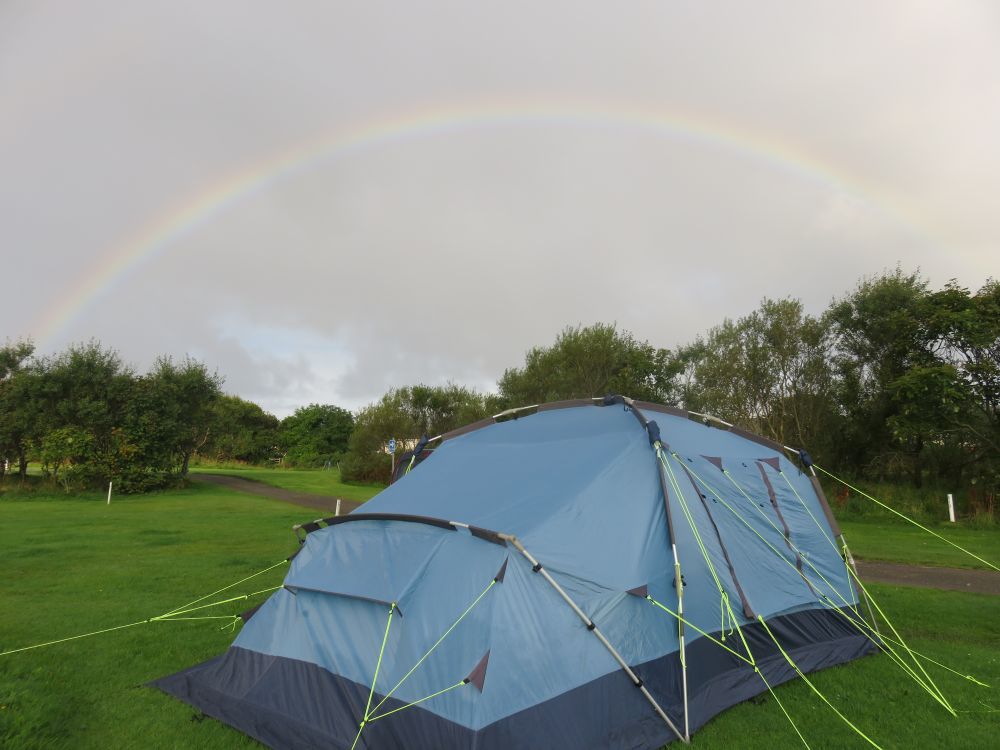
Washing what you wore and slept in
Synthetic base layers usually come home smelling worst, and the fibre is a big part of why. Research at the University of Alberta found that sweaty-smelling compounds are drawn to polyester more than to cotton and don’t fully wash out, so the smell builds up wear after wear.
Adding more detergent won’t shift it. For synthetics, Which? recommends half what you’d use for a cotton wash, because detergent build-up in clothes makes it easier for bacteria to grow.
Fabric softener builds up the same way, so Which? says to skip it on synthetics. Icebreaker also warns that softener coats the fibres and affects how merino breathes and moves moisture.
Merino needs its own rules because it’s wool. Biological detergents contain enzymes that break down protein stains, and wool is a protein fibre, so Woolmark advises against “bio” detergents and bleach in favour of a wool wash.
Whatever the fibre, keep the wash cool and gentle, with base layers turned inside out and any zips done up. Alpkit’s merino care tops out at 30°C, and Which? suggests 30°C or as low as 20°C for anything stretchy, because high heat ruins the stretch. For the same reason, hang them up to dry rather than using the tumble dryer or a radiator, and lay merino flat.
Liners are simpler. Sea to Summit suggests a gentle cycle with no fabric softener, and air drying for silk, because a dryer’s heat can damage it. Cotton liners can take a normal wash.
Waterproof jackets and down sleeping bags need technical washes of their own, and Grangers covers both in its guide to looking after your outdoor kit.
Walking boots
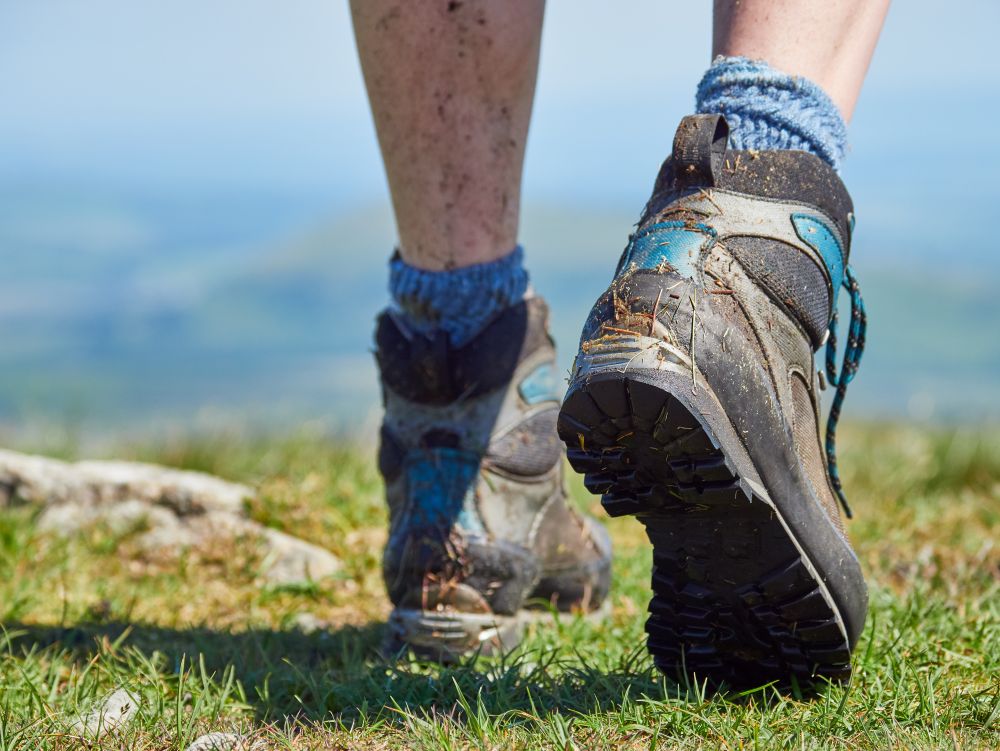
Jonathan Elder’s guide to walking in mud has the boot routine. Brush the mud off before it fully dries, try not to soak leather, and stuff each boot with crumpled newspaper to draw the moisture out.
Then leave them somewhere with a bit of warmth and airflow, such as the hallway. A radiator or the front of a fire dries them too fast, and Scarpa warns that direct heat can crack leather and weaken the glue that holds a boot together. A closed cupboard has the opposite problem and can leave them mouldy.
Storing it so it’s ready for next time
Pack nothing away until it’s bone dry. Moisture attacks a tent’s polyurethane coating over time, a process called hydrolysis, which is how an old tent ends up sticky and no longer waterproof.
Store the tent loosely in something breathable. MSR suggests an oversized cotton bag, a mesh duffel or even a pillowcase in place of the stuff sack, and NEMO warns that long periods compressed in a stuff sack can damage the fabric and seam tape.
Keep the poles and pegs in a separate bag, as Outwell advises, in case they corrode.
Before the bags are closed, write a quick note for the tent bag listing anything that needs attention, such as a bent pole section, a missing peg or a sticky zip. It’s easier to sort at home than on a wet campsite.
Then put it all somewhere dark, cool and dry indoors, such as under a bed or at the bottom of a wardrobe. Outwell says to avoid leaving a tent in a damp shed, garage or car for long periods, and Big Agnes rules out garages and lofts, where swings in temperature and humidity break down seams and coatings.
Sleeping bags want the same care. Store yours out of its stuff sack in a bigger cotton or mesh sack, and never in a plastic bag or dry bag, which Rab warns can trap moisture and let mould grow.
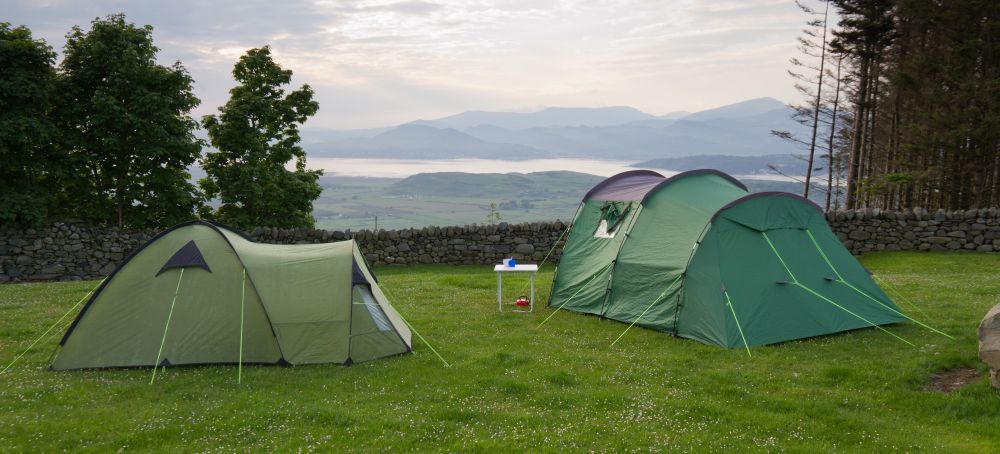
With everything put away, go and plan the next trip. And if someone in your group always packs the tent away wet, send them this before you go.

By Bree Uebergang
Bree Uebergang co-founded Filthy Clean, an Australian brand making some of the best travel laundry detergent sheets for caravans, campsites and anywhere a bottle of liquid is a nuisance. Each sheet is a pre-measured dose that dissolves in the wash, so there’s no plastic jug to carry and no measuring cap to lose. The range also covers dishwashing and toilet cleaning, and it ships in a cardboard box.
If you’re interested in sharing a guest post like this one take a look at our guide for writing for OS Maps Discover – Write for us – OS Maps Discover