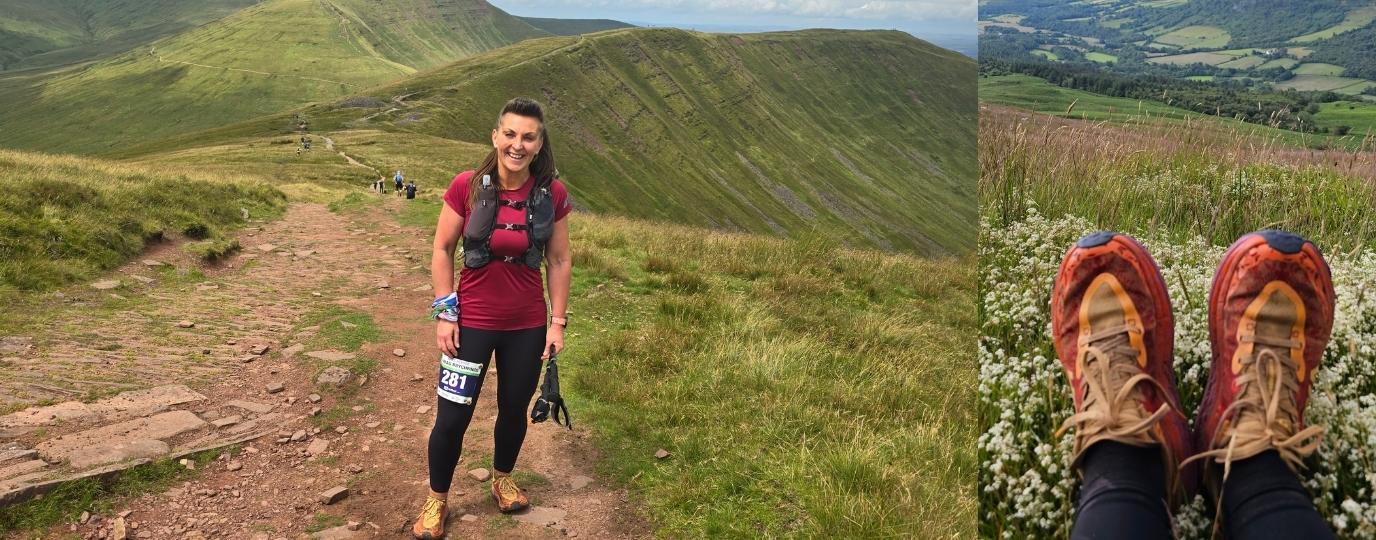
If you love running, but a marathon no longer feels like enough of a challenge, ultra running could be the next step in your running journey. Pushing beyond the traditional 26.2-mile distance, ultra races test endurance, determination and mental resilience, often taking you through some of the most spectacular landscapes in the UK and beyond.
While ultra running might sound daunting, it’s a sport that’s becoming increasingly accessible to runners of all abilities. So if marathons don’t hold the same appeal any more, or you’re finding them to not be the challenge they once seemed, it might be time to consider an ultra.

What is Ultra Running?
Ultra running, also known as ultra marathon running, is any race or running event that extends beyond the traditional marathon distance of 26.2 miles (42.2km). While many runners start with a marathon, ultra running takes endurance to the next level, with races commonly covering distances of 50km, 50 miles, 100km, 100 miles and more.
One of the attractions of ultra running is the sheer variety of events available. Unlike many road races, ultra marathons are often held on trails, through mountains, along coastlines and across some of the UK’s most spectacular landscapes. From single-day races to multi-day adventures, there is an ultra marathon to suit a wide range of goals, abilities and experience levels.
Although elite athletes continue to push the limits of the sport, ultra running is no longer seen as something reserved for professionals. More and more runners are discovering that, with the right training and preparation, completing an ultra marathon is an achievable goal. For many, success isn’t about running fast. It’s about embracing the challenge, enjoying the outdoors, and discovering just how far you can go.
While many runners see a marathon as the ultimate endurance challenge, completing 26.2 miles often reveals that the body’s limits are much further away than they first imagined. Rather than focusing purely on speed, ultra running rewards patience, resilience and determination. For many participants, the greatest achievement isn’t the finish time, but discovering they’re capable of far more than they ever thought possible.
Ultimately, how far you run comes down to your own goals, training and sense of adventure. Whether you’re aiming for a first 50km ultra marathon or dreaming of a 100-mile challenge, ultra running offers runners of all abilities the chance to push their boundaries and explore new limits.

How far is an Ultra Marathon?
An ultra marathon is any running event that is longer than the standard marathon distance of 26.2 miles (42.2km). Beyond that, there’s no upper limit, which means ultra marathons can vary dramatically in length and challenge.
For many runners, a 50km (31-mile) race is considered the entry point into ultra running and is often a popular first ultra. From there, common ultra marathon distances include 50 miles (80km), 100km (62 miles) and 100 miles (161km). Some events go even further, taking place over several days and covering hundreds of miles.
The good news for beginners is that you don’t need to start with a 100-mile race. Many runners progress gradually, building experience through shorter trail races before taking on longer ultra distances. Choosing an event that matches your fitness, training and goals is far more important than focusing on a specific mileage.

What are the benefits of Ultra Running?
Ultra running is about much more than covering long distances. While the physical challenge is a major attraction, many runners are drawn to ultra marathons for the mental, emotional and lifestyle benefits that come with training for and completing an endurance event.
One of the biggest benefits of ultra running is improved endurance. Training for longer distances helps build cardiovascular fitness, muscular strength and stamina, allowing you to spend more time on your feet and tackle increasingly ambitious challenges. The gradual, consistent training required for an ultra marathon can also encourage healthy habits and long-term fitness.
Ultra running can be just as rewarding mentally. Long runs provide an opportunity to develop resilience, patience and self-belief, helping you learn how to manage discomfort and overcome setbacks. Many ultra runners describe a strong sense of achievement after completing an event, regardless of their finishing time.
Another major appeal is the opportunity to explore the outdoors. Many ultra marathons take place on scenic trails, through mountains, forests, coastlines and national parks, offering experiences that go far beyond a typical road race. For runners who enjoy adventure, travel and discovering new places, ultra running can be an ideal way to combine fitness with exploration.
EXPLORE THE
OS Shop
We are with you every step of the way. Shop our trusted walking and hiking maps and guidebooks so you can explore the outdoors with confidence.
Go to the shopWhat is it like to run an Ultra Marathon?
No two ultra marathons are the same. While many people picture ultra running as a solitary experience spent battling the elements in remote landscapes, the reality can be very different. With a huge variety of race formats, locations and distances available, there’s an ultra marathon to suit almost every type of runner.
Many ultra marathons often take place on scenic trails, taking runners through mountains, forests, coastlines and national parks. These events combine endurance running with adventure, rewarding participants with spectacular views and a unique opportunity to experience the outdoors. Others follow roads, canal paths or established routes between destinations, while some take place entirely on short circuits or running tracks.
Looped ultra marathons are particularly popular. Rather than travelling from one point to another, runners complete multiple laps of the same route. While this may sound repetitive, many participants enjoy the social atmosphere these events create. Seeing fellow runners regularly throughout the race provides opportunities for encouragement, conversation and support, helping to build a strong sense of camaraderie.
Unlike shorter races, ultra marathons are often less focused on pace and finishing times. Instead, success usually comes down to managing effort, eating and drinking regularly, adapting to changing conditions and maintaining a positive mindset. Most runners experience highs and lows during an ultra, but learning to work through challenging moments is part of what makes the experience so rewarding.
Above all, ultra running is about the journey rather than the finish line.

How do I start Ultra Running?
The idea of running beyond a marathon distance can feel daunting, but getting started in ultra running is often more achievable than many people think. While common ultra marathon distances include 50km, 50 miles, 100km and 100 miles, most runners build up gradually, gaining experience and confidence via a training plan before tackling longer events.
A good starting point is to establish a solid running base, such as with trail running. If you’re already comfortable completing regular long runs or have finished a half marathon or marathon, you may be closer to ultra marathon training than you realise. From there, the focus shifts from speed to endurance, spending more time on your feet and getting used to running for several hours at a time.
Many ultra runners prepare by completing “back-to-back” long runs, such as running on both Saturday and Sunday. This helps simulate the fatigue of an ultra marathon without requiring a single extremely long training run. Learning to run on tired legs can improve both your physical endurance and your confidence when race day arrives.
Nutrition and hydration are just as important as running fitness. Ultra marathons require runners to fuel regularly throughout an event, so training runs are an opportunity to discover what food, drink and energy products work best for you. Practising your race-day nutrition strategy can be just as valuable as adding extra miles to your training plan.
Above all, remember that ultra running is a journey. Build your distance gradually, listen to your body and focus on consistent training rather than chasing big mileage too quickly. With patience, preparation and a sense of adventure, completing your first ultra marathon can be a realistic goal for runners of all abilities.

What is a key tip for Ultra Running?
One of the biggest misconceptions about ultra running is that you need to run every step of the race. In reality, many experienced ultra runners regularly incorporate walking into their strategy, even when they’re feeling strong. Far from being a sign of weakness, walking can be one of the most effective ways to conserve energy and cover longer distances more efficiently.
A popular technique is the run-walk approach, which involves alternating between periods of running and walking throughout a race. Rather than waiting until fatigue sets in, runners build planned walk breaks into their strategy from the start. This helps reduce the strain on muscles and joints, keeps effort levels manageable and can make it easier to maintain a consistent pace over long distances.
The exact ratio of running to walking will vary from person to person. Some runners may walk for a minute every ten minutes, while others take shorter or more frequent breaks. Uphill sections are also a natural opportunity to switch to a brisk walk, saving valuable energy for flatter and faster terrain later in the race.
Perhaps most importantly, the run-walk method should be practised during training. Experimenting with different intervals will help you find a rhythm that feels comfortable and sustainable, while also allowing you to test your pacing and nutrition strategy.
For many first-time ultra runners, learning when to walk can be just as valuable as learning when to run. By managing your effort from the beginning, you’ll be more likely to stay comfortable, maintain energy levels and enjoy the experience all the way to the finish line.
EXPLORE THE
OS Shop
We are with you every step of the way. Shop our trusted walking and hiking maps and guidebooks so you can explore the outdoors with confidence.
Go to the shopWhat Ultra Running events in the UK are there?
One of the best things about ultra running is the sheer variety of events available. Whether you’re looking for your first ultra marathon or dreaming of a multi-day endurance challenge, there are races to suit almost every ability, goal and preference.
Ultra marathons come in many different formats. Some are point-to-point races, taking runners from one location to another, while others are held on looped courses where participants complete multiple laps. Events can take place on roads, trails, mountain paths, coastal routes and even running tracks, offering very different experiences depending on the terrain and environment.
Not all ultras are based on distance. Some events are time-based challenges, where runners aim to cover as much ground as possible within a set period. Popular formats include six, 12, 24 and 48-hour races, although some events last for several days.
Popular Ultra Running Events in the UK
Ultra running events include:
- Race to the Stones (100km / 50km), following the ancient Ridgeway National Trail to Avebury’s standing stones. Often recommended as a first ultra marathon.
- Thames Path 100 (100 miles), a scenic point-to-point race following the River Thames from London to Oxford.
- Lakeland 100 (100 miles), a challenging mountain ultra that circumnavigates the Lake District with more than 6,000m of climbing.
- The Spine Race, one of Britain’s toughest endurance events, following the Pennine Way from Derbyshire to the Scottish Borders.
- South Downs Way 100, a classic 100-mile trail race through the South Downs National Park.
- Race to the King (100km / 50km), a popular trail event that explores the South Downs and finishes near Chichester.
- Arc of Attrition, a demanding coastal ultra along Cornwall’s spectacular South West Coast Path.
- Ultra-Trail Snowdonia, a mountainous challenge set among the rugged peaks of Eryri (Snowdonia).
- North Downs Way 50 and 100, trail ultras through the Surrey Hills and Kent Downs.
- The Yorkshire Three Peaks Ultra, combining challenging terrain with some of Yorkshire’s most iconic landscapes.
Many of these events also offer shorter distances, making them ideal stepping stones for runners progressing towards their first ultra marathon.
Ultimately, the best ultra marathon is the one that inspires you to start training. Whether it’s a scenic 50km trail race, a 100-mile challenge or a bucket-list mountain event, ultra running offers endless opportunities to explore new places, push your limits and discover what you’re truly capable of. As veteran ultrarunner William Sichel advised, if you’ve been thinking about entering an ultra marathon, don’t keep putting it off. Pick an event, start preparing and enjoy the journey.