The Stories That Shape How We Move
Aging is an inevitable part of life, but how we age is not. Many of the things we traditionally attribute to aging, stiffness, pain, lack of strength, are not inevitable decline, they may be the result of decades of accumulated movement (or non-movement) patterns.
My husband, Andrew, and I moved home to Fife recently, as our children were young and my parents are still capable and independent enough to enjoy having the grandchildren running around. It’s been a wonderful move, but watching your parents age always comes with a tinge of sadness.
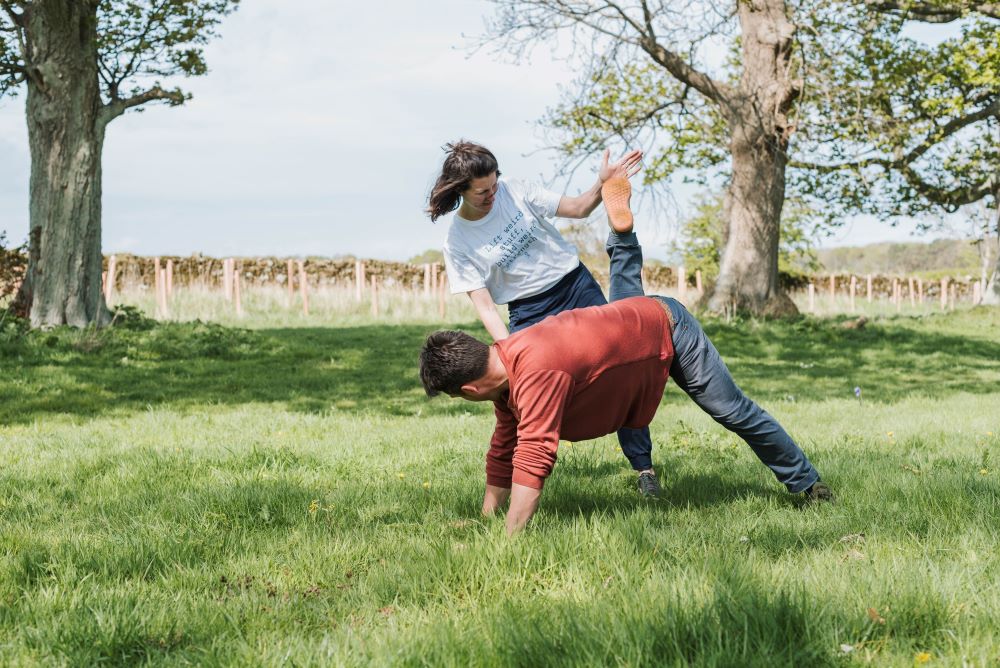
Professionally, Andrew and I run a movement company, we help people build confidence outdoors and reimagine what they are capable of. Since moving home, we’ve had the pleasure of working with my parents and their contemporaries to create a new programme that specifically works with older populations. And while some of them remain definitely independent, it is impossible to ignore the myriad of complex barriers that start to emerge around us as we age and stand in the way of us being able to join in all the activities we once did without thinking. The walk you used to do with your dog that took you up a steep hill, the ladder to the attic or the uneven ground that means you no longer choose that path.
But unless we are talking about extreme sports, the barriers preventing us from joining in are rarely just physical. Katy Bowman, the biomechanist, has a phrase I come back to often: “We age into the shape of our habits.”
“We age into the shape of our habits.”
Katy Bowman, Biomechanist
In other words, it’s not always about aging. It’s about how we’ve been allowed to age, how we’ve moved (or haven’t), how varied those movements were, how much of our body and environment we’ve used regularly.
Rebuilding after pain
We’ve collected some of the stories from our members as jumping off points to think more about how much our environments and social contexts inform, enable or prevent our movement choices as we age.
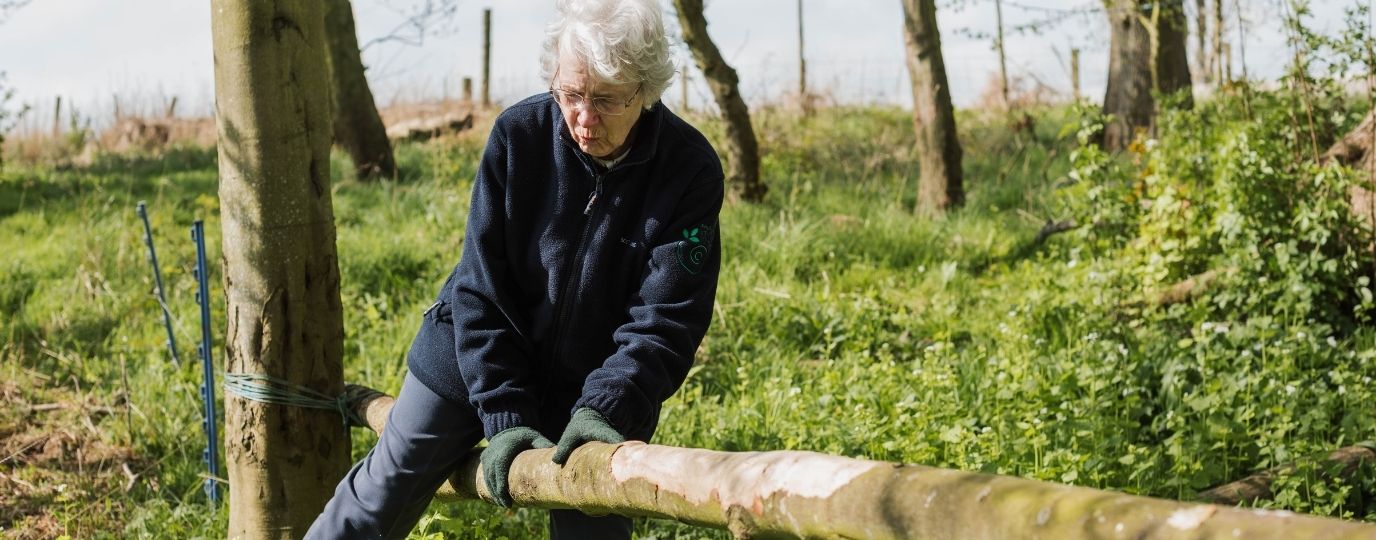
Eleanor is 71, she had a double knee replacement sixteen years ago. After her operation, kneeling felt painful and uncomfortable, so she stopped. Not because she couldn’t, but because the pain felt like a warning, then not kneeling became a habit, and then a rule. A barrier that shaped how she moved through the world, or didn’t.
Eleanor joined a movement class last year and within a month, she knelt down for the first time in over a decade. “I can’t believe what it’s done for me,” she said. “I can now kneel on my new knees, something I haven’t done for years.”
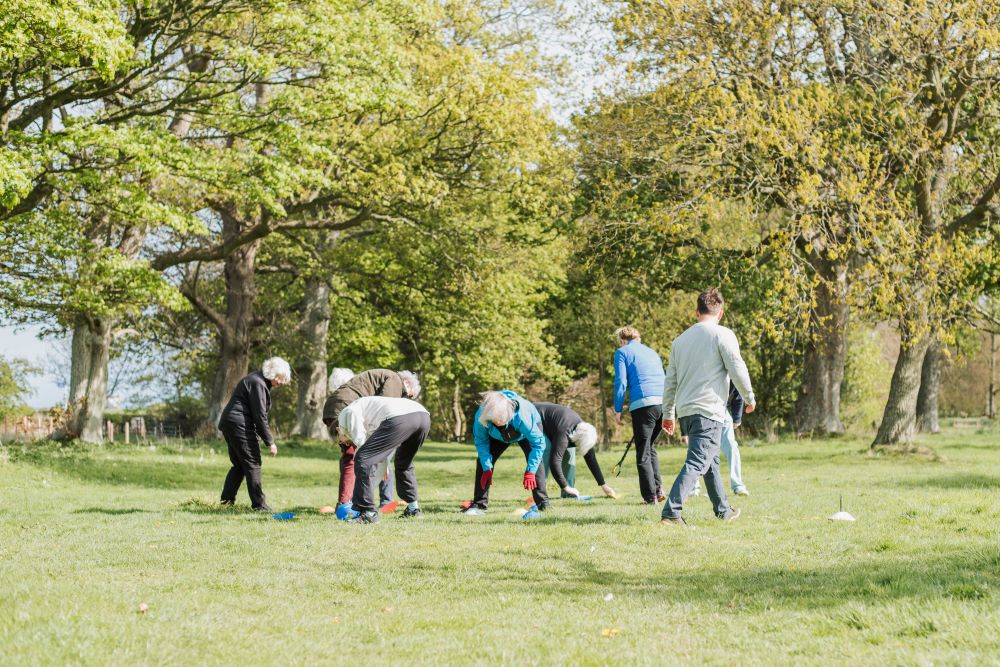
And all she needed was space where she felt confident enough to give herself permission to move, play and reimagine what her knees, and her body, might still be capable of. And to learn that pain doesn’t have to mean the end of the road.
Lynne watched her mum, Hazel, grow more anxious and less mobile after her own knee op. “She was scared to move,” Lynne said.
“She lost confidence and she started losing strength too.”
These aren’t rare stories, they’re part of a wider pattern.
Well-meaning advice “Don’t overdo it,” “Avoid impact,” “Be careful” often comes from a place of caution but it can plant fear where support is really needed. And that fear doesn’t just reduce risk, it reduces life.
There is a stark contrast between disempowering treatment and informed care.
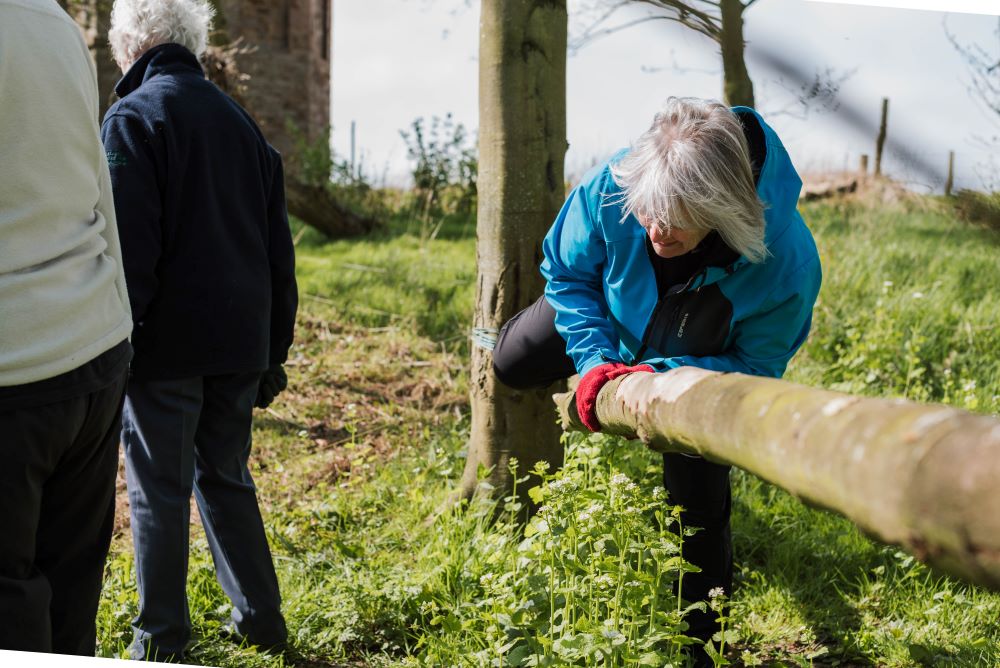
After suffering from a recent disc herniation and visiting a dismissive physiotherapist, Andrew said “I left feeling less equipped to manage my pain than before,” he wrote. “My observations were downplayed. I felt less like a person, and more like a problem.”
That feeling, of being less capable after seeking help, is far too common, particularly for older adults or anyone post-surgery.
Pain is a message, a signal to slow down and to pay attention but it’s not a red card
Nil Teisner, the movement coach, often talks about how pain must be flirted with which I think is a great way to look at it. Not bulldozed through, but visited, gently, curiously, repeatedly, until that movement becomes less frightening, less painful, more familiar.
Every time we approach a movement with curiosity, we’re helping to rewire the body–brain conversation, teaching our nervous system that this position, this load, this way of moving is safe again, this is called fear avoidance extinction training.
Todd Hargove, the movement therapist, talks about “remapping the territory” – if you’ve been in pain for a while your brain starts to form an image of that area as a block that can’t move without hurting. And to help rebuild a more accurate map you need to reintroduce sensation without triggering pain.
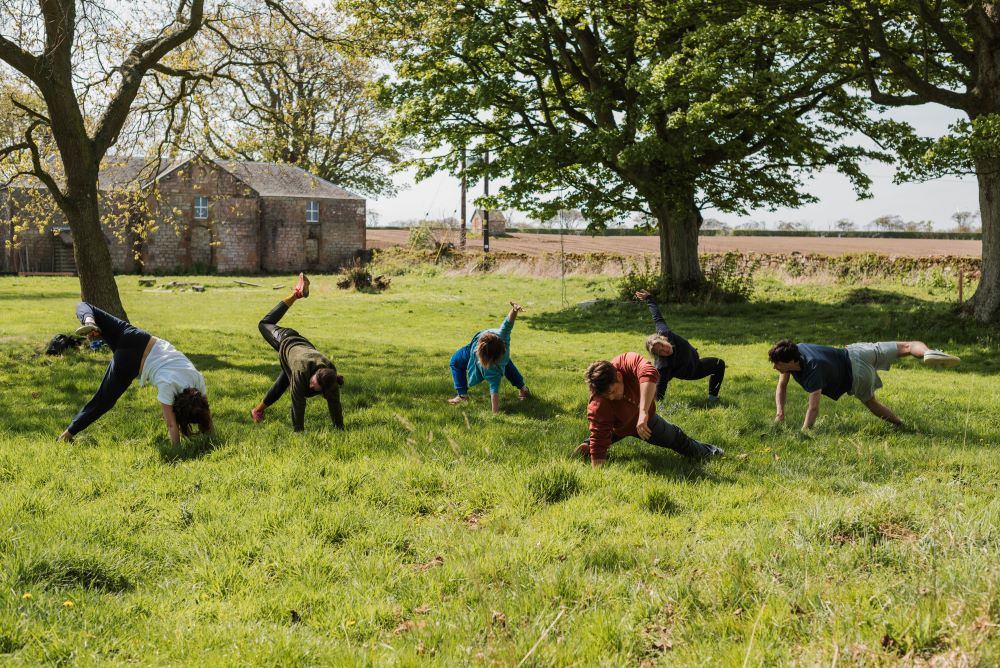
How our environments shape our movement
For a long time, my eldest son had a story about himself: “I’m not someone who does the monkey bars.” In those exact words. Children notice who climbs fastest, who lifts easiest, who gets cheered and slowly, a narrative builds.
Sometimes, those stories stick with us for decades. We meet people in their 50s who had a negative experience of PE at school and that has informed their movement choices for the next 40 years.
But we are able to change these stories. When we have opportunities to move, without pressure or comparison, we make space for new stories to emerge.
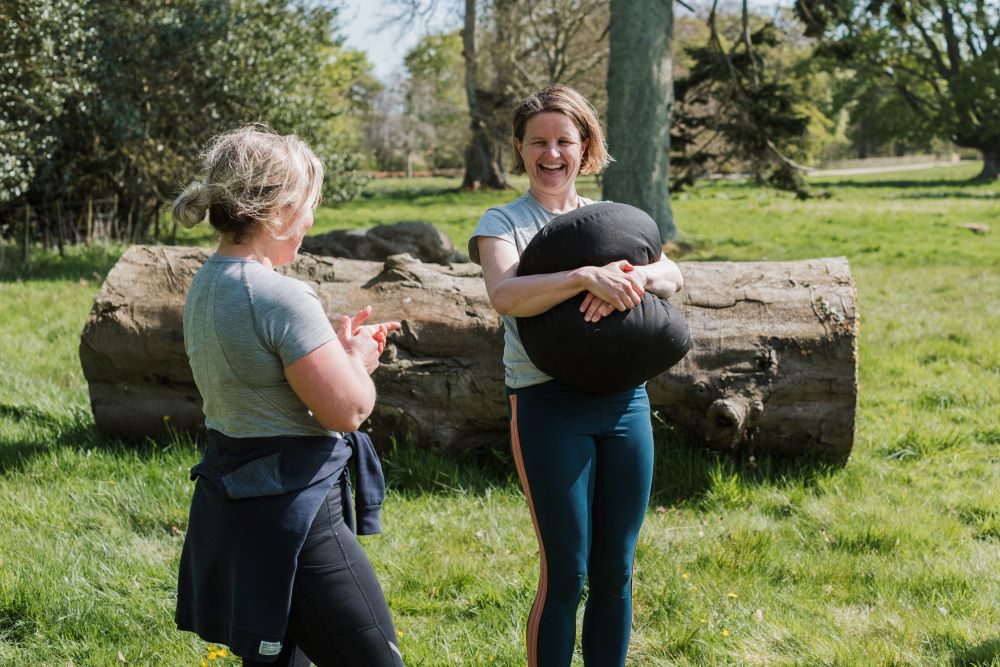
Our life-long relationship with movement is not about being “fit” in the narrow sense, it’s about developing the confidence, coordination, strength, and self-trust to explore your world and respond to it. This term is known as our physical literacy – movement is a language, and we all deserve fluency.
In Robert Macfarlane’s beautiful book, Landmarks, about forgotten words for land, weather, and place, he talks about the ability of words’ to let people see and understand the landscape in richer ways. We can think of movement as a kind of vocabulary, too.
What we can name, we can notice. What we can notice, we can interact with. What we interact with, we can belong to and care about.
Our environments are made up of affordances, invitations to act; a fallen tree to climb over, a bag to carry, a floor to kneel on. The skill is perceiving the hidden affordances that are there and ready to help you, if only you can see them.
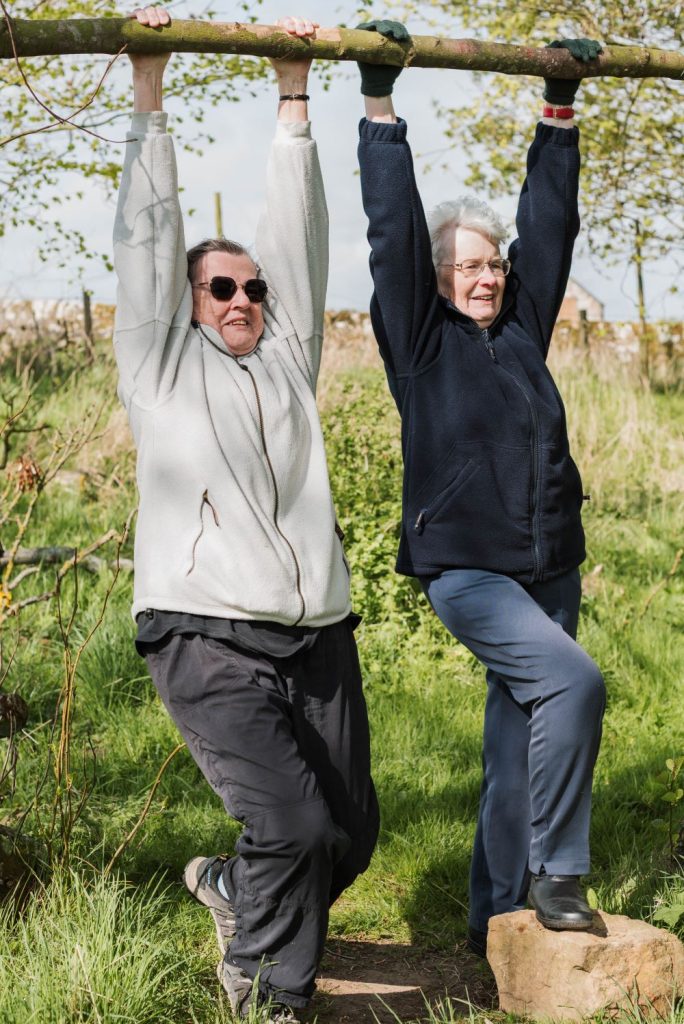
If you’ve never climbed a tree, you might see only branches. If you’ve never hung from your arms, you might not notice the bar at all. Perception and action are entangled. It’s not just about having the strength or skill but rather recognising the invitation.
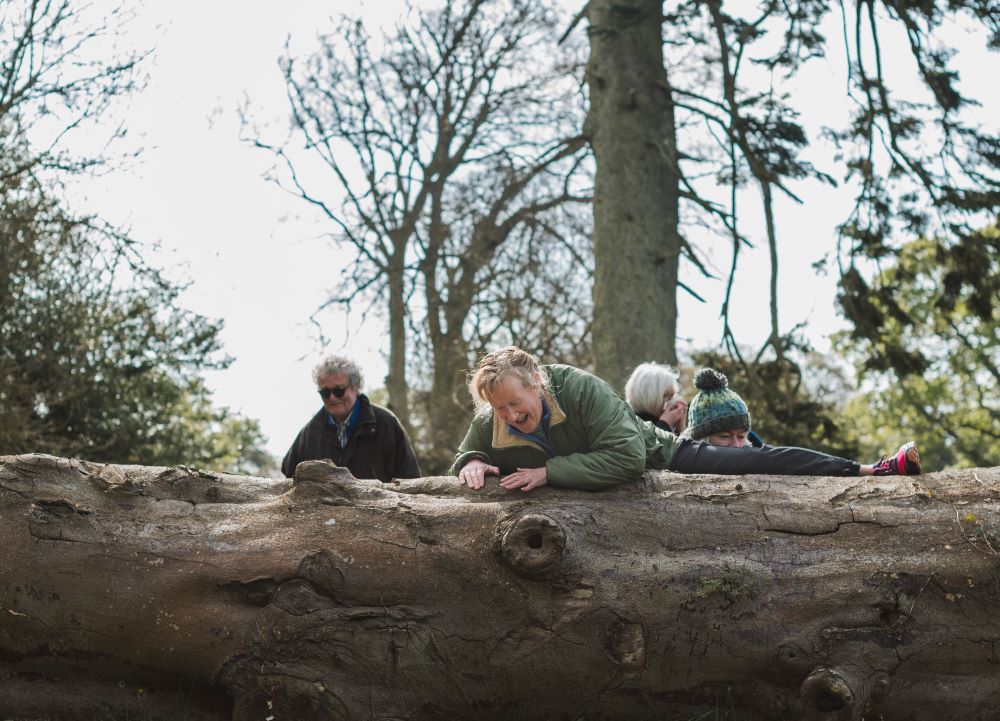
And this is why access matters. Not just access to physical spaces, but access to our stories about who we are and what we’re capable of.
When children look at a bench or wall, they don’t see passive objects – they see potential. Vaults, climbs, swings. The built world becomes a playground, not a barrier.
That perception isn’t innate, it’s trained and learned through play and exploration and years of falling off and getting back up again.
And it works in reverse, too: action changes perception. The more we move, the more affordances we are able to see.
If we want to open up movement possibilities, for ourselves, for our children, for our communities, we have to think not just about programs or exercises, but about environments, about access and about the unseen accumulations of opportunity.
Just like language, movement opens up the world. Not all at once, but incrementally. Through use, through repetition and through building confidence.
We are always shaping our bodies and our perceptions and we are always telling stories about what is possible.
If you’d like to find out more about WildStrong head over to their website or follow them on Instagram @wearewildstrong or Facebook
By Gillian Erskine